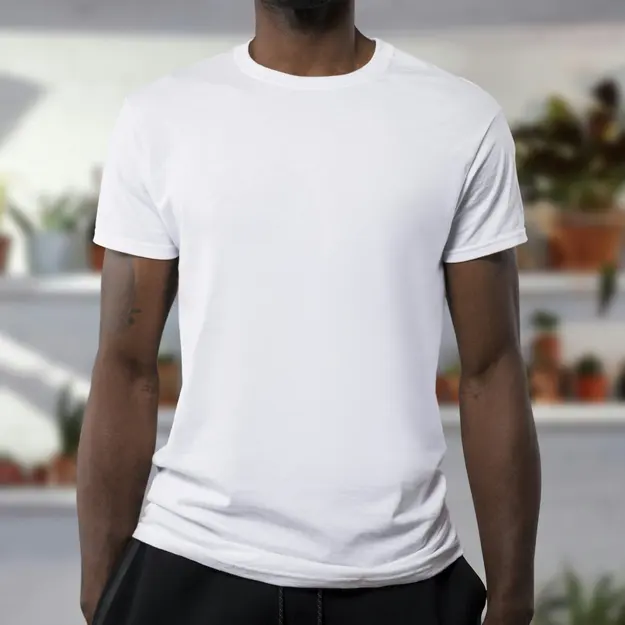
Put a size L polo beside an oversized polo in the same size and the difference is not scale. The oversized garment sits lower on the shoulder, carries a wider body, and has a collar and placket that were redrawn to match the new proportion rather than enlarged with it.
A program that takes the standard block up two sizes produces something else: a polo that is long in the body, high in the armhole and wide at the neck, which reads as a fit problem rather than a style. The retrospective below is the correction, parameter by parameter.
Oversized polo pattern development: the short answer
An oversized polo is a different pattern, not a bigger size. The shoulder drops, the chest widens, the sleeve shortens relative to the body, and the collar and placket are re-scaled to match. Develop those four changes together and the garment reads as oversized rather than as a polo that does not fit.
The order matters: shoulder first, because it moves the armhole; body second, because it moves the balance; collar and placket last, because they follow the neck rather than the chest.
Where sizing up goes wrong first
The collar is the first casualty. Scale a polo up two sizes and the neck opening grows with the chest, so the collar stands away from the neck and the placket lengthens past the sternum. The garment now needs a button moved to close, and the wearer notices before anything else.
The armhole is the second. A larger size has a deeper armhole in proportion, so the sleeve hangs from a lower point and the whole shirt looks as though it is sliding off. That is the opposite of the intended look, which is a relaxed body on a shoulder that is still in place.
Shoulder drop, and the armhole it moves
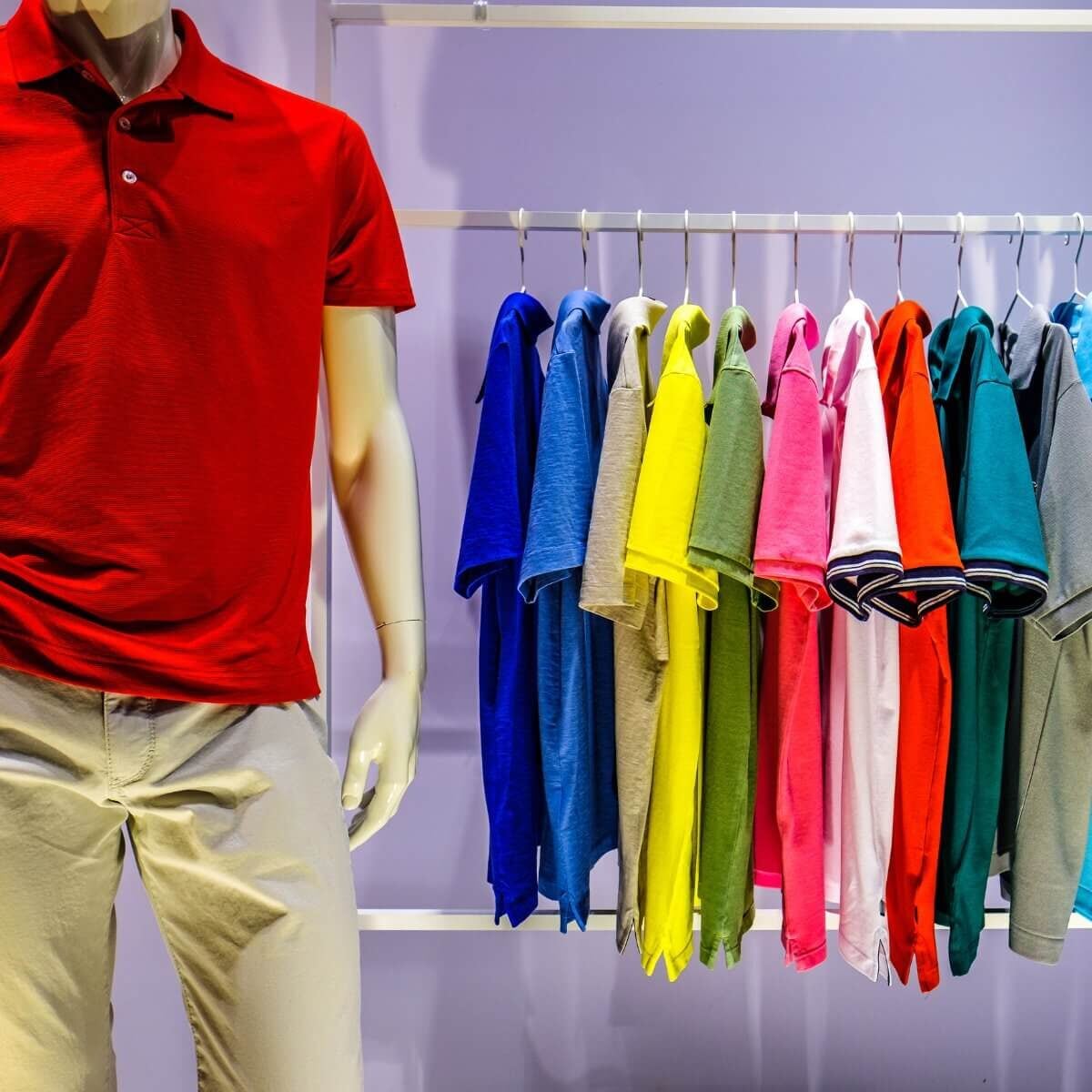
The shoulder drop is the defining measurement of an oversized polo. Move the shoulder point outwards and the sleeve head follows, which means the armhole has to be re-drafted rather than widened. A drop of a few centimetres is a relaxed fit; a drop of twice that is a different garment, and both are legitimate as long as the sleeve is drafted for the armhole that results.
The test is on a body, not on a table. Put the sample on a wearer with the target build, ask them to raise an arm and then lower it, and watch where the sleeve head sits when the arm comes down. A dropped shoulder that has been drafted correctly falls back into place; one that has been widened without re-drafting stays crumpled at the underarm.
Body width against body length
Oversized does not mean longer. Most developed oversized polos keep the body length close to the standard block, or add a small amount, because the volume belongs in the width rather than the hem. A size-up approach lengthens the body at the same time as it widens it, which is why the result reads as a nightshirt.
Set the width first, then decide the length as a separate proportion: a boxy length that stops at the hip, a longer version that covers the seat, or a cropped version that sits above the waistband. Each is a decision, and the width is not the place to make it.
| Parameter | What a size-up gives | What a developed oversized block gives |
|---|---|---|
| Shoulder width | Wider, with the seam still on the shoulder point | Wider, with the seam dropped onto the arm |
| Chest width | Wider, but balanced by a longer body | Wider, with the length held or chosen separately |
| Armhole depth | Deeper in proportion, sleeve hangs low | Re-drafted so the sleeve head sits where the shoulder was dropped |
| Neck opening | Larger, collar stands away from the neck | Held close to the standard neck, with the collar re-scaled |
| Placket length | Longer, in step with the body | Held or shortened, so the buttons close where the chest meets the collar |
| Sleeve length | Longer, reaching the wrist | Often shorter, ending above the wrist as the drop takes up the length |
The last row is the one buyers miss. Drop the shoulder and the sleeve starts lower on the arm, so a sleeve that was the right length now reaches the knuckles. The correction is a shorter sleeve, not a wider cuff.
The collar and placket have to be redrawn
A collar is drafted to a neck opening, and if the neck opening is held while the chest widens, the collar can stay close to the standard shape. That is the usual solution for an oversized polo: keep the neck, adjust the collar depth slightly, and keep the placket short enough that the buttons close where the chest meets the neck.
Placket length is worth a separate conversation. A long placket on a wide body opens into a V that reads as a different garment. Shortening it keeps the polo reading as a polo, and it also reduces the amount of fabric that has to sit flat over a wider chest.
The target body, not the size chart
Oversized polo development only works with a stated target body. The same drop and width read differently on a narrow frame and a broad one, and a sample fitted on one will be wrong on the other. Decide whether the garment is designed for a wearer who normally takes a medium and wants volume, or one who takes an extra large and wants ease, because those two briefs produce different blocks.
Then fit the sample on two people from that group rather than one. The second fitting usually surfaces the sleeve length and the hem position, which are the two numbers most often left to the end.
Bring the measurements of the polo range you already sell to that fitting. The oversized block should relate to the existing fit rather than replace it, and a buyer who can show the standard chest and length next to the new one gets a faster answer about how much volume is enough.
Decoration moves with the block
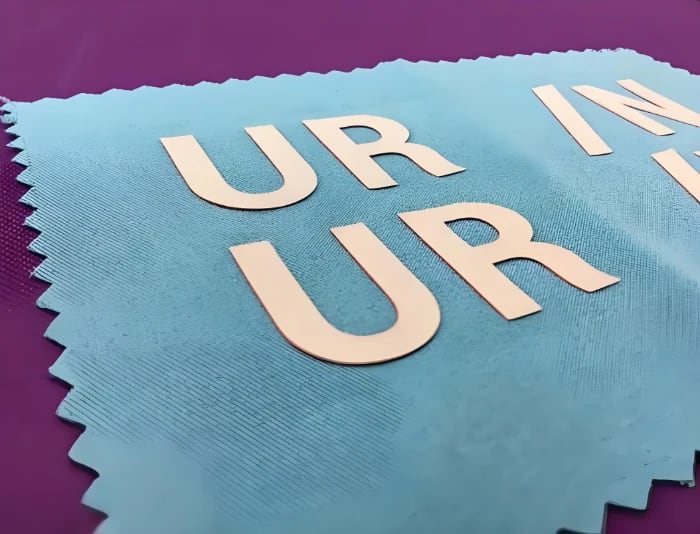
A chest logo placed on a standard block lands in a specific relation to the placket and the shoulder seam. On an oversized block, the shoulder seam has moved outward and the placket may be shorter, so a placement carried over from the standard style lands too close to the centre or too high on the chest.
Re-mark the placement on the new block and approve it on a sewn sample rather than a mock-up, because the drop changes where the fabric sits when the garment is worn. A logo polo program that reuses the old placement is the most common way an oversized style looks unfinished.
Check the embroidery too. A denser, wider chest needs a slightly larger backing to stop the stitch block cupping, and a logo that sat flat on the standard block can pucker on the dropped one.
Grading an oversized block
Grade the drop and the width together, and keep the neck increment small. If the neck grows at the same rate as the chest, the largest size acquires the same problem the size-up approach had, and the collar stands away exactly where the fit is most visible.
Check the largest size on a body before signing the grade. It is the size where a dropped shoulder either works or becomes a sleeve that swallows the arm, and a grade rule that looks reasonable on a spreadsheet can produce a garment nobody wants to wear.
Write the grade rule down as a rule rather than a table of results. A custom oversized polo program that records how the drop and width move together can add a size later without re-drafting the block.
What the sample set should include
Three samples are enough: the middle size in two colourways, the largest size, and one sample in a heavier piqué if the range uses more than one fabric. The two colourways show whether the collar and placket behave the same after dyeing, and the largest size shows whether the grade holds.
Keep one washed sample as well. Piqué relaxes after a wash, and a dropped shoulder that sits correctly on a pressed sample can drop further once the fabric has been through water. The washed sample is the reference the bulk order is checked against, and it costs one extra garment.
FAQ
Can we just take the standard block up two sizes?
You can, and it will fit someone, but it will read as a polo that is too big rather than an oversized polo. The collar, the armhole and the sleeve length all need to be re-drafted for the look.
How much shoulder drop is right?
Enough that the seam sits on the arm rather than on the shoulder point, and no more than the sleeve can carry without collapsing at the underarm. The number is set on a body, not on a chart.
Does an oversized polo need a longer body?
Usually not much. The volume belongs in the width, and a longer body is a separate design decision. Decide the length after the width, and test it with the trousers it will be worn with.
Will the same logo placement work?
Rarely. The shoulder seam and the placket have moved, so the chest placement has to be re-marked and approved on a sewn sample. It is a small change with a large effect on how finished the garment looks.
Sources: OEKO-TEX Standard 100, EU Regulation 1007/2011, Intertek, Higg, US CBP and The Woolmark Company.
Working on a knitwear project?
Let’s talk yarn, gauge and timing.
Send a reference or tech pack and we will come back with a practical development route.