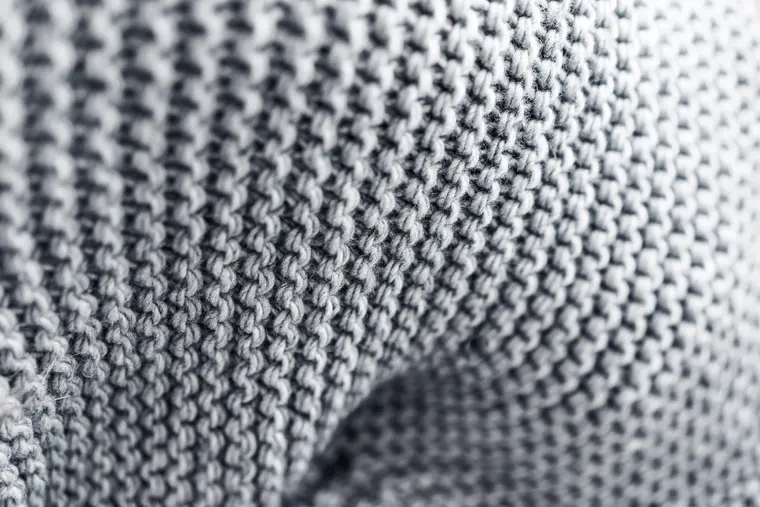
Two inspectors, the same lot of 1,200 sweaters, the same day, opposite verdicts. The first worked to AQL 2.5 and passed the lot with six major defects. The second worked to AQL 1.0 and failed it. Neither was wrong: the two inspections were answering different questions, and the purchase order had not said which question it was asking.
That is the whole problem with AQL in apparel. The number is not a quality target, it is an acceptance rule — and a buyer who picks it casually is really picking how many defective garments they are willing to ship.
What AQL actually means
AQL stands for acceptance quality limit. It is the worst quality level that is still considered acceptable in a sampling plan: if the lot is at that defect rate, most samples will still pass. It is defined in ISO 2859-1 (and its American cousin ANSI/ASQ Z1.4), and it is applied to a sample drawn from the lot, not to every piece.
Three consequences that surprise buyers:
- AQL 2.5 does not mean 2.5% defective. It means a lot at roughly that level has a high probability of being accepted. The actual outgoing defect rate can be higher.
- The sample size changes the answer. The same defect count passes a bigger sample and fails a smaller one, because the acceptance number changes with the code letter.
- Critical defects are not sampled the same way. Safety issues are usually set at zero acceptance regardless of the AQL level.
Defect classes, not one number
Apparel inspections normally split defects into three classes and apply a different AQL to each. A single AQL applied to everything is the most common mistake in a first inspection spec.
| Class | What it covers | Typical AQL | Why |
|---|---|---|---|
| Critical | Safety, legal labelling, sharp points, choking hazards, banned substances | 0 | Not a commercial trade-off; one piece can trigger a recall |
| Major | Visible defects that make the garment unsaleable: holes, wrong measurement beyond tolerance, broken seams, shade mismatch across panels | 2.5 | Customer will reject at retail; returns cost more than the unit |
| Minor | Cosmetic issues a customer may accept at a discount: loose thread, slight stitch irregularity, minor pressing marks | 4.0 | Does not stop the sale; fixing all of them costs more than it saves |
Where the classes get blurred, the inspection becomes negotiable. Write the class definitions into the inspection spec with examples of what counts as major for this specific style — a 2 mm shade difference on a black sweater is major; the same difference on a marled grey may not be.
The sample size decides more than the AQL
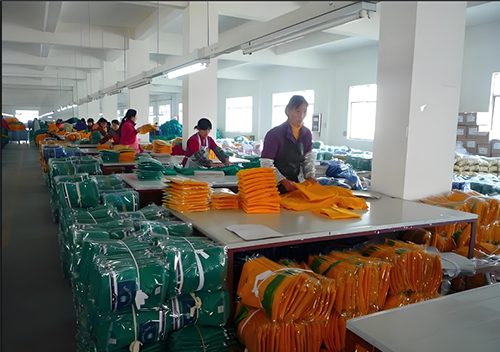
Most apparel inspections run at General Inspection Level II. For a lot of 1,200 pieces that gives a code letter K and a sample of 125. At AQL 2.5 for major defects the acceptance number is 7: up to seven major defects in the sample passes, eight fails.
| Lot size | Sample (Level II) | Accept at AQL 2.5 | What it means in practice |
|---|---|---|---|
| 300 | 50 | 3 defects | A 300-piece first order is judged on 50 pieces |
| 1,200 | 125 | 7 defects | The same defect rate as the 300 lot, judged on a bigger sample |
| 3,201–10,000 | 200 | 10 defects | Acceptance number rises with the sample, not with tolerance |
This is why “AQL 2.5” alone is not a specification. Two suppliers can both claim AQL 2.5 and deliver different quality, because one inspects 50 pieces and the other inspects 200.
Choosing 2.5 or 4.0 for knitwear
The choice should follow the cost of a defect at retail, not a habit. Three questions settle it.
- What does the customer see first? On knitwear, shade variation across panels, dropped stitches, and measurement drift at the chest are the defects that generate returns. Those belong in major, at 2.5 or tighter.
- What can be fixed after inspection? Loose threads and light pressing marks are cheap to fix at the factory and invisible to the customer. Pushing those into major inflates the defect count and makes every inspection fail for cosmetic reasons.
- What is the price point? A €40 knit and a €400 knit do not share a defect tolerance. The higher the price, the tighter the major AQL, because the customer’s expectation is part of the product.
A practical starting point for a first knitwear order: critical 0, major 2.5, minor 4.0. Move major to 1.5 or 1.0 when the style is premium, when the colour is dark and shade variation is unforgiving, or when the retailer has its own protocol that overrides yours.
Where AQL gets misapplied
| Misuse | What happens | Fix |
|---|---|---|
| One AQL for all defect types | Cosmetic issues fail the lot; real defects slip through | Split into critical, major, minor with definitions |
| Inspecting measurements to AQL | Measurement is a tolerance question, not a defect count | Measure every sample piece against the spec; report the distribution |
| Ignoring the sample plan | Inspector checks “a few cartons” and calls it done | State lot size, level, sample size and acceptance number in the PO |
| Applying AQL to fabric length | Fabric defects are assessed per roll, not per garment | Use the 4-point or 10-point fabric system separately |
| Zero defects as a target | Either the inspection is theatre or the factory refuses the order | Set a level you can enforce, then enforce it consistently |
What to write into the purchase order
The inspection clause should be specific enough that two inspectors would reach the same verdict. At minimum: standard (ISO 2859-1), inspection level (General II), sample size by lot, AQL per defect class, the defect classification list for this style, who pays for the inspection, and what happens on a fail.
Our AQL inspection report guide shows what a usable report contains, and the failed inspection process covers the next step when the lot does not pass.
What AQL does not tell you
It does not tell you whether the garment fits, whether the hand-feel matches the approved sample, or whether the colour is right under retail light. Those are approval decisions taken earlier, at sample and pre-production stage. A lot can pass AQL 2.5 and still be the wrong garment — the inspection measures conformance to the spec, and the spec is your responsibility.
FAQ
Is AQL 2.5 stricter than 4.0?
Yes. A lower AQL means a smaller acceptance number for the same sample, so fewer defects are tolerated before the lot fails.
Should a first order use a tighter AQL?
Often yes for major defects, because the first order sets the reference for reorders. A tight first inspection is cheaper than a reorder that repeats the same fault.
Who decides the AQL, the buyer or the factory?
The buyer sets the requirement; the factory can negotiate the level and the sample plan, but it should not choose the standard silently. Put the agreed numbers in the purchase order.
Can we inspect 100% instead?
You can, and on very small or very high-value lots it may be worth it. On 1,200 pieces a full inspection usually costs more than it saves, and it does not remove sampling error — it just moves the cost.
Sources: ISO 2859-1 (sampling procedures for inspection by attributes) and ANSI/ASQ Z1.4.
If you are writing an inspection clause for a first order, send the lot size and the style. We will tell you which sample plan the factory will actually run, so the number in the PO matches the number on the floor.
Working on a knitwear project?
Let’s talk yarn, gauge and timing.
Send a reference or tech pack and we will come back with a practical development route.