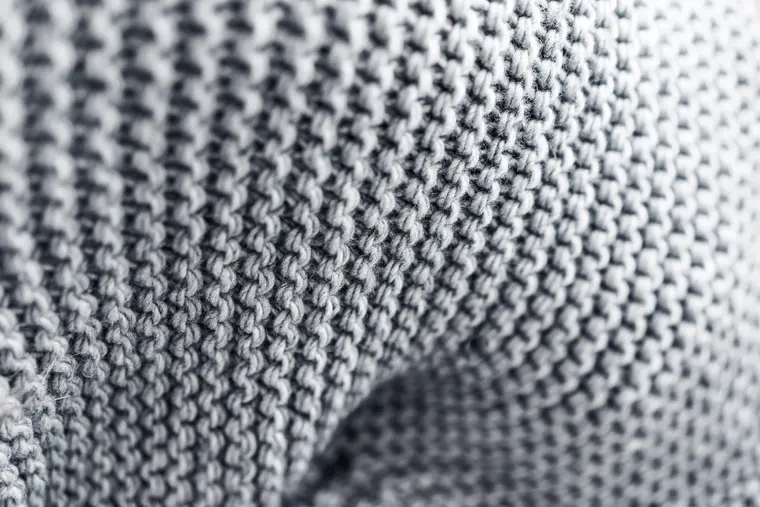
Two sweaters, same style, same gauge, same colour. One retails at €180 and the other at €420, and the difference is invisible on a hanger. The first was knitted from a coarser, shorter cashmere with a higher guard-hair content; the second from fine, long fibre. Both are legitimately called cashmere. Neither label has to tell you which one you are holding — and that is the entire commercial problem with the word “grade”.
Cashmere grading is not a regulated standard with a legal definition. It is a trade convention built on three measurable things: fibre diameter, fibre length, and how much guard hair is left in the dehaired lot. Understanding those three tells you what a supplier means when they say “grade A”, and whether the price difference is real.
What the three grades usually describe
The table below reflects how the trade commonly uses the terms. Ask any supplier to state the numbers rather than the letter, because the letters are not standardised across markets.
| Trade grade | Fibre diameter | Staple length | Hand-feel | What it suits | Main risk |
|---|---|---|---|---|---|
| A | Roughly 14–16.5 µm | Long, typically 34 mm and up | Soft, smooth, low prickle | Fine-gauge sweaters, next-to-skin knits, premium accessories | Cost; still pills if the yarn is loosely spun |
| B | Roughly 16.5–18.5 µm | Medium | Soft but with more body | Mid-gauge sweaters, cardigans, blends | Visible fibre halo after wear; prickle on sensitive skin |
| C | Roughly 18.5 µm and above | Shorter, more variable | Dryer, more wool-like | Outer layers, accessories, blends with wool or silk | Pilling and matting; a “cashmere” claim that disappoints |
Two caveats. First, diameter and length are independent: a fine but short fibre can feel lovely in the hand and pill badly in wear. Second, guard hair — the coarser outer coat — has to be removed by dehairing, and the residual percentage is a quality signal that rarely appears on a spec sheet unless you ask.
Why finer is not automatically better
Finer fibre gives a softer hand and a better drape, and it also has less strength per fibre. A very fine cashmere knitted at a loose gauge will feel extraordinary in the showroom and look tired after ten wears, because the short fibres work their way out of the yarn and form pills.
The counter-intuitive rule: match the grade to the gauge and the wear pattern, not to the price tag. A 14-gauge next-to-skin crewneck is the natural home for grade A. A chunky 5-gauge cardigan worn over a shirt is often better in grade B, where the extra body helps the garment hold its shape and the prickle risk is not against the skin.
What actually drives the price
Four variables, and they move independently:
- Fibre diameter. Finer lots are scarcer and cost more per kilogram, and the gap widens in a tight raw-material year.
- Staple length. Longer fibre spins into a stronger yarn with less waste; short fibre is cheaper per kilo and weaker in wear.
- Dehairing yield. Raw cashmere contains guard hair; the yield after dehairing determines how much raw material is needed per kilogram of usable fibre.
- Colour. Natural white commands a premium because it can be dyed to any shade; grey and brown lots are cheaper but limit the colour range.
Raw cashmere prices move with the Mongolian and Inner Mongolian clip, and they move fast. That is why a quote held for six months is not a quote — ask how long the yarn price is valid and whether the order is booked against stock or against a future lot.
Structures and gauges that suit cashmere
Cashmere knits well from about 3 gauge up to 16 gauge, but the grade and the gauge have to agree. Fine grades at fine gauges; medium grades at mid gauges; coarser grades in outerwear weights and accessories, or blended with wool for structure.
Blending is not a trick, it is a tool. A 70/30 cashmere-wool blend at a mid gauge can deliver most of the hand-feel at a lower cost, with better shape retention. A cashmere-silk blend improves drape and reduces pilling. The label then has to state the blend accurately, which is where the fibre-content rules come in.
Defects and what they tell you
| Defect | Usual cause | What it says about the lot |
|---|---|---|
| Pilling within a few wears | Short staple, loose spin, low twist | Grade may be fine but length is short |
| Halo or “fuzz” after one wash | High guard-hair residue or insufficient dehairing | Dehairing yield was pushed too far |
| Matting or felting | Wrong wash route, or fibre with high scale structure | Care label and fibre are mismatched |
| Shade variation across panels | Different dye lots, or blending lots at the mill | Yarn booking was fragmented |
Pilling is the one buyers notice first and the one the lab can measure. A pilling test to ISO 12945 or the equivalent ASTM method gives a grade after a defined number of rubs; the useful question is not “does it pill” but “at what grade after how many hours, and is that acceptable for this price point”. Our notes on pilling test requirements set out how to choose the limit.
MOQ and colour constraints that follow the grade
Fine grades in natural white are usually stocked by the mill in limited colours; a custom shade means a dye lot, and a dye lot means a minimum quantity of yarn. That is the mechanism behind the common experience that a small order “cannot have the colour I want”. It is not reluctance — the yarn does not exist in that shade until enough of it is ordered.
At Horssle the published starting minimum is 300 pieces per style; specialist yarns and custom dye lots can raise the practical minimum, and cashmere is the category where that happens most often. If the colour is fixed and the quantity is small, the realistic options are a stock shade, a blended yarn, or a larger order.
What to ask before you approve a cashmere lot
- Fibre diameter in micrometres, with the test method
- Staple length in millimetres
- Guard-hair content after dehairing
- Colour of the raw lot, and whether it is dyed or natural
- Yarn count and twist
- Pilling result at the intended gauge, not at a lab standard gauge
- Dye-lot minimum for the colour you want
If a supplier answers with a letter grade and nothing else, ask again with the numbers. The letter is a label; the numbers are the product. Our cashmere sweater programme is built around that conversation, and the knitwear overview shows where cashmere sits against merino and cotton in the range.
FAQ
Is grade A legally defined?
No. Cashmere grading is a trade convention based on diameter, length and guard-hair content. Different suppliers and markets apply the letters differently, which is why you should ask for the measurements.
Is 100% cashmere always better than a blend?
Not for every product. A blend can improve shape retention, reduce pilling and lower the cost. What matters is that the label states the blend accurately and the hand-feel matches the price point.
Why does cashmere pill so quickly?
Short fibres working out of a loosely spun yarn. Finer grades are not immune; a fine but short lot pills faster than a slightly coarser long-staple lot. Gauge and twist matter as much as the fibre.
Can we get a custom colour on a 300-piece order?
Sometimes, depending on the yarn count and the dye-lot minimum. The honest answer comes from the mill, not the factory, and it is worth asking before the design is locked.
Sources: ISO 12945 (pilling and fuzzing), Regulation (EU) No 1007/2011 (fibre names), and FTC fibre labelling guidance.
If you are choosing between a fine and a mid grade for a first order, send the gauge, the wear pattern and the target retail price. We will tell you which grade holds up at that price rather than which one sounds better on the label.
Working on a knitwear project?
Let’s talk yarn, gauge and timing.
Send a reference or tech pack and we will come back with a practical development route.