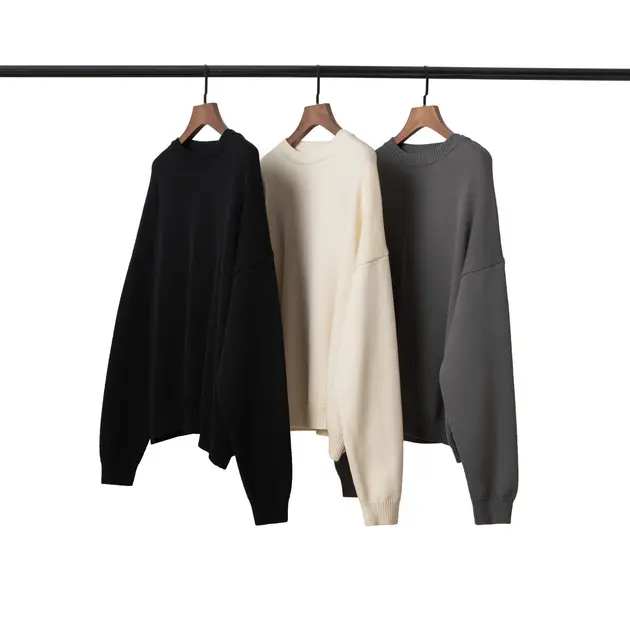
The container sat at the port for nine days because the invoice said “knitwear” and the packing list said 42 cartons while the forwarder’s manifest said 40. The goods were fine. The documents disagreed, and a disagreement is a hold.
Commercial invoices and packing lists are the cheapest documents in the order and the most expensive to get wrong, because the cost is not the reprint — it is the demurrage, the missed delivery window and the conversation with the buyer.
The commercial invoice: the fields that get checked
| Field | What customs does with it | What goes wrong |
|---|---|---|
| Seller and buyer names and addresses | Establishes the parties and the direction of trade | Trading name on one document, legal entity on the other |
| Invoice number and date | Ties the shipment to the entry | Duplicate or missing number; date after shipment |
| Description of goods | Supports the classification | “Apparel” or “garments” instead of a specific description |
| HS code | Determines duty and restrictions | A generic code copied from a previous shipment |
| Quantity and unit | Matches the packing list and the entry | Pieces on one document, dozens on another |
| Unit price and total | Customs value | A total that does not reconcile with quantity × price |
| Currency | Conversion for duty | Currency stated only in the payment terms |
| Incoterm and place | Determines who pays what | “FOB” with no named port |
| Country of origin | Preference and marking | Origin claimed but not supported by the production record |
| Payment terms | Context, sometimes finance checks | Missing, or inconsistent with the contract |
The test is simple: could a customs officer, holding only this invoice and the packing list, reconstruct what is in the box, where it was made and what it cost? If not, something is missing.
The packing list: the fields that stop a hold
The packing list answers a different question — what is physically in the shipment — and it has to agree with the invoice line by line.
- Carton count, numbered from 1 to N, with no gaps.
- Contents per carton: style, colour, size, quantity.
- Net and gross weight per carton and in total.
- Dimensions per carton, especially for air freight where volume weight matters.
- Marks and numbers matching the cartons themselves.
- Total pieces, which must equal the invoice quantity.
A packing list that says “42 cartons, assorted” is not a packing list. It is a note.

The four mismatches that cause most delays
- Quantity. Invoice says 1,200 pieces, packing list totals 1,188 because twelve were pulled at inspection. The difference has to be documented, not discovered.
- Description. The invoice says “cotton sweater”, the packing list says “knit top”, and the HS code belongs to neither.
- Value. A unit price that does not include the trim cost, so the total is below the declared value on the entry.
- Weights. Gross weight on the packing list that does not match the carrier’s measurement, which triggers a re-weigh and a delay.
None of these requires bad intent. Most come from documents being prepared by different people at different times, from different versions of the order.
Who prepares what
| Document | Usually prepared by | Checked by | Common gap |
|---|---|---|---|
| Commercial invoice | Factory or seller | Buyer and broker | Classification and value |
| Packing list | Factory | Forwarder | Carton count vs actual |
| Bill of lading / AWB | Carrier or forwarder | Shipper | Consignee details |
| Certificate of origin | Chamber or issuer | Buyer | Preference criteria not met |
| Inspection report | Third party | Buyer | Not linked to the shipped lot |
Our shipment handover checklist lists the same set from the factory’s side, which is useful when you need to explain why a document is required rather than optional.
Under DDP, the documents still matter to you
When the seller clears the goods, the invoice and packing list are prepared for the seller’s entry, not yours. You may never see them. That is convenient until you need the import record, the duty evidence or a correction — and then the documents are in someone else’s file.
Ask for copies at handover regardless of the term. The DDP allocation guide explains why, and the FOB versus DDP comparison shows when taking the entry yourself is the simpler route.
A pre-shipment document check
| Check | Pass condition |
|---|---|
| Invoice total = quantity × unit price | Reconciles to the cent |
| Invoice quantity = packing list total | Identical, or the difference is documented |
| Cartons numbered without gaps | 1 to N, marks match |
| HS code matches the description | Same fibre, same garment type |
| Incoterm includes a place | “FOB Shenzhen”, not “FOB” |
| Origin supported by records | Production or yarn documents exist |
| Weights match the carrier’s | Within a small tolerance |
Courier and sea freight need different document sets
A courier shipment can often travel on a simplified invoice with a proforma attached, while sea freight needs the full set: commercial invoice, packing list, bill of lading instructions and, where relevant, a certificate of origin. The mistake is preparing the courier version for a sea shipment because it was faster to produce, and then discovering at the port that the entry needs fields the document never had.
FAQ
Can the invoice and packing list be one document?
They can be combined for some courier shipments, but for sea freight keep them separate. Customs reads them for different purposes, and a combined document is harder to correct without reissuing both.
What value should the invoice show?
The transaction value of the goods as sold, consistent with the contract and the payment records. An invoice that does not match the money movement is a query waiting to happen.
Does a wrong invoice affect duty?
Yes. Duty is assessed on the declared value and classification, so an error can lead to an adjustment, a penalty or a refund process — all slower than getting it right first time.
Who fixes an error after shipment?
The declarant or broker can amend an entry, but the process depends on the market and the stage. Prevention is cheaper than amendment in every case.
Sources: WCO HS nomenclature, ICC Incoterms 2020, and US CBP duty guidance.
If a shipment is about to leave and you want a second pair of eyes on the document set, send the invoice and packing list. We check them against the production record before the cartons are sealed, not after.
Working on a knitwear project?
Let’s talk yarn, gauge and timing.
Send a reference or tech pack and we will come back with a practical development route.