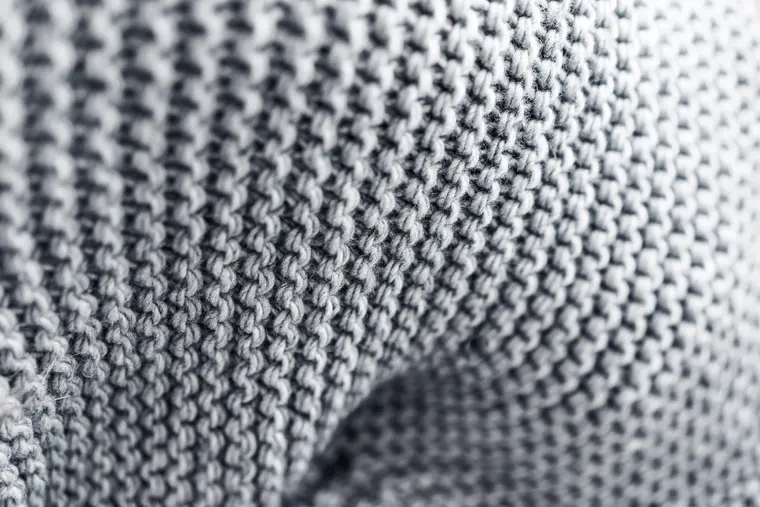
Lay a loopback hoodie and a brushed fleece hoodie in the same shade on the same table and the faces look almost identical. Turn them inside out and they stop being the same product. One shows a grid of loops; the other holds a brushed pile with air trapped in it, and that pile is the whole difference in warmth, drape and how the garment ages.
Last modified: November 23, 2026
The French terry vs fleece hoodies question usually arrives as a photo and a weight. Most wrong choices are made right there: two hoodies compared by weight alone, when a 320 gsm fleece and a 320 gsm loopback sit at the same figure on a spec sheet and behave like different garments in the shop and in the wash. What follows is the comparison we run with buyers before a sample is cut, framed around the failures that bring a hoodie back.
French Terry vs Fleece Hoodies: The Inside Face Decides
French terry hoodies are knitted with loops on the inside and a flat face outside, so they feel dry, breathe, and drape. Fleece hoodies start from a similar knit and then brush the inside into pile, which traps air and adds warmth at the same weight but holds less shape after washing.
Neither is the correct answer on its own. The brief decides, and the brief is usually clearer than it looks once the season and the wash cycle are written down.
What the Inside Face Changes
| Criteria | French terry (loopback) | Brushed fleece |
|---|---|---|
| Inside face | Visible loops, dry to the touch | Brushed pile, soft and warm |
| Warmth at equal weight | Lower; air moves through the loops | Higher; the pile traps a layer of air |
| Hand and drape | Lighter, moves with the body | Fuller, stands away from the body |
| Shape after washing | Holds its line; may twist at the side seam | Can compact and lose loft at the inside |
| Print and embroidery | Firm face, holds dense stitching | Pile fibre can beard through to the face |
| Season and use | Spring and autumn, layering, retail | Winter, outer layer, workwear |
The table explains a complaint we hear often: a fleece hoodie that felt substantial in the showroom feels thinner after a winter of washing, while the terry hoodie beside it still looks the same but was never warm enough for the wearer in the first place. Both buyers chose on weight. Neither checked the inside face.
Symptom: The Hoodie Runs Too Warm or Too Cool
This one is decided before sampling and cannot be fixed by a trim change. A wearer who runs hot indoors will push the sleeves up in a fleece body and leave it in the car; a wearer standing at a bus stop in February will not be saved by a terry body with a heavier hood. Air conditioning splits the difference in the wrong direction, because a fleece sold as winter wear is often worn in a heated office where it becomes a garment the wearer takes off.
The useful question is where the garment spends its hours: heated interiors, a cold warehouse, a school corridor, or outdoors. Terry suits the first and third. Fleece suits the second and fourth, and a heavyweight sweatshirt suits the buyer who wants structure as much as warmth. If a programme covers several sites, two weights under one fit block usually serve better than one compromise.
Symptom: The Surface Pills, Sheds or Beards
Pilling can develop where the fabric is repeatedly rubbed. The outside face rubs against bag straps, seat backs and car belts, and loose fibre works into small balls. Brushed fleece adds a second risk: fine pile fibre can migrate through the knit and appear as a halo on the face, which is why a dark fleece sometimes looks dusty after a few washes.
Two controls reduce both. Choose a yarn with enough twist to hold its fibre, and test the actual bulk cloth rather than a mill card. If the programme is dark and the fleece is heavy, ask for a washed panel before the bulk is cut, because the fault shows on black long before it shows on oatmeal. Ten minutes with a stiff brush on the face tells you more than a paragraph of description from a mill.
Identify what failed before rejecting a terry or fleece sample
A hoodie can leave loose lint on a shirt, grow anchored pills on its outside face or develop pulled loops on the inside. Those observations need separate entries in the sample report. If they are all called pilling, the mill may adjust the yarn without addressing the construction or finish that produced the complaint.
- Anchored pills. Photograph the rubbed face beside an untouched area of the same fabric. Note where it happened, such as the underarm or where a strap crossed the shoulder. Record fuzz and colour change separately from the number or prominence of pills.
- Loose lint. Compare what transfers from the inside of a washed fleece sample with what transfers from an unwashed control. Use the same contrasting witness cloth and contact conditions. Log loose fibres on the witness cloth separately from anything attached to the garment surface.
- Snags and pulls. Open the sweatshirt flat and photograph any raised loop against the adjacent loopback structure. Check whether the loop was pulled or whether a yarn actually broke. A snag record needs the location and a photograph of the inside face.
Fix the care treatment and inspection lighting before sending the samples out. Mark the agreed review points on the sample sheet and compare like-for-like zones on the garments. Where a lab rating is specified, record the agreed test method and fabric condition, since the ASTM Martindale pilling method distinguishes fabric condition from the rating and cautions about using the method for acceptance testing. Use the buyer-approved comparison sample for the visual assessment and the specified method for any laboratory result.
Symptom: The Weight and Shape Disappear After Washing
Cotton knits shrink, and the amount depends on the yarn, the knitting tightness and how the fabric was finished. A loopback that was never compacted can lose length in the body and pull the hem up; a fleece can compact at the inside, which shows as a thinner hand and a flatter hood.
Length loss shows at the hem first, where the rib sits higher than the pattern intended and the pocket drops low on the body. Width loss shows at the chest, and the garment then reads small even when the size is right. Ask for the shrinkage result on the finished garment, not just the greige fabric, and wash the sample the way the care label will tell the wearer to wash it. A hoodie that only holds its length at 30 degrees and a line dry is a different product from one that survives a tumble dryer.
Comparing Them Fairly: The Sample Protocol
Two swatches compared in a meeting prove very little. The comparison has to run on the same conditions, and it has to record what changed rather than what felt nice.
| Step | What you do | What it records |
|---|---|---|
| 1. Cut both swatches | Same size, same shade direction, from the bulk lots | Whether you are comparing like with like |
| 2. Wash and dry | Same cycle and same drying method for both | Shrinkage, twist, pile compaction |
| 3. Measure after wash | Marked points before and after, measured flat | Length and width change per fabric |
| 4. Rub and inspect | Abrasion on the face, then a light brush | Pilling and bearding tendency |
| 5. Decorate a panel | Same print or embroidery on both | How the surface takes the decoration |
| 6. Wear for a week | Two wearers, same size, same routine | Warmth, drape and hood behaviour |
Run those six steps and the decision usually makes itself. It also gives you something to put in front of a supplier: a washed panel and a measured result, rather than an impression formed in a showroom under warm light.
Where Each Route Wins
Terry wins on versatility. It layers under a jacket, sells across more of the year, and hides a light body better than fleece does in a warm shop. It also takes a large print with less risk, because the face is firm and there is no pile to beard through it.
Fleece wins on perceived value. It feels warmer and heavier in the hand, photographs as a winter product, and suits workwear and outdoor programmes where the wearer is static in the cold. The cost of that choice is bulk: a fleece body needs a heavier rib and a firmer hood or the garment collapses into itself. A fleece hoodie programme also needs a decoration method tested on the pile, not borrowed from a terry style.
The same logic runs through the rest of the range. A zip-up hoodie in fleece gains weight at the front opening, so the zip and facing need sampling together. A crewneck sweatshirt in terry is the easier garment of the two, because the neckline carries less weight and the body has less to support.

What to Put in the Brief
A brief that names the fabric route saves a sample round. Write down the season, the wearer’s day, the wash cycle, the decoration method, and the hand feel you want in one sentence. Then add the weight range you will accept and the shrinkage you will reject. If you are comparing suppliers, send the same brief and the same reference garment to each, or the quotes will not describe the same product.
Ask for the quote to separate fabric, making, trims and decoration, because the difference between terry and fleece sits in the fabric line rather than in the sewing. Sampling takes 7–12 days after fabric and tech pack approval, bulk production typically runs 20–35 days after sample approval, the minimum order is 300 pcs per style, and inspection follows AQL 2.5. We can source OEKO-TEX Standard 100, GRS and RWS yarns by requirement, with traceability documents where available. The wider range sits on the sweatshirts and hoodies page.

Questions about loopback and brushed hoodie fabrics
Is fleece always warmer than French terry?
At the same weight, yes, because the brushed pile traps air. A heavy terry can still be warmer than a light fleece, which is why weight and inside face have to be read together.
Which one pills more?
Brushed fleece carries more loose fibre at the inside, so it shows pilling and bearding sooner. Terry is not immune, but it usually fails later and less visibly.
Can we print on brushed fleece?
Yes, on the face. The risk is not the print itself but fibre migration through the knit, which can dull the image after washing, so approve a washed panel on the bulk cloth.
Which fabric should a first hoodie range use?
Terry for a range that sells across seasons, fleece for a winter programme with a clear outdoor use. Many brands run both and keep the same fit block, which is what the sweatshirts and hoodies range is built around.
Sources: OEKO-TEX Standard 100, EU Regulation 1007/2011, Intertek, Higg, US CBP.
Working on a knitwear project?
Let’s talk yarn, gauge and timing.
Send a reference or tech pack and we will come back with a practical development route.