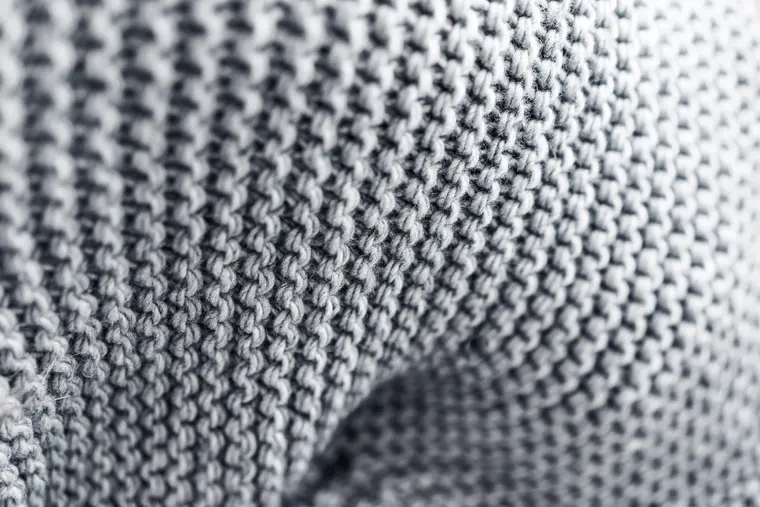
Learning how to check a seamless knit sweater starts with looking at the inside of the sample. A visible line on the face can be a planned change in the knitting, and a hidden join can still be felt inside. Take the quotation and finished garment into the same review so you can record where each claimed construction applies.
Last updated: November 26, 2026
How to check a seamless knit sweater sample
To learn how to check a seamless knit sweater, turn the sample inside out and inspect the shoulders, underarms, side lines, neck edge, and cuffs in good light. Mark any visible or palpable joins on a drawing. Ask the supplier which areas were knitted continuously and which were attached or finished separately.
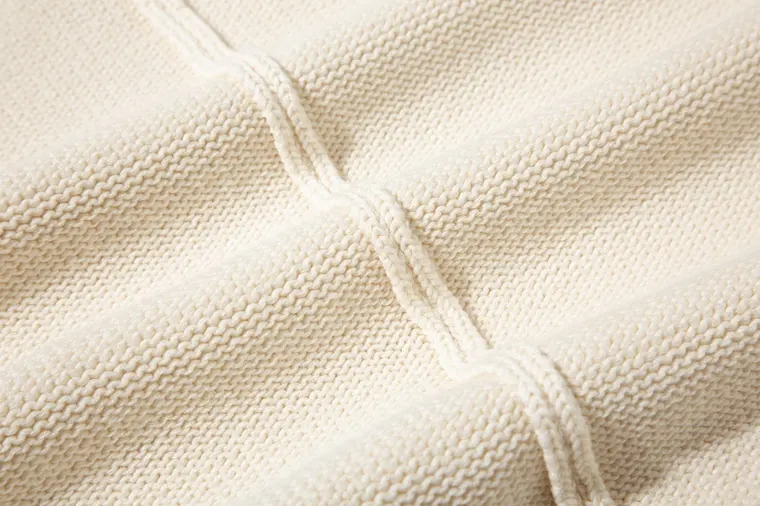
Draw the join map while the garment is inside out
Spread the sample in a relaxed position without stretching the loops. Use a simple outline with places marked for shoulder, underarm, side, neck, and cuff. Start high on the body and follow each section around to the inside where you can see it. Take a wide photograph for location and a close-up when you find a line that looks or feels different. Add the sample revision and size to the record so the supplier knows which garment you inspected.
Look and feel gently across the line. A change in direction, color, or stitch can form a visible line, especially where shaped knitting narrows a section. Check whether you are seeing an overlap, attachment, or separate piece as well. The aim is to record what is visible. You can ask the supplier to explain a line that you cannot classify. Keep the inspection record tied to what you can see and feel on this garment.
Ask what was made together and what was added
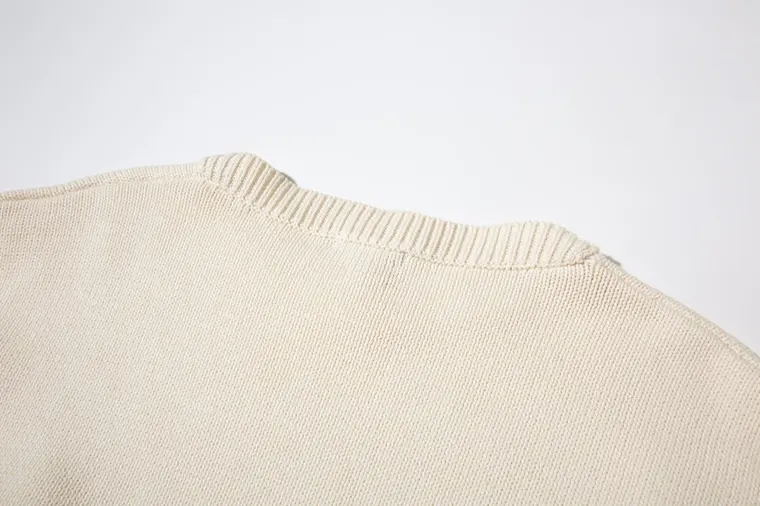
Check the collar and cuffs on the inside. A seam-free body can still have an attached label, trim, or another separately applied feature. The drawing should show which join-free areas matter for the customer and which attachments were approved. If the interior at the underarm feels different from the opposite side, point to both locations and ask whether the difference is intended. Compare with the guide to fully fashioned and cut-and-sew construction before assigning a construction name from appearance alone.
SHIMA SEIKI’s description of WHOLEGARMENT knitting explains a named approach to knitting a whole garment on a flat knitting machine. That description applies to its technology. Ask for the supplier’s own construction note to go with your sample, and use SHIMA SEIKI’s trademark guidance if a named technology is being proposed for a label or consumer-facing claim. A sample can be approved according to your documented construction requirements without making a machine or trademark claim.
Carry the map into fit and repeat checks
Turn the sweater right side out. Fit it in the expected wearing position and gently move through the action that made the placement important. If an added edge rubs or a shoulder line feels firmer than expected, record where it happens rather than removing all detail lines from the drawing. Use the shoulder and armhole review notes for the fitting discussion. Matching a fit to a construction claim requires both the inside inspection and the way the garment sits on the body.
If a care trial is part of approval, keep the same sample marked and repeat the join map and fit check after the agreed care process. AATCC’s method for garment dimensional changes after home laundering is a reference for documenting formal dimensions. Your join map records a different observation: where the approved garment is assembled or finished. Send that map with the request for your custom knitwear sample and compare the delivered specimen with the revision the supplier quoted.
When you move from approval to production, give the drawing a revision name and match it to the accepted sample. A revised neckline or cuff may change what is joined even if the main body stays the same. Ask to see the inside of any changed area on the next sample.
Questions about approving a seamless sample
Does a line along a sleeve prove that pieces were joined?
Inspect the reverse and mark the line. Shaping, stitch changes, and joins can all leave visible traces. Ask the supplier how that specific location was produced if the sample does not make the answer clear.
Can a label or trim be attached to a seamless sweater?
Ask how those parts are applied and state which joins the order allows. A separately added feature can be recorded on the drawing alongside the areas required to be knitted continuously. That makes the purchase requirement concrete.
What should I send if the quotation uses a broad construction term?
Send the annotated inside photographs, size, and sample reference. Ask the supplier to confirm each area in writing and agree how it will verify production matches the approved specimen. Keep the reply with the revised quote.
Working on a knitwear project?
Let’s talk yarn, gauge and timing.
Send a reference or tech pack and we will come back with a practical development route.