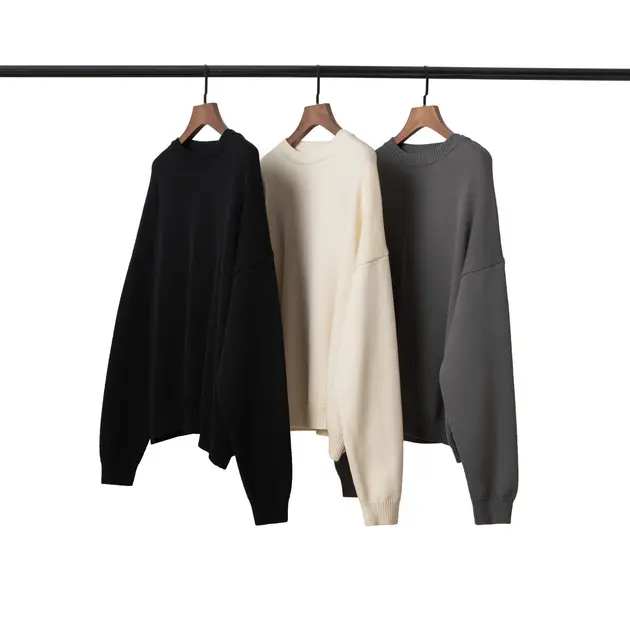
The notice arrived as a letter from a California law firm, naming a cardigan and a chemical nobody at the brand had heard of. It was not a recall and not a fine — it was a 60-day notice of intent to sue, the mechanism Prop 65 uses to enforce warnings. The brand had sold 4,000 units into California without a warning label, and the settlement cost more than the margin on the style.
Prop 65 is widely misunderstood in apparel. It does not ban chemicals. It requires a “clear and reasonable warning” before exposing consumers to chemicals on a published list, and the exposure is judged against safe-harbour levels that exist for some chemicals and not for others.
What the law actually requires
The Safe Drinking Water and Toxic Enforcement Act of 1986 requires businesses to warn Californians about significant exposures to chemicals known to cause cancer, birth defects or other reproductive harm. The list is maintained by the Office of Environmental Health Hazard Assessment (OEHHA) and is updated at least annually.
| Question | What Prop 65 asks | What it does not ask |
|---|---|---|
| Is the chemical listed? | Yes or no, from the current list | Whether the product is “safe” in general |
| Is there an exposure? | Above the safe-harbour level, if one exists | Whether the chemical was intentionally added |
| Is a warning required? | Only if exposure exceeds the threshold | Whether the product can be sold |
| Who enforces? | California AG and private parties via 60-day notices | Customs or import authorities |
Two consequences follow. A product can contain a listed chemical and still need no warning, because the exposure is below the threshold. And a product can be legal everywhere else and still trigger a California claim, because the enforcement model is private and the notices are cheap to file.
Where apparel exposures come from
| Component | Chemicals that attract notices | Where to look |
|---|---|---|
| Metal trims | Lead in zippers, snaps, rivets, eyelets | Trim supplier declarations and spot testing |
| Plastisol prints | Phthalates, lead in pigments | Print supplier formulation, migration testing |
| Coated fabrics | Phthalates, PFAS-related listings | Coating supplier data, not the fabric mill |
| Paints and inks | Lead, cadmium | Screen and transfer suppliers |
| Leather and faux leather | Chromium VI, azo dyes | Tanning and dye records |
Knitwear is less exposed than accessories, but not exempt: metal buttons, zipper pulls, embroidered metallic thread and printed graphics are the usual sources. A sweater with no metal and no print is a low-risk product; a cardigan with nickel-free-look buttons and a plastisol chest print is not.
How a warning is worded
OEHHA publishes warning content for the common cases, including a short-form version with a yellow triangle symbol for products with limited label space. In apparel, the short-form warning on a sewn label or a hangtag is common because the full text does not fit.
- Long form: names the chemical and the harm, with a link to the state’s information page.
- Short form: a symbol plus “Cancer” and/or “Reproductive Harm”, with the state URL.
- Placement: must be seen before purchase where possible — on the label, the hangtag or the packaging.
A warning that is technically present but hidden inside a seam is not “clear and reasonable”.
What to do before selling into California
- Map the components that can carry a listed chemical: metal trims, prints, coatings, leather.
- Ask suppliers for declarations on those components, naming the chemical and the test method.
- Test where the declaration is missing or where the component is high-risk. A migration test is more relevant than a total-content test for skin contact.
- Decide with the threshold in mind. If exposure is below the safe harbour for that chemical, no warning is required; document the reasoning.
- If a warning is required, put it where the customer sees it, in the current format.
Our factory page lists which compliance documents we can support and which sit with the trim supplier, and the guide to care label symbols shows how a warning block sits alongside the care and composition information without crowding the label.
How the 60-day notice works
A private party who believes a product violates Prop 65 must serve the alleged violator and the relevant authorities with a notice of intent to sue, then wait 60 days before filing. During that window the brand can investigate, test, and either negotiate or demonstrate that no warning was required. Most cases settle; very few reach trial. The practical effect is that enforcement does not wait for a regulator to notice your product, and the volume sold in California is what makes a notice worth filing.
The economics of a notice
Private enforcement works because the cost of settling is usually lower than the cost of litigating. That asymmetry means notices arrive for products with small exposures and modest sales, and brands pay attention to the ones with the largest California volume first.
The practical defence is documentation: supplier declarations, test reports, and a written rationale for why a warning was or was not applied. A brand that can show the analysis is in a very different position from one that cannot.
FAQ
Does Prop 65 apply to clothing sold outside California?
It applies to products sold in California. If you sell into California through a marketplace or a retailer, the obligation can reach you contractually even if you are not established there.
Is a Prop 65 warning required on every garment?
No. It is required only where an exposure exceeds the applicable threshold. Many knitwear products need no warning; the analysis is what matters.
Can we rely on the fabric mill’s certificate?
Only for the fabric. Trims, prints and coatings are separate components with separate risks, and they are where most apparel notices originate.
Does a warning make the product legal everywhere in the US?
No. Prop 65 is California-specific. Other states have their own rules, and some chemicals are regulated federally. Treat Prop 65 as one column in a market matrix.
Sources: California OEHHA — Proposition 65 and 16 CFR Part 303 (fibre labelling) for the federal layer.
If you are launching into California and the trims or prints are still open, send the component list. We will tell you which items need a declaration before you commit to a label that may have to change.
Working on a knitwear project?
Let’s talk yarn, gauge and timing.
Send a reference or tech pack and we will come back with a practical development route.