Compare the circumference of the folded edge with the sleeve where it needs to lie before changing stitch tension or stretching the hem flat. A reader on Reddit tried to shorten a T-shirt sleeve while retaining its original hem. The tutorials they found used parallel sleeves, while their sleeve tapered. In a tapered sleeve, the original opening and the fabric further up the arm have different circumferences. Moving the narrow original edge to a wider point can make a ripple even when the thread and needle are working as intended.
Last updated: November 28, 2026
Why does the factory hem pucker when you fold it up?
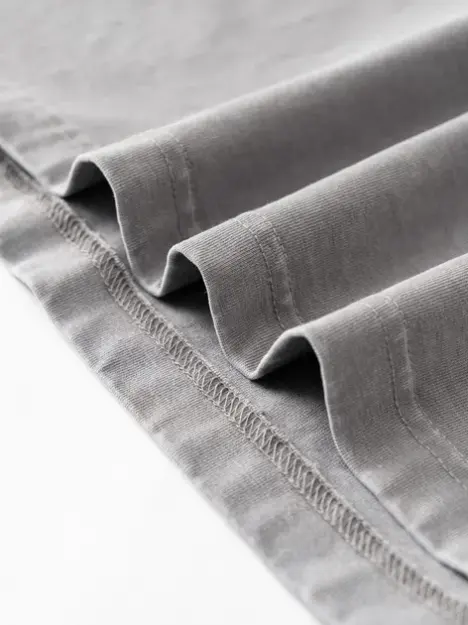
Find out whether the problem exists before sewing
With the garment flat, measure across the sleeve at the finished opening and at the intended line where the turned-up edge will sit. Use the same method on both samples. A flat width is useful as long as the tube is laid without twisting or pulling and the same points are used. Look particularly at the underarm seam. Imagine turning the bottom section up: a taper that narrows toward the sleeve edge will bring a small edge to sit against a larger area.
Pin or baste a short section without stretching it and see whether the folded edge can lie at the seamline. If the fabric cannot meet evenly without force before you sew, a different machine setting cannot make the two circumferences equal. For a new pattern, the sample room can review whether to true the turnback by reflecting the taper across the finished fold. For a finished garment you are altering, there may be too little allowance to reproduce the original construction. Ask what a new turned hem or a different finish would look like before cutting.
Check what changed when the seam was sewn
ISO 4916:1991 organizes stitched seams by their construction. ISO 4915:1991 describes stitch types separately. Photograph the layer arrangement as well as the seam on both faces. Coats’ T-shirt application guidance lists several stitch options for garment applications. The stitch appearance itself cannot establish whether the pattern pieces fit together.
If the unsewn fold lies flat but the sewn hem ripples, compare an unsewn strip with the stitched sample in the same direction. Have the sample room check feeding, stitch setup, thread, layer thickness and material recovery. A ripple throughout the hem and a fold that pulls up only at the underarm seam may need different changes. Compare the unsewn position with the finished sleeve before asking a factory to alter the entire pattern.
How we turn a visible defect into sample comments
In our T-shirt development process, the fabric trial and fit sample come before the pre-production sample locks the construction. Mark both sleeve opening width and hem depth on the same flat diagram. Add a front photo and an inside photo of the underarm turnback. If the opening looks right but the hem pulls, keep the required opening unchanged while asking for a pattern or process revision at the turnback.
Request a sample in the planned fabric, with the same sleeve taper and intended seam finish. Check at the sample’s intended size and again on the grade where the sleeve changes most. If the design is intended to be stretched during dressing, try that movement in the approved test rather than pulling a flat sample beyond its use. Our T-shirt sample approval checklist covers the broader checks that come after you have identified the hem problem.
Retain one untouched reference sleeve where practical. If the sample room sends two options, label which one uses the original turnback and which uses the revised shape. Compare them on the same size and fabric before judging one partly stretched sleeve against a different garment.
What to check when changes have a trade-off
You want to keep the exact original seam appearance
Ask the sample room whether it can reproduce the visible stitches on the new opening. If you are altering a tee, discuss how much length and allowance you would give up. If exact stitch match is less important than a smooth sleeve, have the tailor show an alternate finish on comparable cloth.
The hem looks fine flat but tight on the arm
Compare the finished opening and stretch with the wearer’s movement before changing the pattern. An opening that binds when the arm flexes is a fit issue even if the edge does not wave on the table. Preserve a finished sample so you can compare comfort and appearance together.
Only one colorway puckers after washing
Check it after the garment has dried and rested. Compare body cloth and stitch appearance with a correct sample made from the same fabric specification. Record the care conditions. A single observation from a different material cannot tell you whether to adjust the grade, the turnback or the production setup.
Share the sleeve where it first ripples
Send your flat sleeve measurements, the planned amount of shortening or hem depth, and two close photos of the fold. Send your T-shirt sleeve sample notes.
Working on a knitwear project?
Let’s talk yarn, gauge and timing.
Send a reference or tech pack and we will come back with a practical development route.