Use the location of the sensation to tell whether your merino sweater feels prickly across the fabric or where an edge touches you, then decide whether to ask for a different garment or revise a sample. A wearer on Reddit described a new sweater made with equal parts merino and cotton that prickled on bare skin. They wanted to know whether washing it would help. Start by comparing the fabric and its edges while the garment is dry and unwashed. A fiber-content label gives you the blend, while the finished knit and the parts that contact skin determine what you actually feel.
Last updated: November 28, 2026
What makes a new merino sweater feel prickly?
If the sweater might go back to the retailer, check its return policy before washing. Washing or wearing a piece repeatedly can make it harder to return, and a wash may change how the knit feels without fixing the contact point. If the discomfort starts at the neckline, find the exact place before treating the sweater as though all of its fabric feels the same.
Separate body fabric, rib and seam contact
Woolmark’s fiber guidance explains that fiber diameter is one factor in how wool feels. Naylor, Stanton and Speijers’ published study of wool base layers (2014) examined how fiber diameter relates to wearer perceptions of prickle. In a separate study of commercial knitted wool garments (2018), researchers found that fiber diameter mattered and that knit structure could affect the measured result. These studies help explain why composition alone cannot predict whether a specific garment will feel comfortable.
| Where you notice it | What to compare | What the comparison helps you decide |
|---|---|---|
| Most of the chest, back or sleeves | The inside of a body panel with the inside of another finished sweater | Whether the whole knit feels different to you |
| Only at the neck or cuffs | The ribbed edge and the nearby body fabric | Whether a different neckline or trim would be more comfortable |
| One line at the shoulder, underarm or side | The seam and the same area on the opposite side | Whether contact is localized to construction |
| At the neck label | The label corners and fabric immediately next to them | Whether the label position or edge is the likely source |
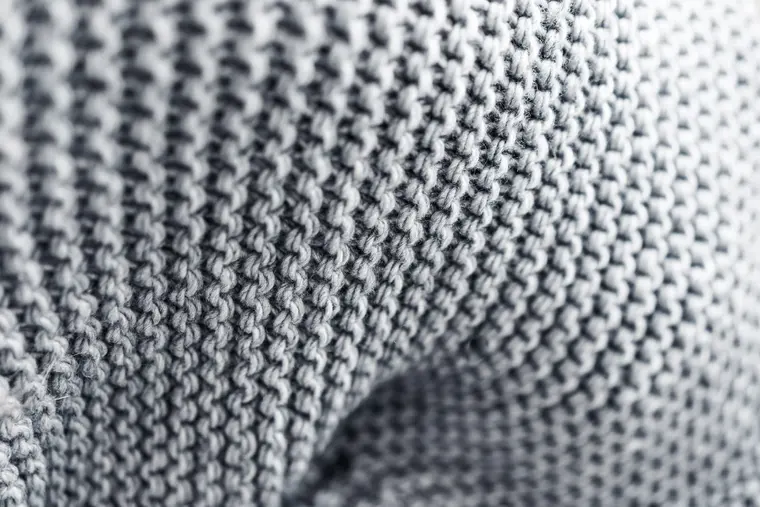
Look at the inside, not only the outside. Lay the garment flat and use your fingertips to find any label corner, seam ridge or rough edge. If you can handle the garment within the retailer’s rules, compare it over the layer you expect to wear, then note how the same place feels on exposed skin. A crewneck worn over a shirt can be comfortable even if you prefer a different piece against your neck. These observations describe contact and comfort, not a medical diagnosis.
What we compare on a finished merino sample
On our custom merino sweater program, the yarn, stitch and fit are developed on physical samples. Our published merino capsule example describes one shared merino yarn quality used across three gauges with a coordinated rib standard. Keeping the yarn reference steady makes it easier to see what changes with structure. The case does not report a wearer comfort score.
When specifying a sweater for bare-skin wear, ask the maker for two separate approvals. Use finished swatches to compare the body knit with the trim at the intended finish, then examine the neckline and cuffs on a sewn or linked sample. Compare the body and rib from the same sample under the same conditions. Put the sample reference, knit structure and finishing route in the approval notes so later production can be checked against what you actually handled. Our gauge and hand-feel guide explains how to make that kind of comparison useful.
Common concerns before you decide
Will washing make a merino-cotton sweater softer?
It might change the hand, but it cannot guarantee that the sweater will feel comfortable. For a product sample, compare an unwashed reference with a separate sample washed and dried according to its intended care instructions. If it is a retail purchase you might return, confirm the return terms first. Woolmark’s care guidance starts with the garment’s care claim rather than treating every wool garment as interchangeable.
Can I ask for a finer yarn and keep everything else the same?
You can request that comparison, although a different yarn may require changes to stitch settings or finishing to match the intended weight and drape. Ask the maker to explain which variables it changed and to show the body and trim together. Approve against a real swatch and fit sample instead of a yarn name.
What if the label feels soft and the neck still feels uncomfortable?
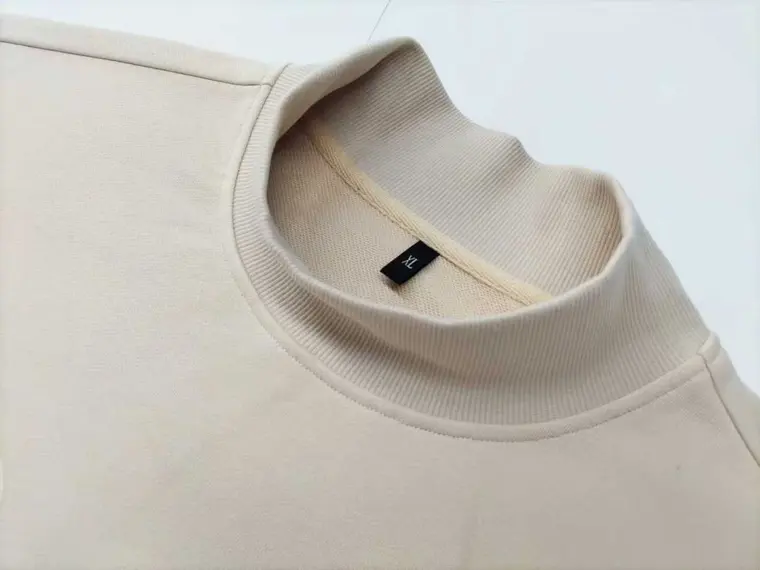
Check whether the rib itself presses against your neck or whether the edge rolls into contact. Compare a looser opening or another neckline shape on the intended fit size. Record the location so the next sample can change the relevant part of the garment.
Show us where the sweater needs to feel softer
Send the intended wearing layer, the material or swatch reference and a note showing the neck, cuff or body area that needs attention. Discuss your merino sweater sample.
Working on a knitwear project?
Let’s talk yarn, gauge and timing.
Send a reference or tech pack and we will come back with a practical development route.