
Use this guide to understand what fine gauge means for a sweater and compare finished swatches before you approve the yarn, stitch and hand-feel for bulk.
Last updated: November 26, 2026
If you are developing a knitwear collection, these are the variables to agree before a sample is made.
Gauge is about more than thickness
On a flat knitting machine, gauge generally refers to the number of needles per inch of the bed. A higher number means closer needle spacing. It does not specify the finished stitch density on its own. Gauge, yarn, fabric construction and finishing together affect weight, drape and stitch definition.
A practical starting point:
- 3–5 gauge: chunky sweaters, deep cables, heavy cardigans and statement textures.
- 7–9 gauge: mid-weight sweaters, classic cable knits and everyday cardigans.
- 12 gauge: lightweight sweaters, fine-gauge tops and trans-seasonal knits.
- 14–16 gauge: fine jersey, polished knit tops and lightweight layering pieces.
Gauge is not a quality ranking. The right gauge is the one that supports the silhouette and hand-feel your customer expects.
Yarn sets the hand-feel
The same gauge can feel very different in two yarns. Fibre, count, twist and blend all contribute. Treat descriptions such as a lofty cashmere or a clean cotton as intended hand-feels to verify on the finished swatch. If mohair or alpaca is proposed for a halo, compare the surface after the intended wash and finish. If a recycled content claim is part of the brief, confirm the supporting material route and documentation.
Ask for yarn composition, count and the proposed care route. Keep those fields with the swatch so they remain available when the same hand-feel needs to be reproduced.
Stitch structure changes the silhouette
Rib, jersey, cable, pointelle, jacquard and intarsia each behave differently. A 2×2 rib can add recovery and structure; a loose jersey can drape softly; a cable pulls in the fabric and changes the finished width. A jacquard adds colour but can also add weight and reduce stretch.
This is why a measurement chart alone is not enough. The stitch and yarn must be tested together on a swatch before the pattern is graded.
Finishing is part of the design
Washing, softening, milling, pressing and garment dyeing can change the final hand-feel and dimensions. A washed cotton knit may shrink and relax; a pressed merino may look cleaner but feel firmer. Agree the finishing route before bulk and confirm it on the pre-production sample.
A good knitwear brief describes how the garment should feel and move, not only how it should measure.
Which concerns should a fine-gauge swatch answer?
For a layering top, show how much coverage the buyer needs in natural light and where the fabric must recover after stretching. For a draped cardigan, compare the way the front hangs after being washed and dried by the proposed care method. A buyer looking for visible cable definition needs a different sample from a buyer who wants an unbroken jersey face under a jacket.
Decide what needs to be repeated before work begins. Write the machine gauge separately from the stitch count read on a finished swatch. Keep the yarn count system and ply in the same record. The Woolmark Company’s knitwear training manual discusses matching yarn and design to machine gauge. Compare the actual knitted result because yarn feed, knitting settings and structure affect the sample even where the machine label is identical.
| Concern | Practical comparison | Record |
|---|---|---|
| Coverage | Use the intended underlayer and compare in the same light and relaxed state. | Approved colour and area where show-through matters. |
| Softness and body | Handle both candidates after matching care and drying. Compare their drape when supported the same way. | Swatch reference and fabric finish. |
| Stitch definition | Compare the same design feature at the same scale and light angle. | Reference photo with stitch area marked. |
| Fit after care | Check the relaxed sample again after the chosen route and note any visible growth or skew. | Agreed starting points and the care conditions used. |
Softness alone can hide an unwanted stretch or an opening that loses its shape. If the sample is intended for a fitted cuff or neckline, handle the body and edge separately and compare which part recovers after the movement expected in wear. Ask the sample room to label the technical face and identify any area knitted with a different structure. A soft body is little evidence for a firmer rib if they have not been assessed together.
Compare one change at a time
Write the difference you want to isolate before ordering swatches. If the decision is finishing, hold yarn and stitch as steady as practical and compare two finished variants. If the decision is yarn, ask the technician which settings must change to run each yarn. Mark the change in your record. An approval made when both yarn and finishing changed can select a fabric cleanly, but cannot explain which input produced the difference.
Agree what the factory is offering for the next sample. Record the yarn reference, colour, gauge, structure, finish and date on the swatch itself or on its approval card. Add the expected price scope, such as whether any special finish is included. The yarn count and ply guide explains the specification language. Use the sweater fit and shoulder guide once you have a full garment to measure.
What the merino capsule kept consistent
In our published merino crewneck capsule, we used a shared merino yarn quality and a coordinated rib standard across styles made in three gauges. The tonal yarn dyes were signed off on swatches. It is a practical example of choosing separate checkpoints for material, gauge and colour, while fitting each style on the same size block. A buyer can ask which routes will use the same yarn and which differences need their own finished swatch.
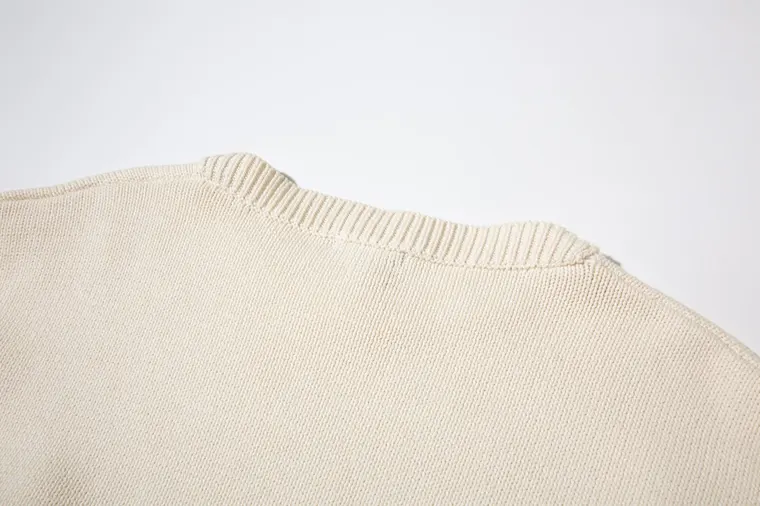
Keep both the approved and the rejected swatch through the next fit sample, especially if the first round changed more than one variable. If the new proposal feels firmer, ask for the sample card before blaming gauge. Once the production yarn is selected, request a test panel in the proposed bulk finish and compare it with the reference in the same dry state.
What to do when the first swatches disagree
Imagine two sample panels that have the same machine gauge and colour but different hand. If one was softened and the other was only pressed, ask for a pair finished the same way before treating the result as a yarn comparison. If the difference survives that check, look at yarn count, twist, blend and stitch settings recorded on the cards. Ask the sample room to explain which adjustments it made to knit each option.
A neater-looking panel can still fail on the wearer. If a cardigan has a soft body and a firm front band, compare a joined part or finished sample and see whether the band holds the edge where the design needs it. Lay each sample flat after the same rest period and record the state in which the sample was judged. A trim, stitch change or pressing change can alter what the wearer experiences at an edge without changing the body yarn.
Keep the cost question tied to the approved route. A supplier may quote a substitute yarn or a simpler finish to hit the target. Ask for those changes to be named and checked against the accepted swatch. If you relax a property such as hand-feel to meet cost, keep the replacement approval separate so a later repeat uses the current standard. Send the updated fabric approval alongside the garment measurements to avoid comparing a current fit sample against a retired swatch.
How to write a more useful brief
- Reference images of the silhouette and stitch you like.
- The yarn or fibre direction, or the hand-feel you want to achieve.
- Target gauge and weight, if you know them.
- Size range and grade rules.
- Stitch details, trims, neckline and rib proportions.
- Wash and care expectations.
- Target retail price and order quantity.
If the yarn and gauge are still open, ask for a small set of alternatives. Tell the supplier which properties and cost constraints must stay fixed while the options change.
Approve the swatch, not the photo
Approve a physical swatch for colour, tension and hand-feel, then approve the fit sample for measurements and proportion. Keep the signed swatch and pre-production sample as the bulk references. They give the buyer and factory a common basis for checking a difference in the finished garment.
FAQ
Does fine gauge always mean a lighter sweater?
It means closer needle spacing on the machine. Finished weight also depends on yarn, knit structure and finishing, so compare the actual fabrics at the intended coverage.
Can the same machine gauge give two different hand-feels?
Yes. Ask which yarn, stitch and finish each swatch uses. Record all three so you can reproduce the one you prefer.
Can a swatch replace a fitted garment?
Use it to approve material, appearance and hand. Approve measurements, proportion and behaviour in movement on the fitted garment.
Send us your sweater swatch brief. Include a reference style, intended layering, yarn direction, finish and the sample decision you need to make.
Working on a knitwear project?
Let’s talk yarn, gauge and timing.
Send a reference or tech pack and we will come back with a practical development route.

