
The sample came back at 400 GSM on the report and felt lighter than the 380 GSM garment beside it. Same cotton, same colour, same measurement chart. The difference was a loopback knitted looser, a yarn with less twist, and a finish that flattened the surface. The buyer held both, distrusted the number and approved neither.
A heavyweight sweatshirt fabric specification is not one number. It is a short chain of decisions — yarn count, stitch density, structure, finishing — and the GSM on the swatch is only where that chain ended this time. Change one link and the weight moves, or the weight stays and the hand does not.
What GSM actually measures
Grams per square metre is mass, not thickness. It is measured on a conditioned sample, usually from a cutter of known area, and it says nothing about how the cloth behaves in the hand or how it will wear. A compact loopback at 400 GSM and an open fleece at 400 GSM can differ in thickness by a third.
It also depends on when you weigh. Greige fabric, finished fabric and fabric after a wash carry different numbers, and a specification that does not say which one is being quoted will be argued about at approval. State the condition before you state the weight, and note the tolerance you will accept on either side of it.
Where the weight comes from: yarn count and stitch density
Two knitters can hit 400 GSM on the same machine. One uses a finer yarn with a tight loop; the other a coarser yarn with a long loop. The first is denser, heavier in the hand and usually dearer per metre. The second looks thick on the table and feels light on the body.
Ask for the yarn count, the machine gauge and the loop length, or the courses and wales per inch. Those three numbers explain the weight better than the weight does. Two mills quoting 400 GSM with different loop lengths are quoting two different fabrics, and only one of them matches your reference garment.
Loopback, French terry and brushed fleece
Loopback carries its yarn on the inside in loops; French terry pulls those loops into a flat back; brushed fleece raises and cuts them. The heavy hand buyers call substantial usually comes from density plus a raised inside, and brushing adds hand more than it adds mass.
Brushing also sheds fibre, so a brushed 400 GSM can weigh slightly less than the loopback it started from. If the claim on the hangtag is a weight, the fabric has to be specified and weighed after finishing, not before.

Heavyweight sweatshirt fabric specification: the fields to write
A heavyweight sweatshirt fabric specification needs six fields: fibre and yarn count, fabric structure, weight in GSM with a tolerance, stitch density or loop length, finishing route, and shrinkage after the stated wash. Write all six and two mills will quote the same cloth; write only the weight and they will quote three different ones.
Write the six fields, attach the swatch and keep the version. A mill that receives a weight alone will choose its own structure, and the swatch that comes back will be a reasonable answer to a question you did not ask.
Shrinkage and the weight after the first wash
Cotton jersey and fleece shrink. Compacting buys some of it back, and the wash protocol decides how much of the rest appears. A specification that quotes finished weight but not the wash routine leaves the buyer to discover the difference after the first domestic wash.
State the wash conditions, the number of cycles and the tolerance you will accept, then measure the sample after that routine rather than before it. The number that matters is the one the customer feels in six months, not the one on the cutter report.
Weight, warmth and the price line
Thickness and warmth travel together only up to a point. Air trapped in the structure insulates, and a dense loopback traps less air than a loose brushed fleece of the same weight, which is why a 400 GSM brushed fleece can wear warmer than a 400 GSM loopback that feels heavier on the table.
Separate the two questions in the tech pack. If the buyer wants warmth, specify the inside surface and the brushing; if the buyer wants weight and drape, specify the density instead. Brushed fleece hoodie development starts from the inside surface, while a crewneck sweatshirt programme usually starts from the drape, and the fabric brief should follow the garment rather than the other way round.
Specification sheet for the tech pack
Eight fields turn the argument into a table. Fill it once per style, attach it to the tech pack, and let the quote, the sample and the bulk order reference the same document.
| Field | What to write | What goes wrong without it |
|---|---|---|
| Fibre and yarn | Composition, yarn count, combed or carded | Substitution at the same GSM, different hand |
| Structure | Loopback, French terry or brushed fleece | Swatch looks right, inside feels wrong |
| Weight | GSM plus a tolerance, condition stated | Endless argument about whose number counts |
| Density | Loop length, or courses and wales per inch | Weight held, drape and thickness lost |
| Finish | Compacting, brushing, anti-pill treatment | Weight and hand move after finishing |
| Shrinkage | Limit after a named wash routine | Garment fits in the sample room, not at home |
| Colourfastness | Test method and grade required | Shade bleeds at the first wash |
| Weight after wash | Measured value and acceptable range | Customer sees a thinner garment than approved |
Two rows do most of the work. Density is the row buyers skip, and it is the one that decides whether 400 GSM feels like a sweatshirt or a heavier T-shirt. Weight after wash is the row that protects the claim on the hangtag. The same logic crosses styles: a zip-up hoodie can carry a slightly lighter body cloth and still feel heavier in the shop because of the placket, the zip and the doubled front panel.
Approving the sample: what to weigh and what to wash
On the sample, weigh a known area yourself rather than reading the mill sheet. Check thickness at three points, feel the inside for brush quality, and wash one piece before approval. If the weight or the hand moves, the specification is not agreed, whatever the approval email says.
Check the colour against the approved swatch under the same light, and check pilling on the inside where the brush sits. A fabric that passes on the table and fails after a wash has not passed.
Holding the specification in bulk
Bulk is where a specification either travels or does not. Horssle Knit samples in 7–12 days after fabric and tech pack approval, runs bulk production in typically 20–35 days after sample approval, and inspects to AQL 2.5. Ask for the weight check to be recorded at the start and at the end of the run, against the approved swatch.
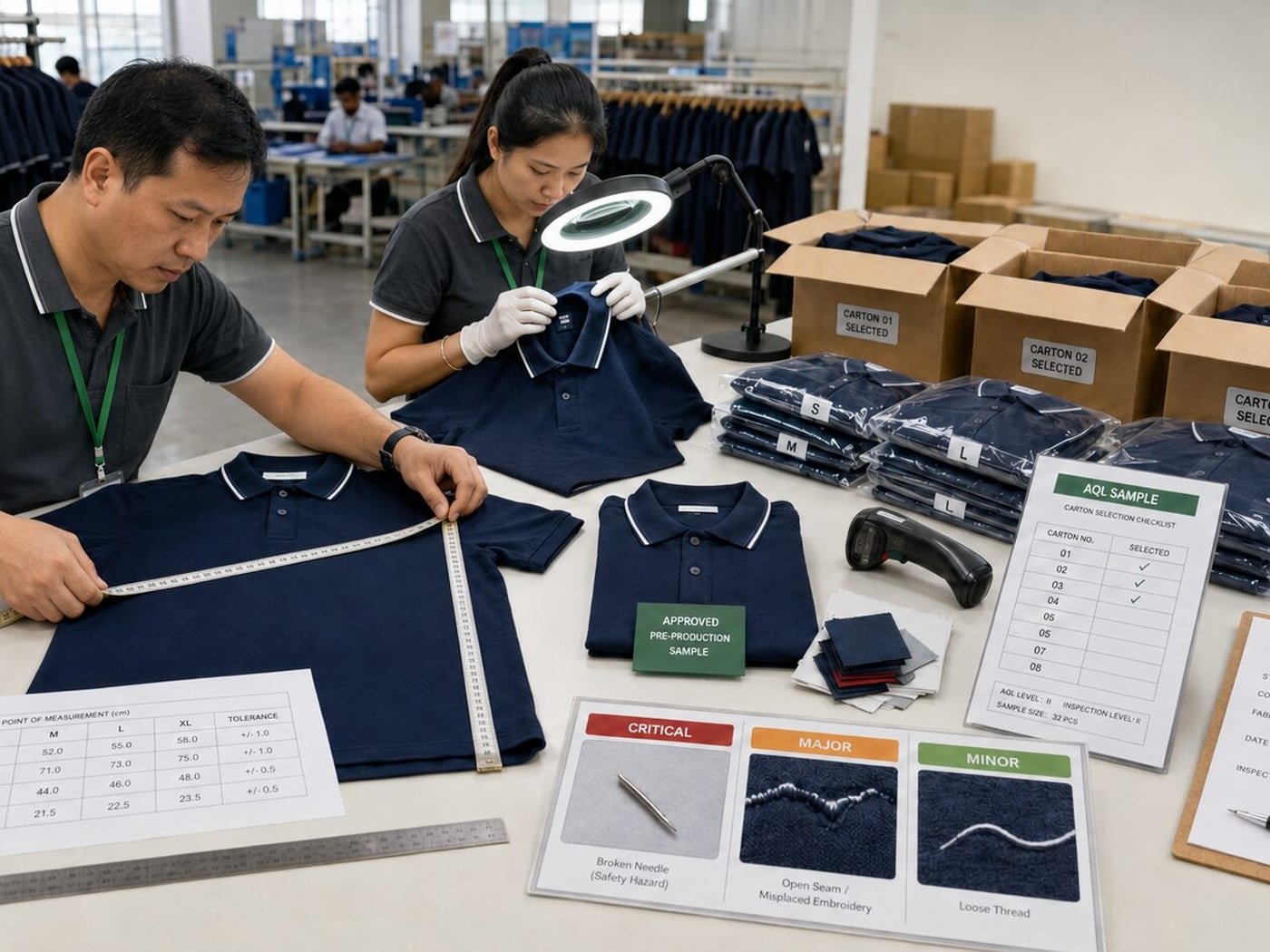
A minimum of 300 pieces per style applies, so the colour and size split matters as much as the GSM line: three colours and six sizes produce eighteen SKUs, and the small ones can sit on the same fabric lot as the large ones. If the weight is drifting across a lot, the split tells you where it will show first.
FAQ
Is a higher GSM always better for a heavyweight sweatshirt?
No. Weight is one property among several. A dense 380 GSM loopback can feel more substantial than an open 430 GSM fleece, and it usually costs less to make. Decide what the garment has to do — stand up on a shelf, hang straight, hold a print — and specify the structure that does it.
Can you produce a 500 GSM sweatshirt?
Weight follows from yarn, gauge and structure, so the honest answer is a sampling conversation rather than a promise at quotation stage. Ask for a swatch at the target weight, then a sample on the intended machine. A mill that confirms the number without a swatch is guessing.
Does brushed fleece weigh more than loopback?
Usually less. Brushing raises and cuts the inside loops, and some fibre leaves the cloth in the process. The raised surface adds warmth and hand, not mass, so a brushed fabric often needs a heavier greige to finish at the same weight.
Should the specification state weight before or after washing?
After, with the wash routine named. Buyers feel the garment after it has been washed and dried, so the tolerance should be tested that way. State the cycles, the temperature and the drying method, and give the factory a number it can verify.
Sources: OEKO-TEX Standard 100, EU Regulation 1007/2011 on textile fibre names, Intertek textile testing methods, Higg facility indexing, US CBP informed compliance, and The Woolmark Company on fibre specification.
Working on a knitwear project?
Let’s talk yarn, gauge and timing.
Send a reference or tech pack and we will come back with a practical development route.


