
A pullover inspection checks seams, neckline recovery and print placement. A zip-up adds a moving component: check the zipper, front symmetry, stops and the guard behind it. Where the buyer specifies AQL 2.5, apply the agreed sampling plan to lot acceptance and use a separate style-specific checklist to identify which defects to look for.
Last modified: November 23, 2026
The two styles share a body block and a fabric brief, which is why buyers compare pullover vs zip up hoodie manufacturing as if it were one route. It is not. The zip-up carries different trims, a two-panel front, a different decoration problem and a longer inspection list, and the differences show up first in the sample room and again at the final inspection.
What changes at pattern stage?
A pullover front is one piece. A zip-up front is two, plus a placket allowance down each side and a zip guard behind. That single decision moves the marker, the cutting labour, the sewing sequence and the way the print sits across the centre.
It also changes fit tolerance. The zip closes the front, so the two panels must meet without pulling; a millimetre of pattern error at the placket reads as a gap at the chest. On a pullover the same error disappears into a seam allowance, which is why a pullover block can look fine on paper and the zip-up made from it does not.
Where the cost sits: trims and operations
The zip is the visible cost. The invisible ones are the operations around it: setting the zip, matching the two fronts, adding the guard, and burying the top and bottom stops so they do not sit proud. Those operations are why a zip-up quote that looks close to the pullover often is not.
| Development point | Pullover | Zip-up |
|---|---|---|
| Front panel | One piece, cut on the fold | Two panels plus placket allowance |
| Trims | Drawcord, eyelets, ribbing | Same plus zip, slider, stops, guard tape |
| Sewing operations | Standard seams and neckline join | Added zip set, panel matching, stop finishing |
| Decoration | One registration across the front | Split registration, or placement clear of the zip |
| Sample checks | Neckline, hood join, fit | Plus zip length, symmetry and puller travel |
| Inspection focus | Seams, print, measurement | Same plus closure function and front alignment |
| Minimum per style | 300 pieces | 300 pieces |
None of these lines is large alone. Together they explain why two quotations for the same fabric and quantity can sit apart, and why a buyer comparing them needs the trims list attached to both. A quote that lists “zip” without the guard tape, slider type and stop finish is only half a trim line. The weight of the body cloth matters here too: heavier fleece puts more strain on the placket, which is why heavyweight sweatshirt development tends to sample the closure earlier.
Print and embroidery: layout is a different problem on a zip-up
A full-front print on a pullover is one registration. On a zip-up the same artwork crosses an opening that moves when worn, so the design has to be split and registered on both panels, or placed to avoid the zip altogether. Neither option is free, and the choice belongs in the tech pack rather than in the print shop.
Embroidery is more forgiving but not free either: a chest logo works on both styles, a large back design works on both, and a front print that spans the placket is where rework begins. On a brushed inside, the ink behaves differently again, so brushed fleece hoodie development tests the print on the pile rather than on a flat swatch. Decide the decoration before the pattern is finalised. A design that has to clear the zip can lose 30 mm of width, and that change is cheaper on paper than on a screen.
How to approve artwork that crosses a zipper
If the lettering has to read as one image, close the zip before checking it. Ask the decorator to mark a keep-clear zone on the artwork proof using the actual zipper, seam construction and printing fixture. A viable placement on a pullover does not establish a viable placement on a zip-up, and a flat artwork proof cannot show how a slider will interact with the garment layers.
| Artwork requirement | Placement to sample | Check on the decorated garment |
|---|---|---|
| Continuous wordmark with no visual break | Use an uninterrupted zone such as one chest panel or the back | Confirm the wordmark remains readable at the approved size on the smallest size that uses it. |
| Motif intentionally split at centre front | Approve separate left and right artwork with a visible break for the zipper | Zip the garment; compare the heights of key landmarks on both halves without pulling the front flat by hand. |
| Artwork sits near the zipper without crossing it | Dimension from the centre front and a second fixed garment point | Cycle the slider and check that the print edge, seam and any backing stay clear of its travel. |
Photograph the garment closed, then open it and record the print edge and zipper tape on the inside. Repeat the visual check after the agreed care treatment. Keep the closed garment photograph with the approved proof so factory and buyer are comparing the same alignment at bulk inspection. YKK’s zipper precautions explain why fabric clearance matters at the slider.
Keep the printer’s proof separate from the fit photograph. The proof fixes the dimensions and placement; the photograph records how the finished panels meet in wear.
Pullover vs zip up hoodie manufacturing: what the comparison turns on
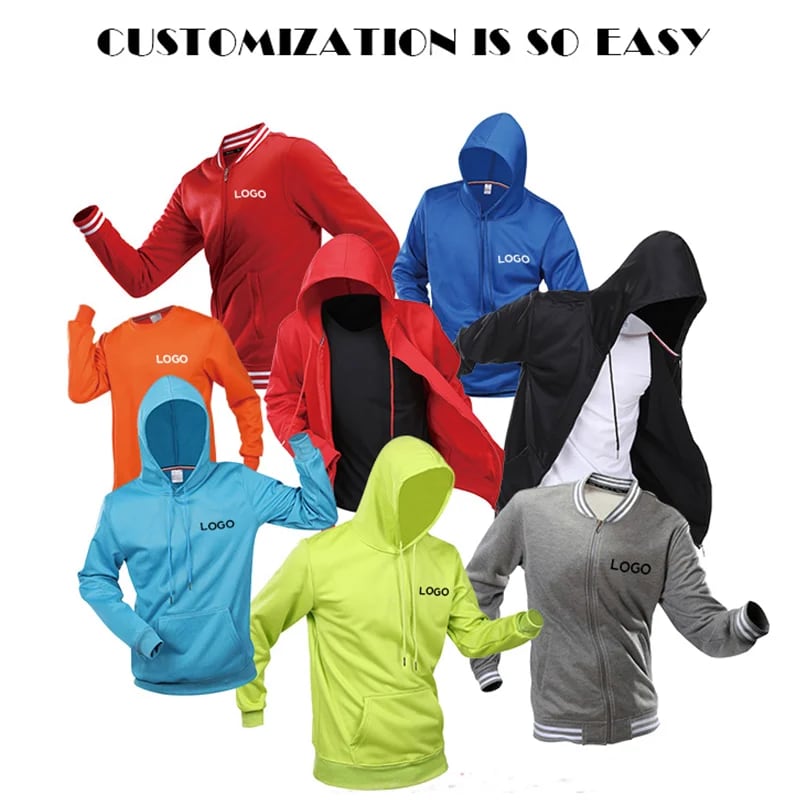
Pullover versus zip up hoodie manufacturing comes down to four differences: a two-panel front instead of one, a zip and placket assembly instead of a plain seam, split decoration registration, and an inspection list that includes a moving closure. Everything else — fabric, fit, finishing, packing — can be identical.
That last point matters for procurement. If the fabric, fit and decoration stay constant, the two styles can be compared on the closure alone, and the price difference can be read for what it is. If the fabric changes at the same time, the buyer learns nothing about either style and usually blames the zip.
Zip symmetry: the inspection point buyers miss
A zip that closes cleanly on the table can pull apart on the body. The checks are physical. The two fronts meet at the same point top and bottom, the tape lies flat without a wave, the puller runs without catching the guard, and the stops sit inside the seam rather than on top of it.
Symmetry is a measurement, not an impression. Ask for the left and right front to be measured at the same points on the chart, at each size, and compare the two. On bulk, add a wear check: someone puts the garment on, zips it, and looks at the chest and collar. A zip that passes the table and fails the body is a pattern problem wearing a trims costume.
Fit and sizing: the zip changes the tolerance
A pullover has stretch and forgiveness. A zip-up has a fixed front, so the chest measurement carries more weight, and the hood has to sit correctly whether the closure is open or shut. That is a fit question rather than a sewing question, and it is settled on the sample rather than in the cutting room.
Ask for graded measurements on both front panels, not only the body. The difference between left and right front at each size is where the fit argument starts, and it is far cheaper to catch on a chart than in a shipment. A chart that lists only chest, length and sleeve cannot catch the asymmetry that makes a zip-up look wrong on a hanger. A crewneck sweatshirt avoids the question altogether: no closure, no placket tolerance, no split registration across the front.
Sampling: what to ask for on each style
On a pullover, sample the neckline, the hood join and the print placement. On a zip-up, sample the placket, the zip length, the pocket bags and the decoration registration across the opening. Horssle Knit samples in 7–12 days after fabric and tech pack approval, so the sample round is long enough to correct a placket and short enough to keep a season on schedule.
Ask for both styles in one sample round when the fabric is shared. Comparing them side by side on the same body, in the same colour, is the fastest way to see what the closure actually costs. It also settles the decoration question early, while the print file is still open.
Inspection and AQL: where the two styles fail differently
Pullovers fail on seams, neckline recovery and print registration. Zip-ups fail on those, plus zip function, front symmetry and placket alignment. Even when the buyer uses the same AQL 2.5 sampling plan for both styles, the relevant faults differ. Write the fault list for each construction.
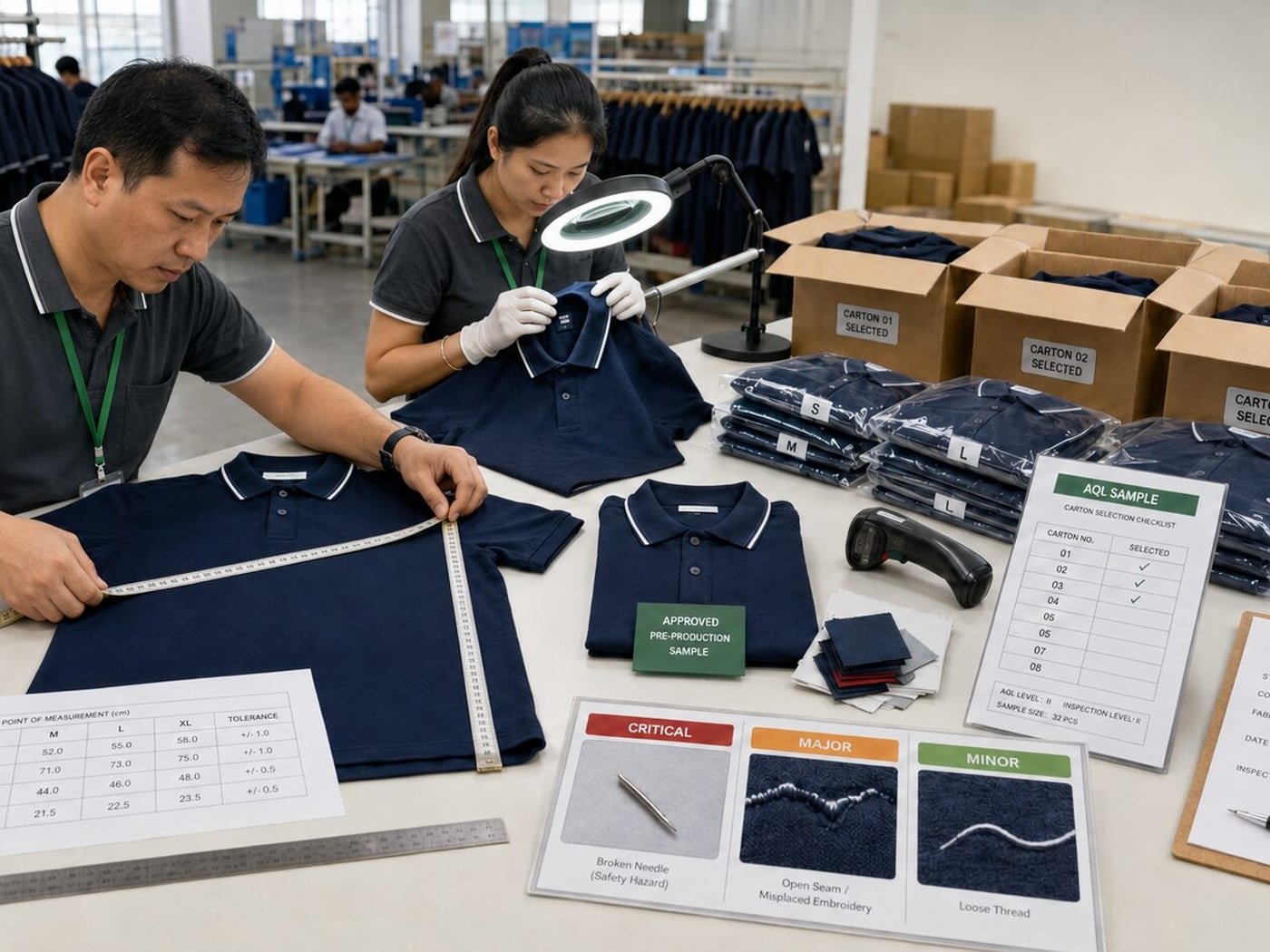
Bulk runs in typically 20–35 days after sample approval, and the zip-up should be inspected early in that window rather than at the end, because a placket fault found late is a queue rather than a correction. A minimum of 300 pieces per style applies to either, so a programme that runs both styles carries two minimums unless colour and fabric are shared across them.
One more line belongs in the comparison. Trims for a zip-up are specified by type: zip tape width, slider, puller, stop finish. If the tech pack lists only “zip”, the sample and the bulk can legitimately use different hardware, and the buyer will experience that as an inconsistency rather than as a specification gap. Write the hardware, or accept what the factory chooses.
Questions about zip-up and pullover approvals
Is a zip-up hoodie more expensive to make than a pullover?
Usually yes, by the cost of the zip, the placket work and the extra cutting and matching. The gap is smaller than buyers expect when fabric and decoration are identical, and larger when a front print has to be split around the opening. Ask for both quotes on the same fabric and the same quantity before reading the difference.
Can the same pattern be used for both styles?
No. The body block can be shared, but the front becomes two panels with a placket allowance, and the neckline and hood join often need adjusting. Treat the pullover block as a starting point rather than a finished pattern, and sample the zip-up separately.
Which style is faster to produce?
The pullover, because it has fewer trims and fewer operations. The difference shows at sampling and again at inspection, where the zip-up carries more checkpoints. Neither style changes the published window of 20–35 days after sample approval, but the zip-up has less slack inside it.
Do both styles need a full measurement chart?
Both do, and the zip-up needs graded front-panel measurements as well. A chart that lists only body measurements cannot catch the left-right asymmetry that makes a placket look wrong, and that fault is expensive to correct after cutting.
Sources: OEKO-TEX Standard 100, EU Regulation 1007/2011 on textile fibre names, Intertek textile testing methods, Higg facility indexing, US CBP informed compliance, and The Woolmark Company on fibre specification.
Working on a knitwear project?
Let’s talk yarn, gauge and timing.
Send a reference or tech pack and we will come back with a practical development route.

