
Put a 140 GSM and a 220 GSM T-shirt of the same fit on a table and the heavier one carries roughly half again as much cotton per square metre. Put both on, and the difference in the hand can be smaller than the numbers suggest, because the yarn and the knit decide as much as the weight.
That is the comparison in one line: weight sets a range, structure and yarn set the feel. A buyer choosing between the three numbers is really choosing a use case, and the trade-offs run in three directions at once: opacity, drape and how the fabric takes decoration, against warmth, weight on the body and cost per piece.
140 vs 180 vs 220 GSM T-shirts: the short answer
140 GSM is light, airy and suited to warm climates, layering and promotional runs. 180 GSM is the general retail weight, opaque enough for most colours. 220 GSM is a structured, opaque fabric for premium and oversized fits. Compare them at the same fit, colour and wash, and judge the hand.
Everything below tests that short answer rather than replacing it. The numbers describe a fabric, and a fabric only becomes a shirt once someone chooses a block, a yarn and a finish. That sequence is what a T-shirt development program runs on.
What GSM measures, and what it does not
GSM is the weight of one square metre of fabric, measured before the garment is cut. It is a property of the cloth rather than of the shirt, so the same 180 GSM jersey can arrive as a boxy tee or a fitted one and weigh differently as a finished garment.
The number says little on its own about thickness, opacity or durability. A compacted 180 GSM can be denser and more opaque than a loosely knitted 200 GSM, and a brushed or peach finish changes the surface without moving the weight much. Read GSM as a starting coordinate rather than a quality score.
It is also easy to check, which is why it gets quoted so often. Cut a 10 cm by 10 cm square from a flat panel, weigh it in grams, and multiply by 100. The result is the fabric weight of that sample, and it is a practical way to confirm that the cloth on the table is the cloth on the order.
The three weights here are all cotton single jersey, the usual starting point for a custom cotton T-shirt program. The same reasoning applies to a poly-cotton blend, though the hand moves with the blend ratio, so the number cannot be transferred across fibres without samples.
The three weights side by side
The table describes the same single jersey construction at three weights. Change the yarn count, the knit or the finish and the cells move, which is the reason to compare samples rather than descriptions.
| Weight | Opacity | Drape | Where it fits | Decoration behaviour |
|---|---|---|---|---|
| 140 GSM | Sheer in pale colours; a dark underlayer shows | Fluid, follows the body | Warm-weather retail, layering, event and promotional runs | Large prints can show through the back; a white base or higher mesh helps |
| 180 GSM | Opaque in most colours | Soft, holds a relaxed shape | General retail, uniform and merchandising programs | Takes water-based and plastisol ink evenly |
| 220 GSM | Fully opaque | Structured, holds a boxy silhouette | Premium, oversized and heavyweight ranges | Holds heavy ink without cockling; embroidery sits without pucker |
Two of those rows are judgement calls rather than measurements. Opacity depends on the colour and the yarn, and drape depends on the fit as much as on the fabric, so treat the table as the set of questions to put to the samples.
None of the three transfers directly to a gym T-shirt program, where the knit is chosen for moisture handling and the usable weight range sits outside these numbers.
Opacity and drape: where the weight shows
Opacity is the first difference a wearer notices, and it is a colour problem as much as a weight problem. A 140 GSM white tee is close to transparent in sunlight, while the same fabric in black hides everything. A buyer who tests only in white, or only in black, gets surprised by the middle of the range. Test the palest colour in the line, because that is the shade where a weight is judged and where confidence in a supplier usually thins.
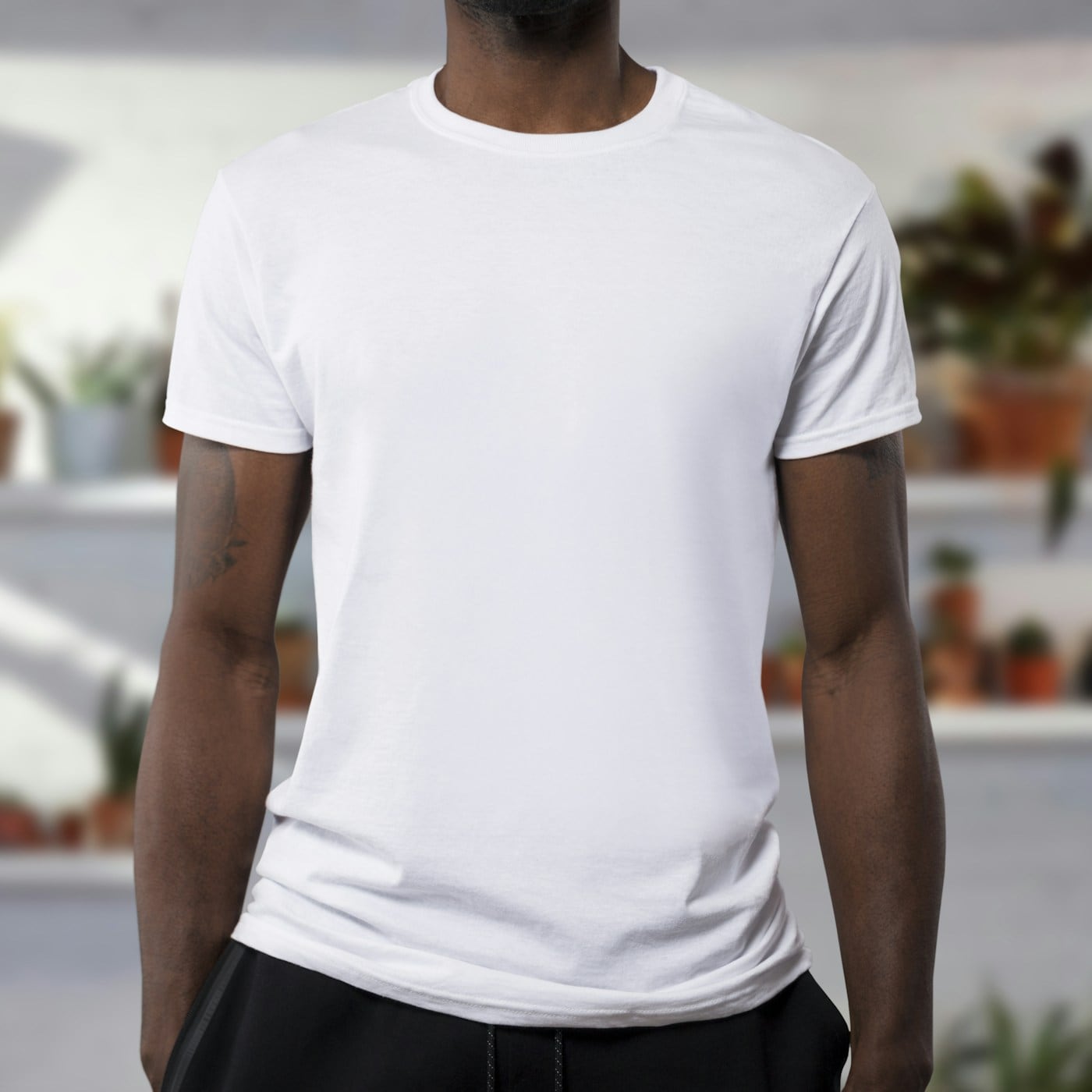
Drape is the second. A 140 GSM jersey falls and follows the body, which suits a fitted or layered look. A 220 GSM holds its own shape, which is why it is the usual choice for a boxy or oversized cut; on a slim block the same fabric can read as stiff rather than substantial.
Yarn count and structure: why 180 can feel heavier than 200
Two shirts can carry different numbers and feel the same, or the same number and feel different. A finer yarn knitted at a tighter stitch density produces a denser surface at the same weight. A heavier yarn in a looser knit feels lighter and airier in the hand, even when the scale disagrees.
Structure moves the number too. Single jersey, interlock and rib behave differently at the same GSM, and a compacted finish adds density without adding grams. When a supplier quotes only a weight, ask for the yarn count, the structure and the finish in the same line, then compare samples.
Shrinkage and the finished weight
The figure on the fabric card is the weight before washing. A tubular knit and an open-width knit shrink differently, and a compacted fabric has already taken part of that shrinkage out before it reaches the cutting table. What the wearer receives is the finished weight, after the garment wash.
That is how two fabrics quoted at 180 GSM become different shirts. Ask whether the weight is quoted before or after finishing, and confirm it on a washed panel instead of the swatch. A tee that loses a few per cent of its length in the first wash has changed the fit, whatever the card says.
Decoration on each weight
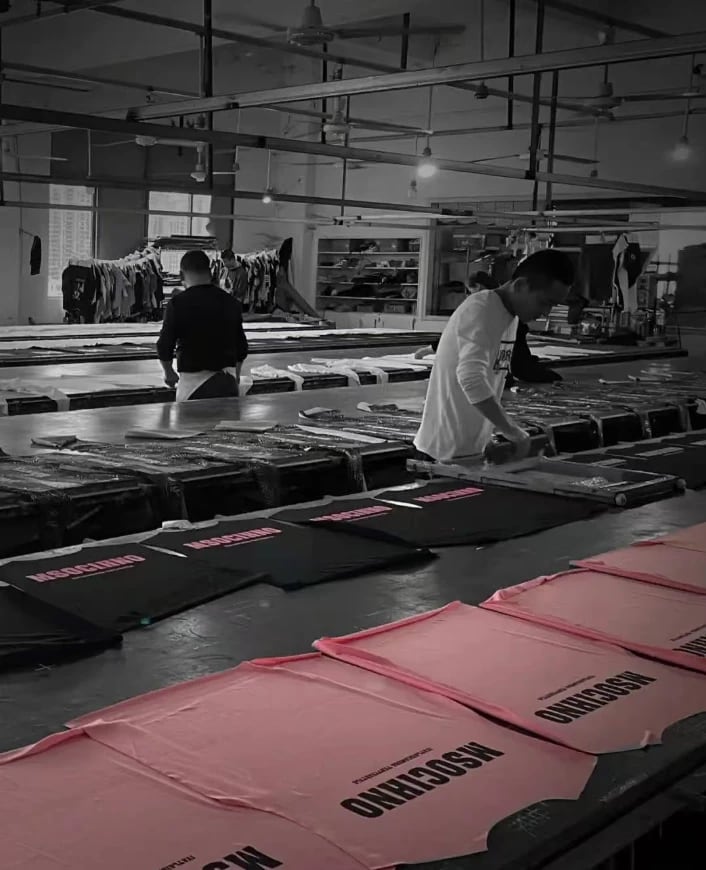
On 140 GSM the print is a design decision as much as a production one. A large solid block on a light fabric shows through the inside, and a plastisol layer adds weight and stiffness to a shirt that was chosen for its lightness. Water-based ink keeps the hand closer to the cloth.
On 220 GSM the constraint reverses. The fabric can take a heavy ink layer or a dense embroidered logo without cockling, but a large print on a structured shirt can feel boardy. Place the decoration where the fabric moves least, and test the placement on a panel rather than on a flat drawing.
The middle weight is where most programs land, because 180 GSM tolerates both methods. It is also the weight where a good fabric and a poor one look most alike in a photograph, which is one more reason the comparison belongs in your hands.
Comparing samples under the same conditions
A comparison is worth only the conditions it was run in. Order the three weights in the same fit, the same colour and the same finish, then compare them in one session rather than three.
Weigh each shirt, measure the chest and body length flat, wash all three the same way and measure again. Photograph them together with a tape measure in frame. The differences that survive that process are the ones worth writing into the specification.
| What to record | How | What it tells you |
|---|---|---|
| Garment weight | Weigh each shirt on the same scale | Confirms which fabric actually arrived |
| Flat measurements, before and after wash | Measure chest and body length at the same points | Shows shrinkage and whether the block still matches |
| Opacity | Hold each shirt against a window in daylight | Shows what the colour hides and what it does not |
| Decoration | Photograph the print or logo at the same distance | Shows how each surface took the same artwork |
Keep the washed samples. A specification written from memory of a swatch is the most common reason a reorder arrives at the wrong weight.
FAQ
Is 180 GSM a good T-shirt weight?
For most retail programs, yes. It is opaque enough for pale colours, heavy enough to hold a shape through washing, and light enough to sell in warm markets. That range is also its limitation: it is the weight a buyer can specify without knowing the end use, so it rarely offends and rarely stands out.
Is 220 GSM too heavy for summer?
Not necessarily. Weight and breathability are different properties, and an open-knit 220 GSM can breathe better than a tightly knitted 180. Test the fabric in the climate it will be worn in rather than judging by the number, and check how it feels after a wash, when the surface has relaxed.
Does a higher GSM mean better quality?
No. Weight is one property among several, and a heavy fabric can be loosely knitted, poorly finished or unstable after washing. Quality shows in the yarn, the consistency of the knit, the shrinkage figure and the way the garment survives a wash trial.
How can I check the GSM of a finished shirt?
Cut a 10 cm square from a flat area away from seams and rib, weigh it in grams and multiply by 100. On a finished garment the result is approximate, so use it to confirm a specification rather than to replace the fabric card.
Sources: OEKO-TEX Standard 100, EU Regulation 1007/2011, Intertek, Higg, US CBP and The Woolmark Company.
Working on a knitwear project?
Let’s talk yarn, gauge and timing.
Send a reference or tech pack and we will come back with a practical development route.

