
The number that settles most print-method arguments before a sample is pulled is 300. That is the published minimum per style at Horssle Knit, and at that run length the arithmetic becomes visible: screen printing carries a fixed setup for every colour, direct-to-garment carries almost none but bills per piece, and heat transfer sits between the two depending on the film.
Last modified: November 23, 2026
A buyer weighing screen printing vs DTG vs heat transfer is rarely comparing three prices for the same thing. Each method brings its own setup, per-piece cost, fabric preferences and failure modes after washing. Read the comparison as a price table and the print that looked right in the sample room arrives wrong on the shelf.
Screen printing vs DTG vs heat transfer: the short answer
Screen printing pushes ink through a mesh and suits flat artwork in solid colours at volume. DTG prints directly onto the garment and suits detailed or photographic artwork without setup. Heat transfer applies a printed film or vinyl with heat and pressure, and suits small runs and synthetic fabrics.
None of the three is universally right. Each works under a set of conditions and creates problems under another, which is why the decision belongs beside the artwork file and the fabric specification.
Where the money goes in each method
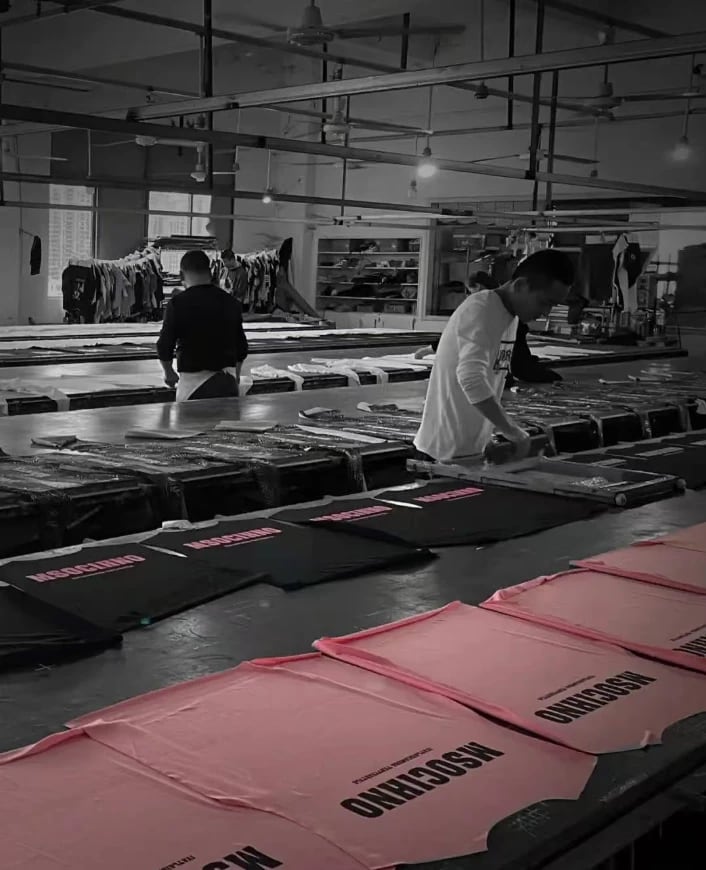
Screen printing costs split into a fixed part and a running part. The fixed part is artwork separation and one screen per colour; the running part is ink, machine time and the labour of loading and unloading each garment. Screens are made once and used for the whole run, so the fixed cost is divided across the order.
DTG has almost no fixed part and a higher per-piece cost. There is no screen, so a ten-colour design costs the same to set up as a one-colour design. What rises instead is machine time: each garment is printed individually, and pretreatment adds handling before and after printing.
Heat transfer splits again by type. A printed transfer film is produced separately and pressed onto the garment, so the cost sits in the film and the pressing time rather than in screens. Cut vinyl is slower on fine detail and usually kept to simple shapes and lettering.
| Cost driver | Screen printing | DTG | Heat transfer |
|---|---|---|---|
| Setup | One screen per colour plus separation | Artwork file only | Film or vinyl preparation |
| Per-piece cost | Low and stable across the run | Higher, driven by machine time | Moderate, driven by film and pressing |
| Effect of more colours | Rises with each colour | No change | Rises with film complexity |
| Effect of a larger print | Modest | Noticeable, slower pass | Rises with film area |
| Fabric sensitivity | Needs a flat, absorbent surface | Cotton-rich, pretreated | Wide, including synthetics |
| Typical fit | Bold graphics at volume | Detailed artwork at any run length | Names, numbers and small runs |
That table is about structure, not about a quotation. Two factories can quote the same method and reach different numbers because their screen count, ink system and press setup differ.
Artwork decides more than the quotation does
Colour count is the first parameter. Six spot colours need six screens, six passes and six registration points; two need two. Gradients and photographic detail are the second: screens reproduce them poorly, so the artwork has to be separated into halftones, which changes how the print reads on fabric.
DTG handles gradients natively and keeps fine detail, but the ink sits on the cotton surface and reads softer than a plastisol print. Fine line work survives better on DTG than on a coarse mesh, a difference worth checking on a physical sample rather than a monitor.
Heat transfer is limited by the film. Fine detail can be reproduced, but the film has an edge, and that edge shows on a dark garment where the carrier is visible. Large solid areas on a transfer also feel stiffer than a screen print of the same size.
Fabric decides what the ink can do
Screen printing needs a surface that accepts ink and holds it. A flat cotton jersey takes plastisol or water-based ink well; a textured or heavily brushed fabric breaks the print across the surface. Stretch matters too, because an ink film that does not move with the fabric cracks at seams and across the chest.
DTG is a cotton process. Blends with a high polyester content need pretreatment and a different ink set, and the colour still reads differently on synthetic fibres. If the program uses a poly-rich performance jersey, DTG moves down the list quickly.
Heat transfer is the most tolerant of synthetics, which is why it appears so often on polyester training tops and sports numbers. The trade-off is hand feel and breathability over large areas, plus a film that can lift at the edges if pressing drifts.
Compare print methods on the actual shirt fabric
Run each shortlisted method on the intended shirt fabric and colour. Supply the same artwork file and print dimensions. Mark the finest line that must remain open, the solid area that must look even and the edge that must stay clean. A method can pass on a light cotton shirt and still need a second proof on a dark or blended version. If those versions are in the order, keep distinct approvals for them rather than carrying the light-shirt sign-off across.
- Screen printing: Check ink coverage on the solid area and registration where colours meet. Look at the inside of the garment as well as the face if the brief limits how much ink is felt against the body.
- DTG printing: Check whether the thinnest marks stay legible and inspect the surrounding fabric for visible pretreatment marks. Ask which pretreatment and ink system the decorator used. Epson’s production guide shows that pretreatment and ink fixation depend on the printer and substrate.
- Heat transfer: Check the perimeter for lifting after the intended care treatment and look beyond the printed area for pressing marks. Record the transfer system used; transfer films and adhesives should not be treated as interchangeable.
Keep one approved piece per fabric and colour with the artwork revision and print method recorded. When the production blank changes, compare the replacement against the same visual and wash checkpoints before approving a new proof. Store the unwashed and washed samples together so a later reorder can be judged against the result that was actually signed off.
Quantity: fixed cost against per-piece cost
Below the published minimum of 300 pieces per style, the maths changes, because a fixed setup is divided across fewer garments. That does not make low-volume screen printing impossible; it makes it a question of how much of the order is spent before the first garment is printed.
Above that threshold the balance shifts toward screen printing for solid-colour artwork, because the setup is paid and each extra piece adds only ink and press time. DTG stays flat in setup but keeps its per-piece cost, which suits short runs and detailed artwork.
The honest comparison is a total for the order, not a unit price. Ask each supplier for the same specification: same garment, print size, placement, colour count and packing. Without that, the quotations describe three different products.
Hand feel and wash: what to approve on a sample
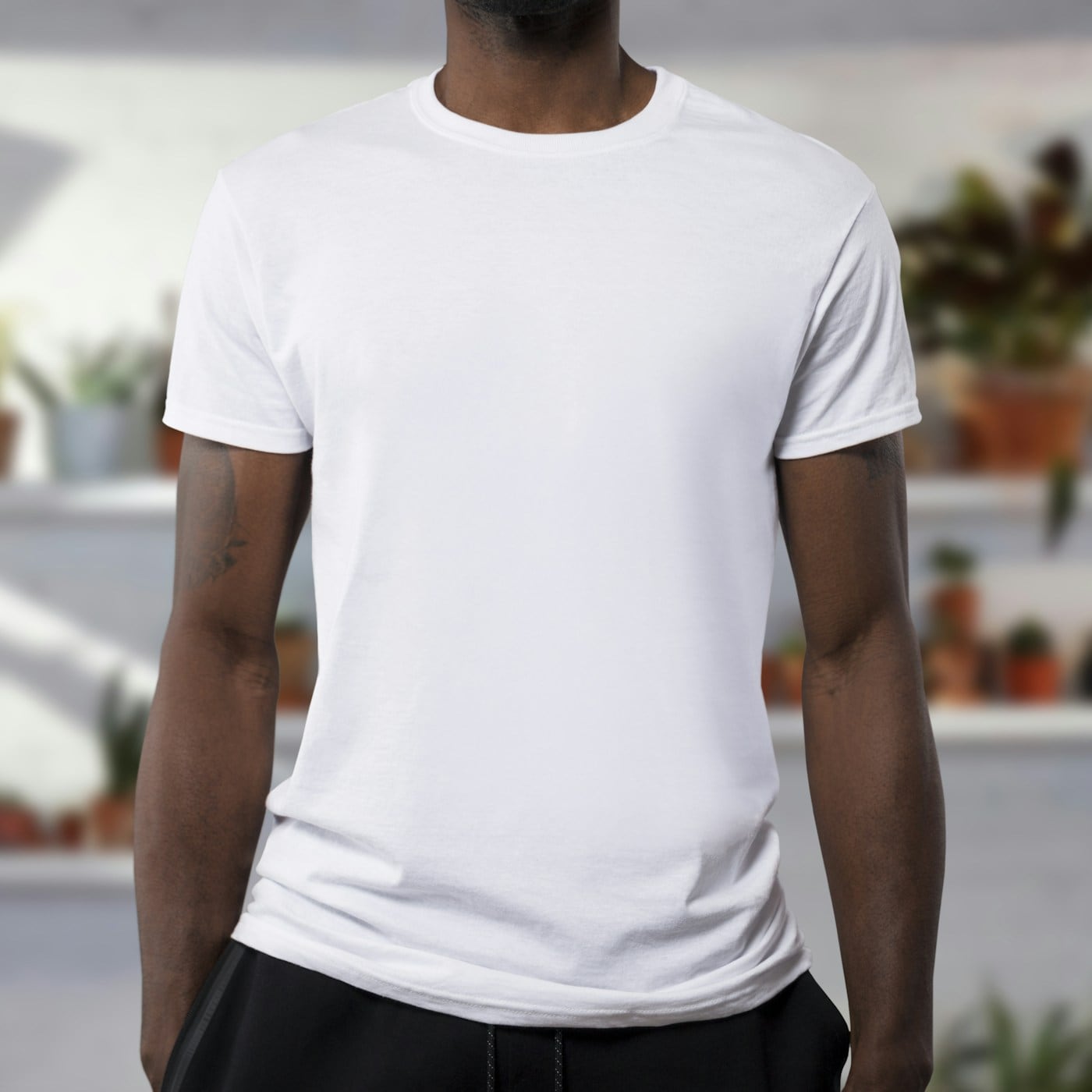
Every method feels different in the hand. A plastisol print sits on top of the fabric with a defined edge; a water-based print sinks in and leaves a softer surface. DTG feels light but slightly grainy on dark shades because of the pretreatment. A transfer film feels like a film, especially over a large area.
Wash performance is where samples earn their keep. Wash a printed sample the way the care label will tell the customer to wash it, then inspect seams, edges and stretch zones. Cracking at the shoulder seam, lifting at the hem or a colour shift after the first wash are all visible before bulk.
Ask what the sample proves. One print on a flat panel does not prove behaviour on a curved chest, on a seam, or after repeated washing. The care label and the print method should be written together, because a transfer that needs a cool iron and a label that permits a hot one will produce complaints.
Placement, size and number of print positions
Each print position adds a setup and a handling step, whichever method is used. A left chest logo and a full back print are two positions and two operations on the floor. Buyers who budget for one and specify three find the difference at the quotation stage rather than the design stage.
Size matters as much as position. A print spanning the full chest needs a platen that supports the garment flat; one that wraps over a side seam needs a different setup again. On a heavier tee, a large print can stiffen the front panel enough to change how the garment hangs.
Placement also interacts with fit. On an oversized body panel, a print scaled for a regular tee sits high and small. Where a program covers both fits, specify artwork per fit rather than applying one file to both.
Questions about choosing and approving a print method
Which method suits a one-colour chest logo?
Screen printing is usually the natural fit at volume: one screen, one pass, a stable per-piece cost. DTG handles it too and avoids setup entirely, which suits very short runs. Heat transfer works for a small logo on a synthetic garment.
Can DTG print on dark shirts?
Yes, with pretreatment and a white ink layer under the colour. The pretreatment is what makes dark-garment DTG feel slightly heavier and look slightly grainy up close. Wash performance then depends on the pretreatment as much as on the ink.
Does heat transfer last as well as screen print?
It depends on the film and the pressing, not the method alone. A well-pressed transfer on a suitable fabric holds, but it can lift at the edges over time and is more sensitive to heat in the wash and the iron. Judge it on a washed sample.
How do we compare three quotations fairly?
Give all three the same garment, print size, placement, colour count and packing. Then compare the order total and the number of print positions, not the unit price. A quote that omits a position or uses a lighter garment is not a comparison.
Choosing the method with the sample in hand
The decision is properly made with three things on the table: the artwork file, the garment and the quantity. Given those, a printer can say which method will hold the detail, survive the wash and price sensibly across the run.
Ask for one sample per method when the artwork is borderline. Two extra samples cost little next to a bulk run printed with the wrong process, and the difference in hand feel is obvious within a minute of handling.
Send artwork, fabric direction and target quantity together. Our cotton T-shirt development notes cover how fabric weight affects print surface, the oversized fits have their own placement rules, and performance T-shirt programs usually land on transfer or a specialist ink. Sampling is 7–12 days after fabric and tech pack approval, with bulk typically 20–35 days after sample approval.
Sources: OEKO-TEX Standard 100, EU Regulation 1007/2011 on textile fibre names, US CBP informed compliance publications, Intertek, Higg and The Woolmark Company.
Working on a knitwear project?
Let’s talk yarn, gauge and timing.
Send a reference or tech pack and we will come back with a practical development route.

