
Two sweatshirts, same weight, same shade, same fit on the hanger. One is all cotton, the other a cotton-rich blend with a small polyester share. After ten washes they are no longer the same garment: one has softened and drawn up slightly at the body, the other has held its length and kept a flatter surface. Neither result is automatically the one a buyer wants.
Cotton vs Cotton Polyester Sweatshirts: Which Blend Fits the Brief?
Cotton vs cotton polyester sweatshirts rarely resolves on price alone. Cotton gives the softer hand and natural surface most brands want; a cotton-rich blend gives better shape retention, colour stability and a lower press load after washing. The deciding variable is the wash cycle the garment will actually meet.
Most briefs arrive with the blend already chosen, usually because a previous style used it or because a competitor’s product tag mentioned it. That is a starting point, not a specification. The useful question is what the garment has to survive: how often it is washed, how it is dried, whether it carries a print or an embroidery, and what the surface should look like in month six.
Start With the Wash Cycle, Not the Fabric Card
A sweatshirt is judged after it has been worn and washed, not on the sample rail. Ask how the wearer launders it: home machine, home with a tumble dryer, or a commercial laundry with higher temperatures and stronger chemistry. The answer narrows the blend faster than any hand-feel comparison, because the two routes fail in different ways under heat and agitation.
Home washing with a dryer is the harder test for cotton, which is where shrinkage and surface wear appear first. A commercial laundry is harder on colour and on the ribbed cuffs, and it punishes a garment that was never tested to the care label printed inside it. Write the intended wash route into the brief; it belongs in the first line of the fabric decision, not at the end.
This is also where a custom cotton sweatshirt programme earns or loses its margin. A garment built for gentle home washing and then sent through an industrial cycle will come back shorter, greyer and harder to press, and no amount of pressing at the factory prevents it.
What the Polyester Share Actually Does
Polyester in a cotton sweatshirt is not a filler. It adds tensile strength to the yarn, reduces the amount the garment shrinks after washing, and holds colour more consistently across production batches. Those three effects are why uniform and promotional programmes default to a blend, and why the fabric keeps a flat surface through repeated laundering.
It also changes what the wearer feels. The hand becomes drier and slightly cooler, the surface can take on a faint sheen under interior light, and pilling becomes more likely where the garment abrades against itself, because polyester fibres migrate to the surface and ball up rather than wearing away. None of that is disqualifying; it is a trade the brief has to name.
Where the polyester sits matters as much as how much of it there is. A blend spun through the yarn behaves differently from a fabric that keeps most of its polyester in the backing, and the two are easy to confuse on a specification sheet that names only a percentage.
| Route | Hand and surface | Behaviour after washing | Suits |
|---|---|---|---|
| All cotton | Soft, dry hand; surface blooms with wear | Draws up at the body unless compacted; creases; colour softens | Brands selling hand feel and a natural fibre story |
| Cotton-rich blend | Close to cotton with a flatter face | Holds length and colour; needs less pressing | Uniform and retail programmes with repeat orders |
| Even cotton-polyester blend | Drier hand, smoother surface, faint sheen | Resists shrinkage and creasing; pilling risk rises with abrasion | Workwear, promotional and high-wash programmes |
Read the table as a set of tendencies rather than promises. A well-built cotton sweatshirt can hold its shape through a reasonable wash life, and a badly built blend can pill in the first month. The blend sets the direction; yarn quality, knitting tightness and finishing decide how far the garment travels along it.
Where the Blends Diverge After Ten Washes
Shrinkage is the first visible difference. Cotton relaxes and draws up, especially in the body length, unless the fabric has been compacted or the garment is washed cold and dried flat. A blend with a polyester share resists that movement, which is why programmes that cannot control laundering tend to specify one.
Surface is the second. Cotton blooms and softens, and a loopback inside face fuzzes into something more comfortable. A blend stays smoother for longer but can develop small pills at the cuffs, the underarm and anywhere a bag strap rubs. Colour is the third: cotton dye softens with washing and sunlight, while the blend holds its depth, which matters when a reorder has to sit beside the first delivery on a shop floor.
Decoration: Embroidery and Print on Each Blend
Embroidery behaves similarly on both, with one caveat: a dense logo on a soft cotton loopback can pull the surface into a slight dimple, while the same design on a blend sits flatter because the fabric resists distortion. If the logo is large and the garment light, that difference shows in the photograph.
Printing is where the blend matters more. Plastisol and water-based inks sit on the surface and cure at temperatures a cotton-rich fabric tolerates well. A high polyester share needs a lower cure temperature and a different ink chemistry to avoid dye migration, where the garment’s colour bleeds into the print over time. A custom zip-up hoodie with a large back print is the case where that risk is worth testing before bulk.
Weight and Hand Are Separate Questions
Buyers often treat weight and blend as one decision. They are two. A heavier loopback in all cotton feels substantial and soft; the same weight in a blend feels denser and cooler, and reads as workwear rather than leisurewear. Weight sets the drape; the blend sets the surface and the wash behaviour.
That is why a fabric card is a poor place to choose. Ask for two samples at the same weight, one cotton and one blend, in the same shade, and handle them side by side. Then wash both and handle them again, because the garment that feels right in the meeting is rarely the garment that survives the laundry.
Implementing the Choice: Sample, Wash, Approve
The sequence that avoids surprises is short and unglamorous:
- Write the wash route and the decoration plan into the brief.
- Ask for two routes at the same weight and the same shade.
- Wash both samples to the care label, then measure again.
- Check the decoration on both, not on one.
- Approve the route, the shade standard and the care label together.
Steps three and four are the ones buyers skip. A sample that has not been washed tells you about hand and shade; it tells you nothing about the garment the customer will own in two months. A sample decorated after approval tells you even less.
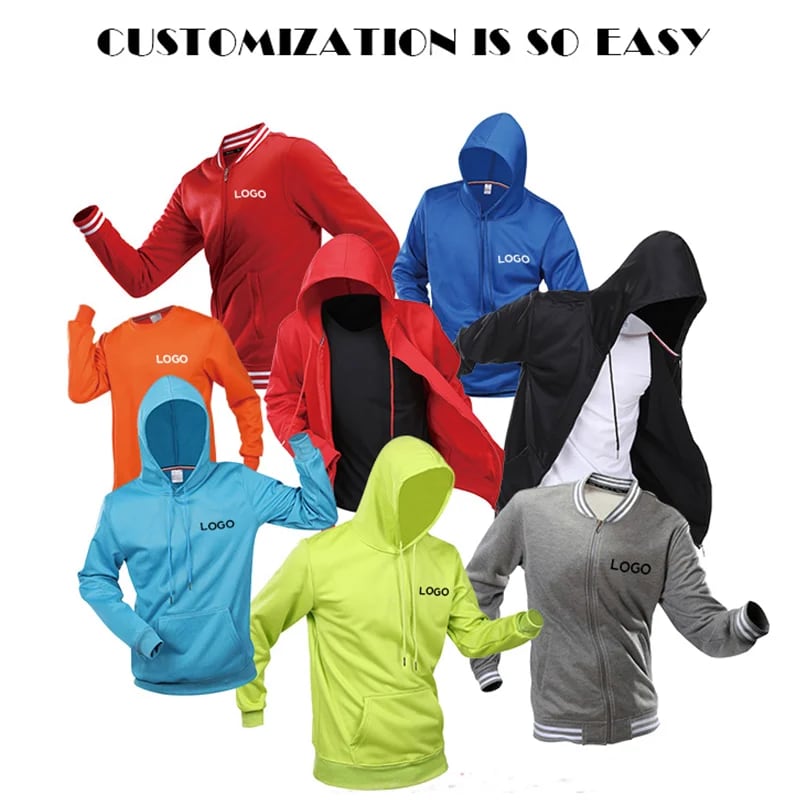
The same test settles the accessories and trims. Ribbing, drawcords, cuff elastane and zip tape can each behave differently after washing, and a sweatshirts and hoodies programme that tests only the body fabric is testing two-thirds of the garment.
Bulk, Inspection and Reorder
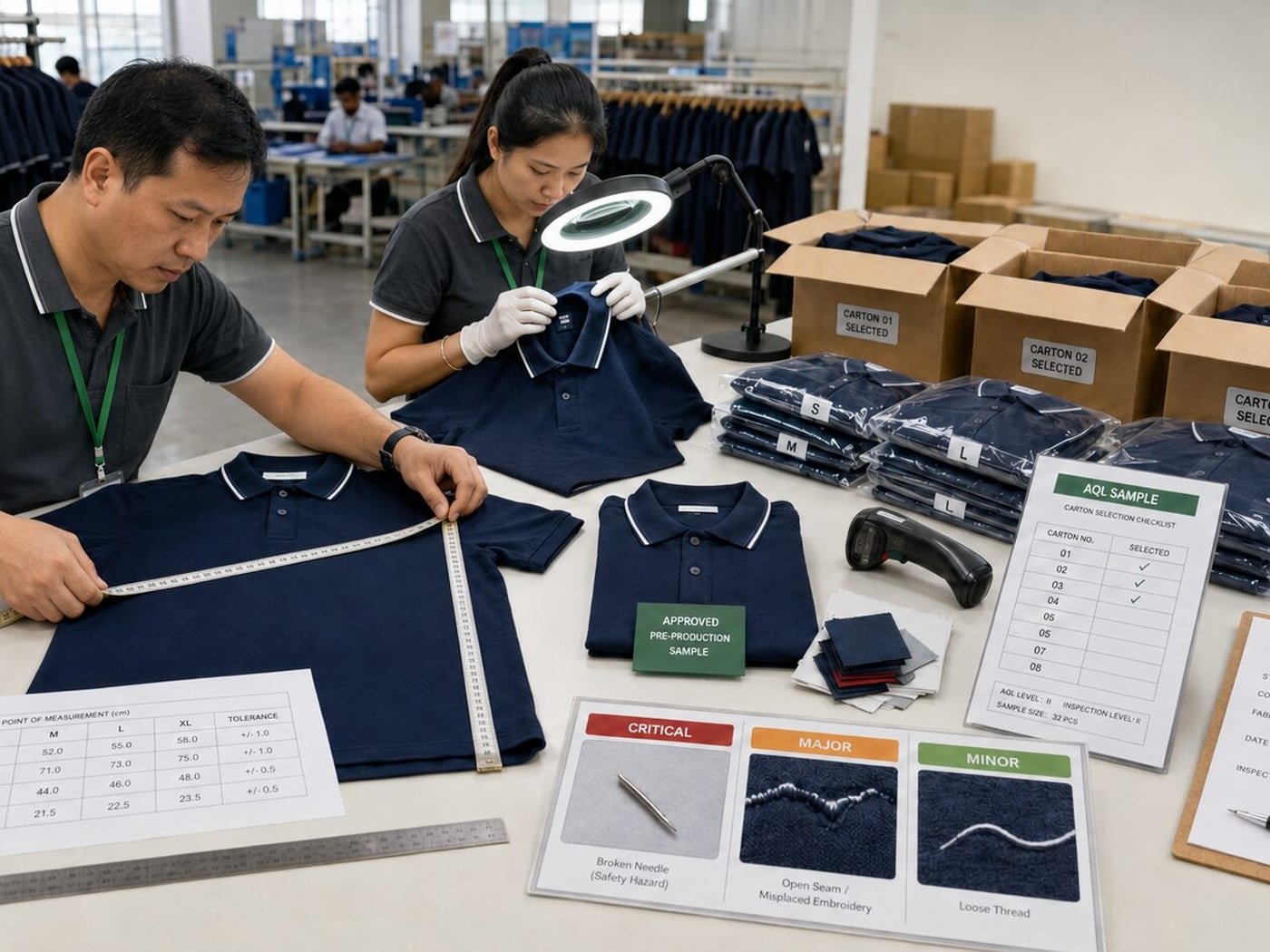
Once the route is approved, the commercial terms are straightforward. Minimum order is 300 pcs per style. Sampling runs 7–12 days after fabric and specification approval, and bulk production typically runs 20–35 days after sample approval. Inspection is carried out to AQL 2.5 unless the buyer’s own plan replaces it.
Keep the approved sample, the washed sample and the colour standard together, because a reorder is matched to all three. A blend that changes supplier or ratio between orders will show at the cuff and the hem before it shows on the invoice.
Ask for the fibre composition on the order confirmation as well as the quotation. The ratio is the variable a mill moves first when a yarn is substituted, and a buyer who has the number in writing can compare the delivery against it without reopening the whole specification.
FAQ
Is a cotton-poly sweatshirt warmer than cotton?
Not reliably. Warmth comes from fabric weight and the air trapped in the loopback, not from the blend. A heavy cotton sweatshirt is warmer than a light blend; the blend’s contribution is how the garment holds shape and colour after washing.
Which blend shrinks less?
The one with the polyester share, in most constructions. Cotton draws up with heat and agitation and a blend resists that movement, but the finishing route matters as much as the ratio, so wash the sample before you commit.
Can we print on a cotton-poly sweatshirt?
Yes, with the right ink and cure temperature. The risk is dye migration on high-polyester fabrics, so test the print on the actual garment rather than on a cotton swatch.
What is the minimum order and lead time?
Minimum order is 300 pcs per style. Sampling takes 7–12 days after fabric and specification approval, and bulk production typically takes 20–35 days after sample approval, with inspection to AQL 2.5 unless the buyer’s plan replaces it.
Sources: OEKO-TEX Standard 100, EU Regulation 1007/2011, Intertek testing, Higg, US CBP informed compliance, The Woolmark Company.
Working on a knitwear project?
Let’s talk yarn, gauge and timing.
Send a reference or tech pack and we will come back with a practical development route.

