
The first bulk shipment arrived at 190 GSM and looked right on the hanger. Three weeks later the collars had folded into the neckline and the plackets had curled. The weight had been specified as a number, approved as a number, and never checked against the structure that gives a polo its shape.
Polo shirt fabric GSM selection usually starts with a number and ends with a question about the collar. Weight tells you how much cloth there is per square metre. It does not tell you how a pique will hold a collar stand, how a light colour will cover, or whether the fabric will be bearable in July.
What GSM does and does not tell you
Grams per square metre is mass. It is measured on a conditioned sample, and it says nothing about stitch density, yarn count, or how the fabric behaves when a collar is sewn into it. Two piques at 200 GSM can differ in firmness by a margin you can feel through a sleeve.
For a polo, firmness matters more than weight, because the collar and the placket need structure. A loose knit at 220 GSM can be floppier than a tight knit at 190, and the collar will follow the fabric rather than the interlining. That is the failure in the opening paragraph: a number met, a garment lost.
Why the collar fails first
A polo collar is a small piece of cloth asked to stand up for the life of the garment. It relies on three things: the body of the pique, the interlining inside the collar, and the way the collar is joined to the neckline. If the fabric is too soft, the interlining does all the work and eventually curls or delaminates.
Check the collar before you check the weight. A sample with a collapsed collar at 180 GSM and a sample with a standing collar at 180 GSM are different fabrics, and the difference sits in the knitting and the finishing, not in the number on the report.
Polo shirt fabric GSM selection: the fields to write
Polo shirt fabric GSM selection needs four fields, not one: the weight with a tolerance, the knit structure and stitch density, the colour and its coverage requirement, and the season or end use the polo is sold for. Weight alone is a number a mill can meet with several different fabrics.
Write the four, attach a swatch, and keep the version. A mill that receives only a weight will choose its own density and its own yarn, and the polo that comes back will be a correct answer to a question nobody asked.
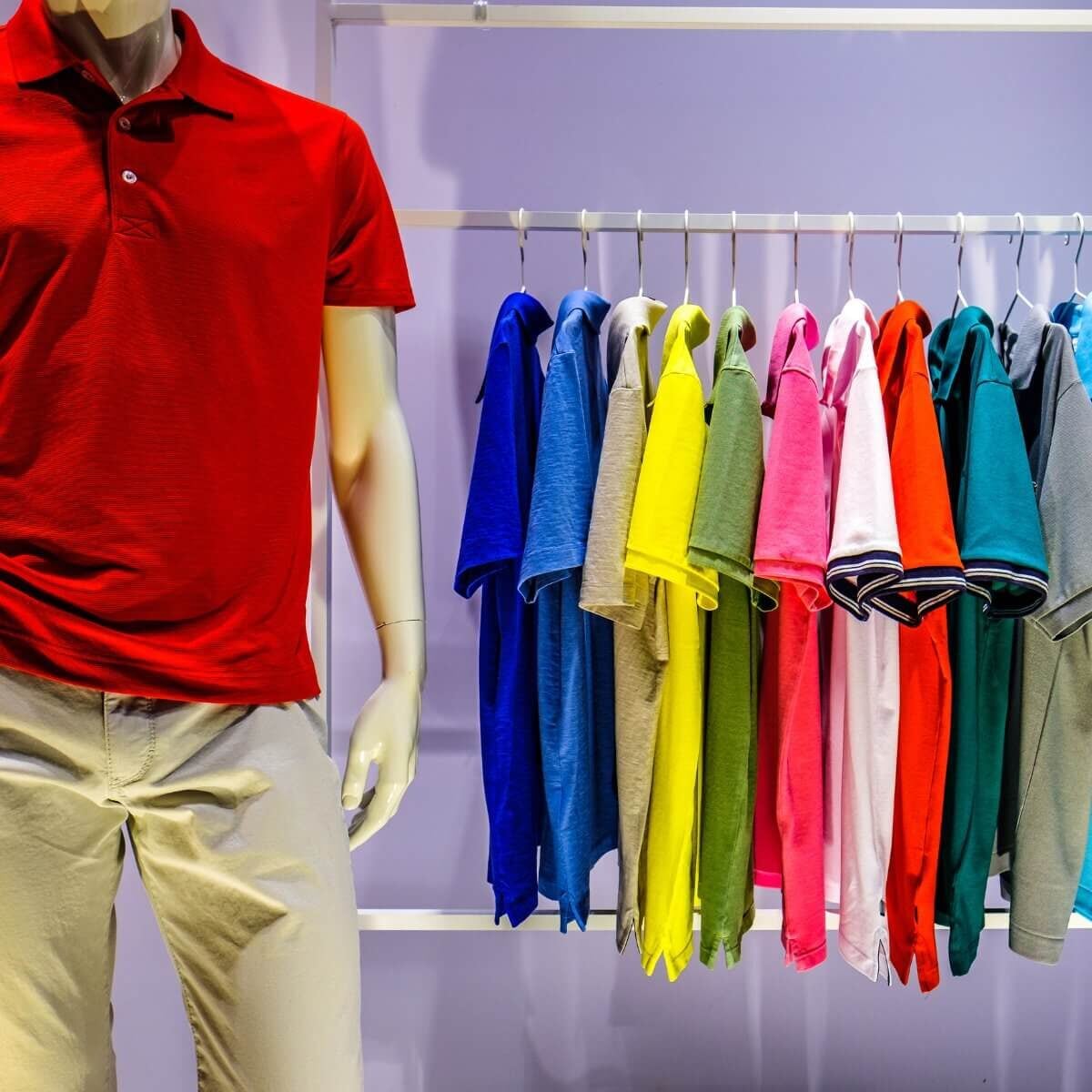
Pique, jersey and interlock at the same weight
The structure decides how the weight feels and how the polo wears. Pique has a textured face that hides creasing and supports a collar; jersey is smoother, lighter in the hand and less structured; interlock is denser and flat on both sides, which makes it forgiving on a lighter colour.
A 200 GSM pique and a 200 GSM jersey are the same number and different garments. That is why the structure belongs in the specification beside the weight, and why a pique polo should not be quoted against a jersey weight without saying so.
| Structure | Face and hand | Collar and placket support | Where it suits |
|---|---|---|---|
| Pique | Textured, dry, holds shape | Strong; the usual choice for a collar stand | Corporate, golf, retail basics |
| Jersey | Smooth, soft, lighter drape | Weaker; needs a firmer interlining | Summer and fashion-led polos |
| Interlock | Flat both sides, dense, smooth | Good, with a clean placket | Light colours and print-heavy fronts |
| Performance knit | Fine, smooth, often with elastane | Moderate; depends on the interlining | Golf and active programmes |
Read the table with the season in mind. A performance knit at a lower weight can outperform a heavier pique on a hot course, because it moves moisture and does not need to stand up in the same way. A corporate polo worn over a shirt wants the firmer face.
Colour coverage and the light shades
Coverage is where weight and colour meet. A white or pale polo shows the body, and any print beneath it, at lower weights; a navy or black hides more at the same weight. If the range includes white, specify the coverage requirement rather than the weight, because weight alone will not deliver it.
Test coverage on a body, in daylight, with the placket buttoned. A swatch held to a window tells you about the fabric; a garment on a body tells you about the product. This is the same test whether the polo carries an embroidered logo or a print, and it is worth doing before the colour range is fixed.
Season, layering and the weight band
A summer golf polo and a corporate polo worn over a vest are different briefs. The summer polo wants less weight and more airflow; the corporate one wants a firmer face that survives a logo and a wash cycle without going limp at the neckline.
Write the season and the layering into the brief. Two programmes can share the same block and still need different weights, and the difference should come from the use rather than from a competitor’s sample that happened to be on the desk.

Decoration belongs in the same decision. A dense embroidery on a light pique can pull the fabric and leave a ring; the same logo on an interlock sits flatter. Ask for the decoration to be sampled on the chosen structure, not on the nearest swatch in the library.
Weights for a mixed range
A range of six polos does not need six fabrics. Two structures and two weights cover most programmes: a firm pique for corporate and golf styles, a smoother knit for fashion and pale colours, each in a summer weight and a heavier weight.
Fewer fabrics mean fewer dye lots, fewer shrinkage surprises and a smaller minimum spread across colours. The saving is not in the unit price; it is in the risk. Write the range as a matrix of structure and weight before writing the individual specifications, and the specifications become variations rather than six separate developments.
Keep the tolerance identical across the matrix, so that a colour change never reads as a weight change. Where a customer asks for a new colour in an existing fabric, the weight question is already answered. Where both are new, test them together, because a paler shade and a lighter weight compound.
Sampling: what to ask for
Ask for the collar, the placket and the shoulder seam in the sample, and wear it for an hour before approving. Horssle Knit samples in 7–12 days after fabric and tech pack approval, and that hour of wear is the least expensive test in the programme.
Wash the sample once before approval. Pique can shrink and the collar can change after the first wash, and a polo approved dry is a polo approved in a state the customer never sees. If the collar stands after the wash, the fabric and the interlining are working together.
Bulk: holding the weight
Bulk runs in typically 20–35 days after sample approval, with inspection to AQL 2.5. Ask for the fabric weight to be recorded against the approved swatch at the start and at the end of the run, and for the collar to be checked on the finished garment rather than on the cut panel.
A minimum of 300 pieces per style applies, and the colour and size split decides the dye lots. Where several colours share a fabric, the weight tolerance should be identical for all of them, or the range will feel inconsistent on the shelf even though each garment matches its own sheet.
FAQ
Is a higher GSM always better for a polo?
No. A firm 180 GSM pique can hold a collar better than a loose 220 GSM one, and it will be cooler to wear. Match the weight to the structure, the colour and the season, then check the collar on a washed sample.
Can a light polo hold a collar stand?
It can, with a firmer knit and a suitable interlining. The weight sets the floor, not the outcome. Ask for the collar to be sampled in the actual fabric rather than approved from a swatch, because the join is where it either stands or folds.
Should the weight be measured before or after washing?
State both, and inspect the washed one. A polo is worn and washed, so the weight after the stated care routine is the number the customer experiences. Give the mill a tolerance and a named wash protocol, not a single figure.
Does a heavier polo last longer?
Not by itself. Durability comes from yarn quality, stitch density and how the collar and placket are constructed. A heavy fabric with a weak collar fails sooner than a lighter fabric with a firm one.
Sources: OEKO-TEX Standard 100, EU Regulation 1007/2011 on textile fibre names, Intertek textile testing, Higg facility indexing, US CBP informed compliance, and The Woolmark Company on fibre specification.
Working on a knitwear project?
Let’s talk yarn, gauge and timing.
Send a reference or tech pack and we will come back with a practical development route.

