
Two polos, same size label, same chest measurement. One lets the wearer finish a swing; the other pulls across the back at the top of it and rides up at the hem on the way down. The difference is not in the chest. It sits in the shoulder slope, the armhole depth and the body length, which is where a polo is either developed for movement or merely sized.
Golf polo fit development is a sampling problem before it is a design problem. A garment can measure correctly on a table and still restrict a player, because the measurements that govern a swing are not the ones a basic size chart records, and the fitting that proves them takes a club rather than a tape.
Golf polo fit development: sampling for the swing
Golf polo fit development starts with the swing, not the chest: sample for shoulder width, armhole depth, sleeve length and body length, then test the garment through a full swing rather than a standing fitting. A polo that measures correctly can still pull across the back.
What follows is the sampling order that gets a golf polo approved in one round: the four measurements, the wear test that records them, the two areas where the pull starts, and the claims and documentation that have to accompany a performance garment.
What the swing does to a polo
A golf swing rotates the shoulders further than the hips, lifts the lead arm across the chest and finishes with the body turned and the arms high. A polo built on a standing fit resists all three: the back panel tightens, the armhole digs into the front of the shoulder, and the hem lifts clear of the waistband at the finish.
None of that appears when the wearer stands still in front of a mirror. It appears at address, at the top of the backswing and at the finish, which is why a golf polo sample is judged in motion and why the fitting notes should be written by someone who watched the swing rather than by someone who measured the garment afterwards.
The four measurements that decide playability
Four measurements carry most of the movement question, and each one has a different failure mode when it is too small or too large.
| Measurement | Why the swing depends on it | Failure when it is wrong | Check on the sample |
|---|---|---|---|
| Shoulder width | Sets where the sleeve joins the body | Too narrow pulls the armhole forward on the backswing | Observe the seam at address and at the top |
| Armhole depth | Decides how much the sleeve can lift | Too shallow restricts; too deep exposes the chest | Raise the lead arm and watch the armhole edge |
| Sleeve length and girth | Controls clearance at the bicep | Too tight grips; too loose rides into the elbow | Complete a swing and look at the sleeve hem |
| Body length | Keeps the hem in place through the turn | Too short rides up; too long bunches at the hip | Finish the swing and check the hem against the waistband |
Chest and waist ease still matter, but they are second-order for movement. A polo with a comfortable chest and a shallow armhole will still restrict the swing, which is why the four measurements above deserve separate lines on the spec sheet rather than being folded into a single body width.
The wear test: a record sheet, not an opinion
A wear test without a record sheet produces an opinion, and opinions are hard to sample against. The version that works is a short list of movements, each observed and recorded by the same person, on the same sample, before the garment is approved.
- Address posture: check the hem, the shoulder line and the collar.
- Half swing: watch the armhole and the back panel as the shoulders turn.
- Full swing with the longest club: note any pull across the back and any lift at the hem.
- Finish and hold: check the sleeve hem, the placket and the hem position.
- Walking, bending and reaching: check the collar and the placket gap.
- Remove the garment and measure it again against the spec sheet.
Record each movement with a simple note and, where possible, a photograph taken at the moment the garment pulls. A note that says “pulls across the right shoulder at the top” is actionable; a note that says “fits tight” sends the sample back for a general increase that may not fix anything.
Shoulder, armhole and sleeve: where the pull starts
Most movement complaints trace to the armhole rather than to the chest. A shallow armhole restricts the arm’s lift, so the player compensates by turning the shoulders further, which pulls the back panel and drags the placket out of line. Deepening the armhole a little often solves a complaint that reads as a chest problem.
The shoulder seam is the second suspect. A seam that sits too far inboard narrows the effective shoulder and puts the sleeve under tension at address; a seam that sits too far out drops the sleeve and makes the armhole gape. On a piqué polo the seam also has to survive the strain of a swing without grinning at the armhole.
Sleeve length is the third. A golf sleeve usually finishes above the elbow so it does not catch on the forearm through the swing, and the girth has to allow a full turn without gripping. Test it with the arm raised, not hanging, because that is where the sleeve is under load.
Hem, body length and the follow-through
The hem is where a golf polo is judged in play. A shirt long enough to stay tucked at address can still lift clear at the finish, and a shirt cut long enough to prevent that can bunch at the hip during the walk. The compromise is usually a curved hem with a little extra length at the back, tested through the finish rather than measured flat.
Placket length belongs in the same conversation. A placket that opens at the top of the swing exposes the chest; a placket that is too short restricts the neck when the player turns. Check the gap at the finish, with the top button undone, because that is how the garment is worn.
Claims and documentation
A performance polo attracts claims, and each claim has to be supported. Moisture management, UV protection, odour resistance: a claim printed on a hangtag or used in a product page needs test evidence from a laboratory using a recognised method, and the evidence has to describe the fabric as supplied rather than the idea behind it.
Care instructions belong to the same file. A fabric that needs a specific wash to keep its finish has to say so on the care label, and the fibre content has to be declared in the form the destination market requires. A polo that claims performance and instructs a wash that removes it is a complaint waiting to be written.
Dress codes are the third document. Many clubs and tournaments require a collar and sleeves, and some specify the hem treatment. Those requirements are not regulations, but they function like them at the point of sale, so they belong in the brief before the sample is cut rather than after the range has been photographed.
What the sample must prove before bulk
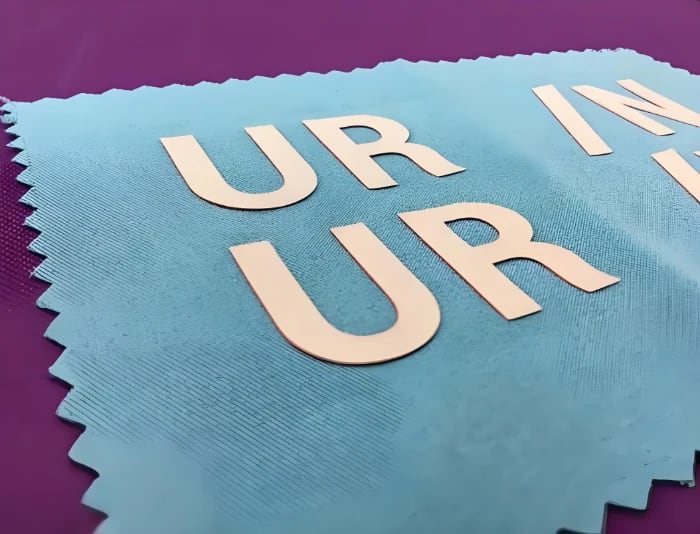
Before bulk, the golf polo sample has to prove three things: that the four measurements are inside the spec, that the garment moves through a full swing without pulling or lifting, and that the decoration survives the strain it will meet. A chest logo sits where the fabric works hardest, and a stiff embroidery on a stretch piqué can pucker the panel it is applied to.
Once those are signed, the rest of the schedule is standard. Sampling runs 7–12 days after fabric and tech pack approval, bulk production typically 20–35 days after sample approval, and the minimum is 300 pieces per style. The performance polo route adds a fabric choice to that list, and the piqué route adds a structure, so the swing test should be run on the fabric the order will actually use.
FAQ
Can we use a standard polo block for a golf style?
As a starting point, yes. It still needs a movement check, because the armhole depth and the body length that suit a uniform polo are usually wrong for a swing.
How many players should test the sample?
Two or three, covering different builds, recorded on the same sheet. More testers produce more opinions; two recorded swings usually locate the problem faster.
Do we need a different fit for men and women?
Yes, because shoulder width, armhole depth and body length are graded differently. The movement test stays the same, and the measurements that carry it change.
What if the wearer reports the polo riding up?
Check body length first, then the armhole. A shallow armhole forces the shoulders to turn further, which lifts the hem even when the length is correct.
If the movement test is the part without a method, send the style, the fabric and the target quantity to the golf polo team and ask for the sample to be developed against a swing rather than a standing fit.
Sources: OEKO-TEX Standard 100 on restricted substances, EU Regulation 1007/2011 on fibre names and labelling, Intertek on textile testing, US CBP informed compliance on import documentation, and Higg on environmental assessment.
Working on a knitwear project?
Let’s talk yarn, gauge and timing.
Send a reference or tech pack and we will come back with a practical development route.

