
A factory that subcontracts nothing is not automatically the safer choice. Most apparel production passes through several hands: yarn is spun elsewhere, fabric is dyed elsewhere, embroidery, printing, linking and washing often happen in specialist units. The risk is not that work travels. It is not knowing where it travels before the purchase order is signed.
An apparel factory subcontracting checklist is not a document about trust. It is a map of who performs which operation, with a named owner and a piece of evidence for each line, so a buyer can see which parts of the promise sit inside the building and which sit down the road.
An apparel factory subcontracting checklist: the responsibility map
An apparel factory subcontracting checklist maps each operation to a named party: knitting, dyeing, cutting, sewing, linking, decoration, washing, testing and packing. For each one it records whether the work is in-house, who performs it if not, and who answers when it goes wrong, in writing.
The map matters because accountability follows the operation. A buyer who knows the collar band is linked in-house and the yarn is dyed three towns away can ask the right question when a shade fails, rather than asking the factory to explain the whole supply chain at once.
Why the disclosure question is a compliance question
Subcontracting has moved from a commercial detail to a compliance one. Labour standards schemes and social audit programmes expect undeclared subcontractors to be visible in the audit, because undeclared units are where working-hour and wage problems tend to sit. Customs documentation similarly expects the production route to be traceable when origin is claimed.
That means the honest answer to “do you subcontract?” is usually yes, with a list. A factory that answers no while sending garments for washing or embroidery is not being protective of a supplier relationship; it is creating a documentation gap that surfaces at the worst moment, which is when a buyer, an auditor or a customs officer asks for the route in writing.
Ask for the map as a document rather than as a conversation. A written list with operation names and parties is easier to compare between suppliers than a verbal account, and it gives both sides something to update when the route changes.
Drawing the map, operation by operation
The practical way to build the map is to start from the garment and work backwards through the operations, which is the order the production actually follows.
- List every operation the order needs, including the ones that feel too small to mention: trimming, pressing, label sewing, bagging.
- For each operation, ask for the party that performs it and the site where it happens.
- Ask for the evidence that links that party to your order: a sample they produced, a specification they were given, a record of the test they ran.
- Mark each line as in-house, subcontractor or a mix, and note who manages the relationship.
- Agree which changes require notification, and how quickly.
- Repeat the exercise on the sample, not on the brochure, because the route used for a sample can differ from the route used for bulk.
| Operation | Commonly in-house | Commonly subcontracted | What to ask for |
|---|---|---|---|
| Knitting or fabric | Knitwear panel knitting | Woven fabric, yarn spinning | Mill name and the yarn lot reference |
| Dyeing | Rarely | Almost always | Dyehouse name and a lab dip signed by both sides |
| Cutting | Cut-and-sew styles | Small runs, sample cutting | Cut ticket and the marker used |
| Sewing and linking | Main production | Overflow, specialist linking | Line name and the sample the line was given |
| Decoration | Some embroidery | Printing, specialist embroidery | Artwork file and the approved placement sample |
| Washing and finishing | Pressing | Garment wash, softening | Recipe and the tested sample result |
| Testing | In-house checks | Third-party laboratories | Laboratory name and the test report |
| Packing | Usually in-house | Retail-ready packing units | Packing specification and a packed sample |

Sampling, production, testing and problem handling
Four responsibilities decide whether the map is useful. Who makes the sample and where? Who runs the bulk order? Who tests, and against which standard? Who handles a problem when a defect appears after dispatch?
The sampling responsibility is the one buyers check least. A sample made in a dedicated sample room by a senior operator can be flawless, while the bulk is made on a line by someone who never saw it. That is not a failing in itself, as long as the difference is disclosed and the bulk route is sampled separately.
Problem handling is the other end. A factory that can name the person responsible for a subcontracted operation, and the process for correcting it, is describing a system. A factory that says the subcontracted party “will deal with it” is describing a gap, and the gap will be discovered by the buyer.
What the answers should look like
A good answer names a party, a site and a document. A weak answer names a category: “our partner factory”, “a local dyehouse”, “a testing lab”. Categories are not auditable, and they cannot be checked against a certificate or a report.
| Question | Weak answer | Answer that can be checked |
|---|---|---|
| Where is the fabric dyed? | A dyehouse nearby | Named dyehouse, shade approved on a signed lab dip |
| Who links the neckline? | The factory does it | Named unit, sample linked there and approved there |
| Who tests the fabric? | We test everything | Named laboratory and a report number, or a documented in-house method |
| What if the colour fails? | It will be sorted | Named owner, correction route and who pays for the sort |
Those four questions take a meeting to ask and a week to answer properly. They are also the four that decide whether a supplier can be audited, and whether a buyer can explain the supply chain to a retailer who asks.
Where the map changes between sample and bulk
The route used for a sample is often the route with the shortest queue, which is not the route the bulk will follow. A neckline linked by a senior operator on a single machine is not evidence that the bulk will be linked the same way, and a buyer who maps only the sample route has mapped a demonstration.
Ask for the bulk route separately, once the order is confirmed, and note any difference. Differences are not automatically a problem: a factory may run bulk on a line whose supervisor was trained on the style, which is a reasonable answer. The problem is a difference nobody mentioned, because it removes the only evidence the buyer had.
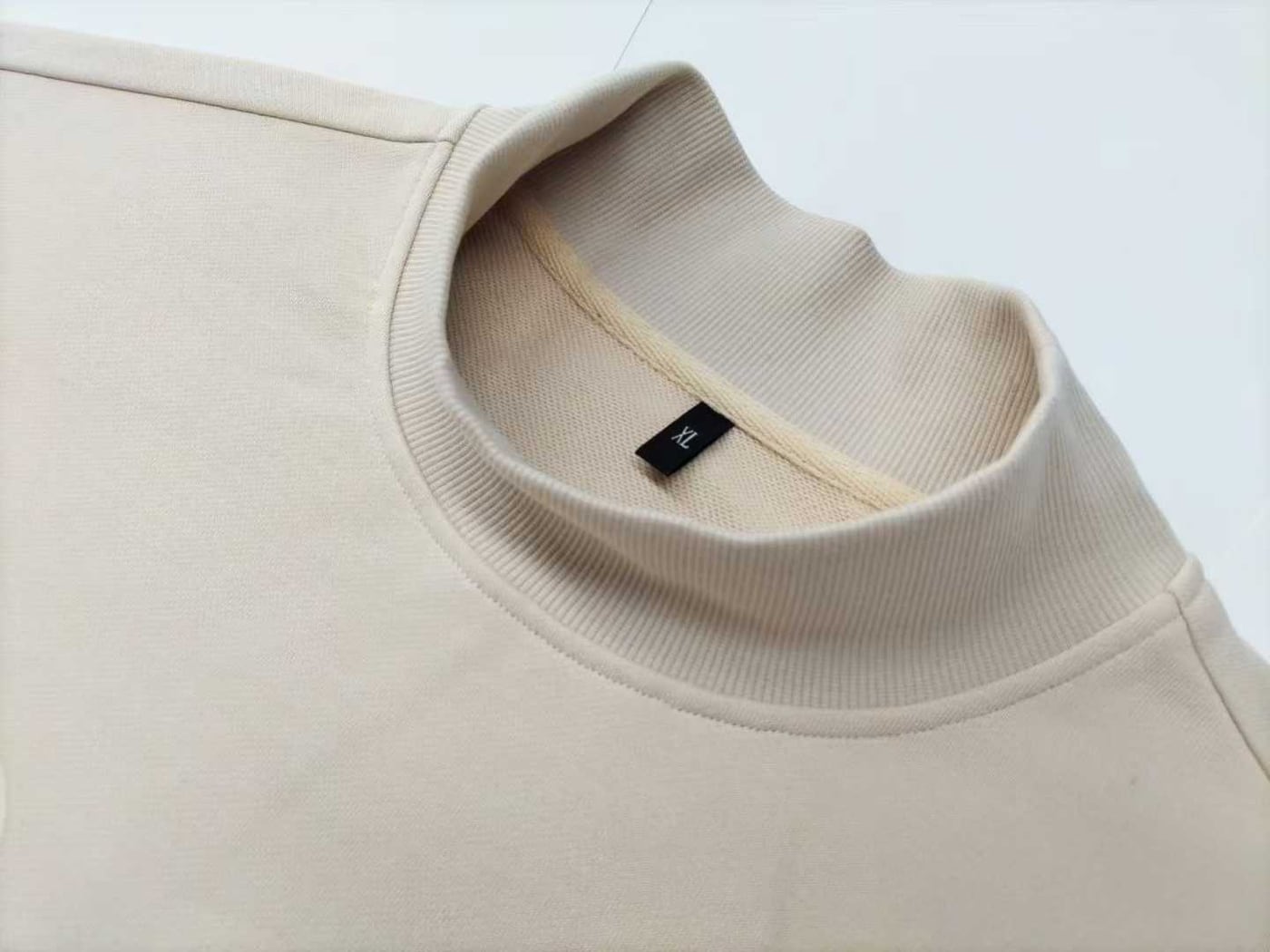
The operation list for the atelier is the kind of document to ask for: a plain list of what happens on site, what is sent out and who sends it. It is short, it is checkable, and it is far more useful than a certificate nobody can connect to an operation.
Recording the map in the order
The map belongs with the order documents, not in a folder of supplier questionnaires. A single page listing the operations, the parties and the evidence makes the route visible to anyone who later inspects the goods, and it gives the factory a reason to notify a change rather than absorb it.
Sampling runs 7–12 days after fabric and tech pack approval, and bulk production typically 20–35 days after sample approval, so a route change discovered mid-production has very little room to recover. A map agreed at kickoff, and updated when a party changes, is what keeps the schedule honest.
Keeping the map current
A map written for the first order stays accurate for about a season. Dyehouses change, embroidery units close, and a factory may bring a process in-house to control it. A check at every new order, rather than an annual review, keeps the document true enough to use.
The mechanism that makes it work is a notification clause: any change to a party on the map is reported before the affected order ships, with the reason and the new evidence. Factories accept that condition more readily than buyers expect, because it protects them from being blamed for a change they never had a chance to disclose.
FAQ
Is subcontracting a red flag?
No. Specialisation is normal, and a dyehouse or an embroidery unit usually does the work better than a general factory would. The red flag is an undisclosed route, not a disclosed one.
Can we require that no work is subcontracted?
You can require disclosure and approval before a change. A blanket ban is hard to verify and pushes the work underground, which is the outcome nobody wants.
Who is responsible if a subcontracted operation fails?
The factory you placed the order with, unless the contract says otherwise. That is why the map names an owner for each operation rather than leaving responsibility to whoever performed it.
Do we need to audit the subcontractor ourselves?
Not usually. Ask for the audit report and the date, confirm the scope covers the operations on your map, and check that the site on the report is the site on the map.
If the operation map is what you are missing, send the style and the operations it needs to the production team through the contact form and ask for the route in writing before the first sample.
Sources: OEKO-TEX Standard 100 on restricted substances, EU Regulation 1007/2011 on fibre names and labelling, US CBP informed compliance on import documentation, Better Work on labour compliance, and Intertek on textile testing.
Working on a knitwear project?
Let’s talk yarn, gauge and timing.
Send a reference or tech pack and we will come back with a practical development route.

