
A folded sweater and the box that holds it differ by a hand’s width of air, and that gap is the number that matters in gift packaging. Every centimetre of empty space is volume a courier charges for, and every centimetre removed is pressure on a knit that creases where it is compressed.
Knitwear gift packaging design is a trade between those two figures, plus the sequence a customer sees when the lid comes off. Get the trade wrong in one direction and the parcel arrives creased; get it wrong in the other and the box arrives with a sweater rattling inside it.
Knitwear Gift Packaging Design: Volume Against Creasing
Knitwear gift packaging design balances three things: the volume of the pack, the pressure on the folded garment and the order of the unboxing. A box that is too large lets the garment move; one that is too tight leaves creases that do not hang out. The fold route decides both.
The material choices matter less than the geometry. A plain box with the right internal dimensions presents better than an expensive box with a hand’s width of air in it.
What the Box Has to Do
It has to protect the garment through a courier network, present it when the lid comes off, and hold whatever else travels with it: a hangtag, a care card, a spare button, a return slip. Those three jobs pull in different directions, because protection wants structure and presentation wants space.
Protection is the job that cannot be negotiated. Presentation can be adjusted with a band, a card or a colour; a box that lets the garment move will damage it whatever the tissue does inside. Write the jobs into the brief in that order. A box that protects and presents but cannot be packed at volume is a sample, not a product, and a box that packs quickly and arrives crushed is a return.
Creases Come From Pressure and Time
A knit creases where it is folded and held. The fold line itself is usually fine, because wool and cotton relax; the damage comes from a second fold pressing on the first, or from a garment compressed against a hard edge for a week in a parcel.
A garment packed in a warm room and moved to a cold warehouse also settles differently. The knit relaxes in the warmth and firms in the cold, so a pack that is tight on a summer line can be loose in a winter one, and the clearance should be set for the tighter of the two conditions.
Tissue paper redistributes that pressure. A layer between folds stops two knit surfaces pressing into each other, and a wrap around the whole garment stops it abrading against the box. It does not need to be heavy, and it does need to be acid-free if it touches a pale colour for months.
Three Ways to Fold a Sweater Into a Box
| Route | Crease risk | Volume | Unboxing | Packing effort |
|---|---|---|---|---|
| Flat fold, two layers | Low; one fold line | Higher; wide footprint | Clean, immediate | Low |
| Flat fold with tissue between layers | Lowest | Higher still | Considered, slower | Medium |
| Roll with tissue | Low at the roll, higher at the ends | Lower; compact | Reveals the knit slowly | Medium to high |
| Board-backed flat pack | Very low; the board takes the pressure | Highest | Formal, retail-like | High |
Most gift programmes settle on the second or third row. The first is a shipping fold, the fourth is a counter fold, and the difference between them is the box, not the garment.
Volume: Where the Air Goes
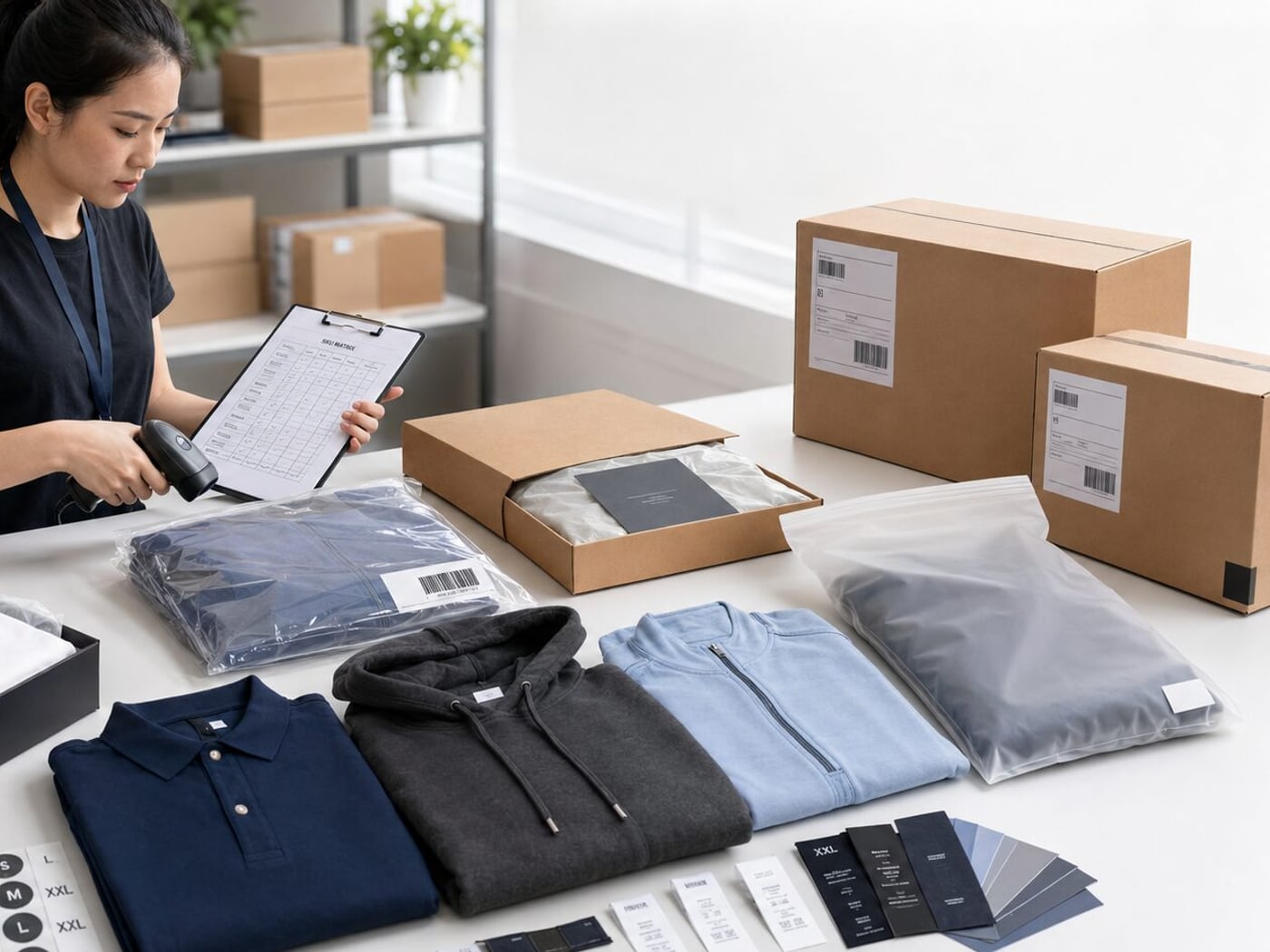
Measure the folded garment, then measure the box, then look at the difference. If the garment slides when the closed box is tilted, the volume is doing nothing except costing freight. If the lid needs pressure to close, the pressure is going into the knit and will show as a fold line.
Two adjustments usually close the gap: a slightly shallower box, and a fold that uses the garment’s own thickness as structure. A sweater folded so that the rib sits at the open edge packs flatter than one folded with the body in the middle, because the rib is the densest part and it does not need protecting from itself.
Sizing the Box to the Fold
Work from the folded garment outwards. Fold the way the pack will be folded, measure the footprint and the height, then add the tissue and a finger of clearance on each side. The box that comes back from that measurement is usually smaller than the one on the shelf, and it ships for less.
Allow for the garment settling. A knit compressed at packing relaxes in the box, so a pack that is snug on the line can be loose by the time it reaches the customer. If the difference matters, add a card tray or a paper band rather than a larger box, because the band holds the garment and the box holds the band.
Fixing the Garment in Place
Once the volume is right, the garment still has to stay put. Tissue around the body, a paper band around the fold, or a card tray that holds the shape are the three common answers. Each one has a cost in packing time and a benefit in how the pack survives a sorting belt.
There is a middle route that suits most programmes: a shallow rigid box, a tissue wrap and a paper band, with no extra void fill. It carries less protection than a board-backed pack and more presentation than a polybag, and it packs quickly enough for a seasonal run.
Avoid tape directly on the knit. It leaves a residue that shows on dark shades, and it takes surface fibre with it when it is removed. If a band is needed, use paper or a branded belly band rather than an adhesive strip.
The Unboxing Sequence
The lid comes off, then the tissue, then the garment, then the card. That order is a design decision, and it should be storyboarded rather than left to the packing line. A hangtag that falls out first reads as a mistake; the same tag tucked against the shoulder reads as care.
Write the sequence down and pack to it, in order, with the card last and the tissue folded so the first edge the customer lifts is a clean one. A sequence that exists only in the merchandiser’s head will look different on every carton.
Layering also decides what the customer photographs. Gift packaging increasingly lives on social media, and the arrangement that photographs well is usually the one with the fewest layers and the clearest contrast between the tissue and the knit.
Labels, Tags and the Paper Inside
The hangtag carries the brand and the price; the woven label sits in the neck; the care label has to be visible without unpacking the garment, because a customer who cannot find it will wash the sweater by guess.
Paper components add volume and weight, and they are the part most often specified late. Decide whether the pack carries a care card, a return slip, a spare button and a printed message before the box is sized, because every additional insert changes the internal height.
What to Approve
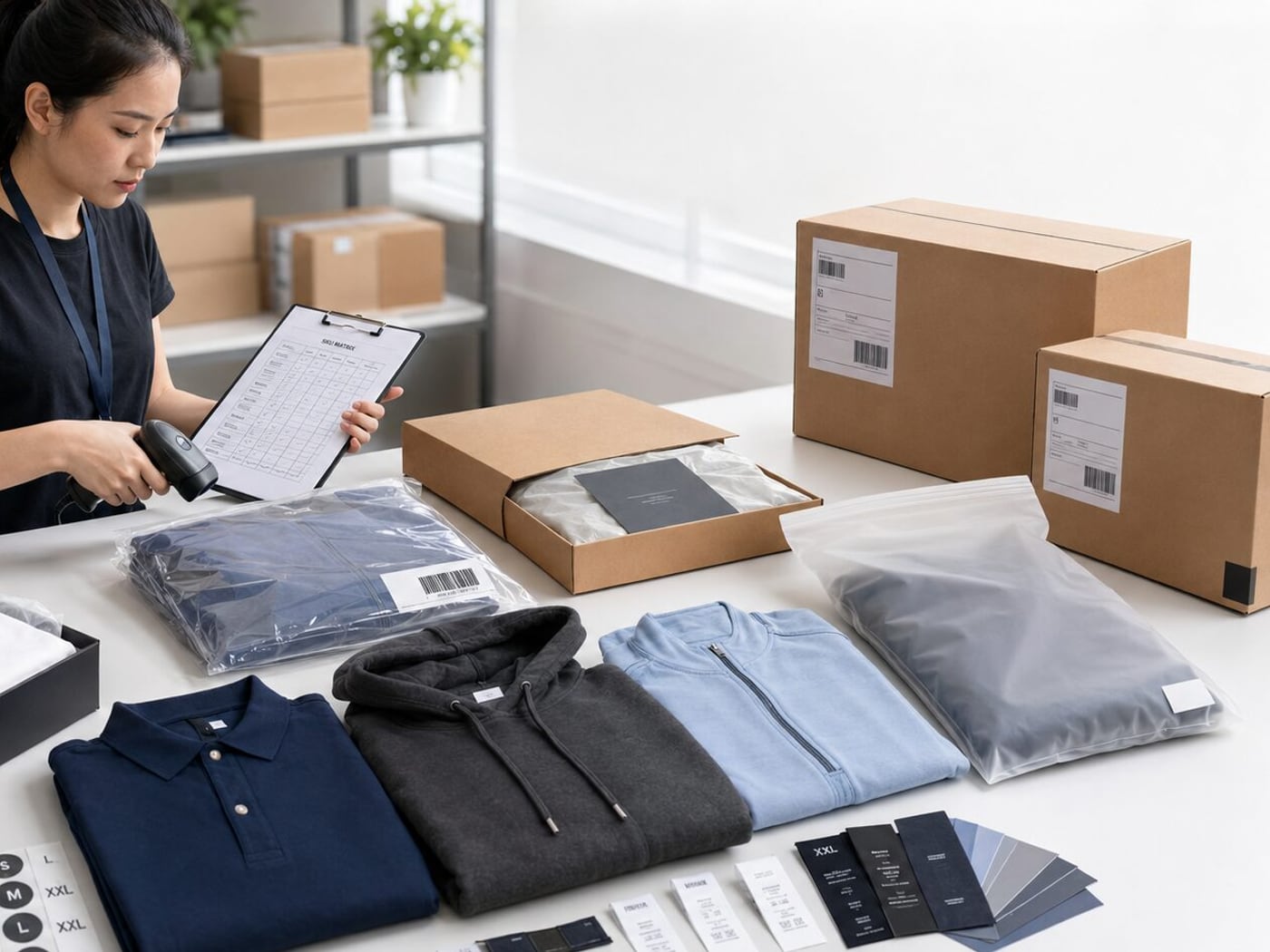
Approve a packed sample, not a flat lay. Close the box, tilt it, shake it gently, then open it as a customer would and photograph each layer. Send the packed sample through a courier if the programme is retail, because the parcel network is the only test that matters for creasing.
Then pack ten in a row and time it. A pack that takes a minute longer per unit is a decision the buyer should make deliberately rather than discover on the line. The gift packaging range shows the components in combination, and the pack is built around the garment rather than the other way round.
Record the internal dimensions, the fold route, the tissue weight and the insert list on one sheet. That sheet is what a second production run needs, and it is the difference between a repeatable pack and a packing line that improvises.
FAQ
Should the box be rigid or folding?
Rigid presents better and protects more; folding is lighter and cheaper to ship. Most gift programmes use rigid for retail and folding for e-commerce, where the courier is the customer’s first impression.
Does tissue paper stop creasing?
It redistributes pressure rather than removing it. Tissue between folds and around the garment helps most; tissue stuffed into a box that is too large does very little.
Can a sweater be vacuum packed to save volume?
It saves volume and adds creases. A knit compressed flat for a long journey recovers slowly, and the fold lines can be visible on the shelf, so vacuum packing suits storage more than gifting.
Where should the care label sit in a gift pack?
Where it can be found without unpacking the garment: on the outside of the tissue, on a card, or on a label visible at the neck. A care label buried under three layers is a label the customer never reads.
Sources: EU Regulation 1007/2011, US CBP, OEKO-TEX Standard 100, Better Work, Intertek, Higg.
Working on a knitwear project?
Let’s talk yarn, gauge and timing.
Send a reference or tech pack and we will come back with a practical development route.

