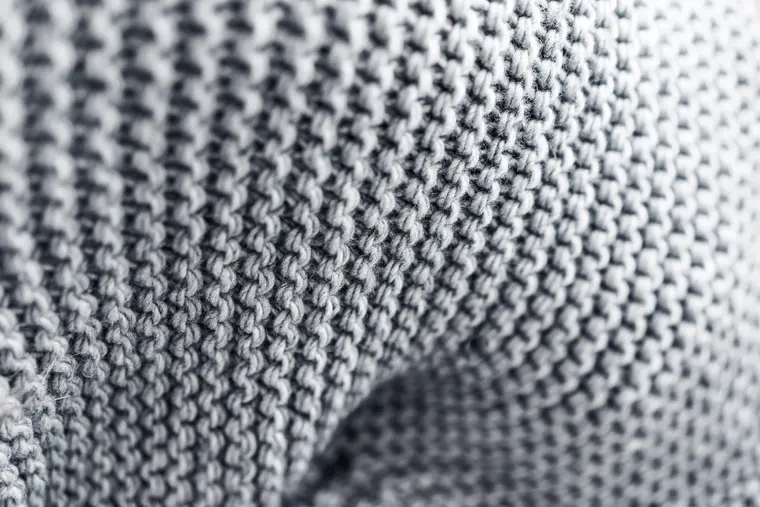
Two sweaters, the same yarn, the same gauge, the same measurements. One has a neckline linked by hand, with the seam sitting flat against the shoulder; the other has a machine join that stands up slightly and shows a ridge under a shirt. On a hanger they look alike. On a body, and on the inside, they are different products.
A hand finished knitwear quality checklist exists to protect that difference, and it is not romance about handwork; it is a measurable difference in how a seam sits, how an edge rolls and how consistent the garment is from piece to piece.
What hand-finished means, and does not
Hand-finished knitwear is not hand-knitted knitwear. The panels come off a machine; the finishing — linking, seaming, grafting, trimming, pressing and any repair — is done by hand or with a hand-guided machine. The distinction matters commercially, because it sets what the buyer is inspecting: the joins and the surfaces, not the loops.
It also sets what can vary. Hand work has a range, and the specification should describe an acceptable range rather than a perfect piece. A checklist that demands zero variance produces either a rejected lot or a lot that was passed without being checked.
Hand finished knitwear quality checklist
A hand finished knitwear quality checklist covers four things: the ends, the linking at neckline, armhole and shoulder, the edges and hems, and any local repair. Inspect each on the inside as well as the outside. Hand work shows in the consistency between pieces, not in a single perfect sample.
Check a run of pieces, not one. The question is not whether a garment can be finished well, but whether the finishing holds its standard across the order, and that only appears when five or ten pieces are laid side by side.

The four checks in detail
Ends are the first check and the easiest to photograph. Every yarn end should be worked into the seam or the structure and trimmed, not cut flush and left to work loose. Turn the garment inside out and look for ends at the side seams, the underarm and the neckline join.
Linking is the second and the one that most changes how a garment sits. The neckline, armhole and shoulder joins should follow the curve without a step, and the seam allowance should lie flat against the body rather than standing proud. Run a finger along the join: a ridge that catches is a ridge a customer will feel.
Edges and hems come third. A hand-finished edge should roll consistently along its length, with no point where the tension changes. Compare both cuffs and both sides of the front; asymmetry is the defect a buyer notices first and describes worst.
The fourth check is local repair. Small holes, dropped stitches and thin places are mended, and a mend should be invisible from the outside and stable from the inside. Ask how many mends per garment are acceptable, and write the number down, or the answer will be decided by whoever inspects that day.
Labels sit alongside those four. A care label sewn into a hand-finished seam should lie flat and be caught at both ends, not hang from a single stitch; a neck label should be centred and should not pucker the neckline it was sewn into. Check the inside of the back neck with the garment held up to the light, because that is where a label’s tail and its catch stitches show.
| Check | What good looks like | What to record |
|---|---|---|
| Yarn ends | Worked in and trimmed, no loose tails inside | Number of ends visible per garment |
| Neckline linking | Seam follows the curve, lies flat | Photograph inside and out |
| Armhole and shoulder | No step, no ridge, symmetric | Left/right comparison note |
| Edges and hems | Even roll, consistent tension | Measurement of band depth |
| Mending | Invisible outside, stable inside | Maximum mends per garment |
| Pressing | No shine, no stretched seams | Pressing method used |
The order of finishing
Finishing runs in a sequence, and the sequence explains most of the defects that appear later. A garment pressed before the neckline is linked will show a crease where the join sits; one trimmed before the final press will have ends that reappear after steaming.
- Check the panels for dropped stitches and yarn faults before any joining.
- Link the shoulders, then the neckline, then the armholes, so each join is worked against a stable edge.
- Close the side seams and check the alignment of the hem and cuff ribs.
- Work in the ends at the seams and trim after the final join, not before.
- Mend any small faults and record the number per garment.
- Press with the method agreed for the fibre, then check the joins again.
Each step depends on the one before it. Skipping the panel check moves the fault to the mending stage, and mending after pressing leaves a mark that no amount of steaming removes.
What buyers mean by a clean inside
Most hand-finishing complaints are about the inside of the garment, which is the side the customer feels and the side the buyer sees last. A clean inside means no loose ends, no knots, no trimmed yarn working back through the seam, and no ridge where a join was pressed flat.
Ask for the sample to be turned inside out and photographed. Ask, too, what happens to the offcuts and the yarn tails after trimming: a finishing room that leaves them in the garment will leave them in the bulk, and the fault appears after the first wash when a tail works through to the outside.
Comparing the sample with the bulk
Hand finishing drifts. The first pieces are finished with care because they are being looked at, and the standard can slip once the run is routine. The comparison that matters is between the approved sample and the pieces coming off the line in the third week, not in the first.
Ask for a finishing review at the start, in the middle and at the end of the run, and keep the reviewed pieces. A services overview explains how sampling and bulk sit inside the production window, and the case studies show what a finishing standard agreed at sampling does to the bulk result.
Writing the inspection brief
An inspection brief for hand finishing needs three things: the checks, the acceptance criteria and the sampling. The checks are the four above; the criteria are what “flat”, “even” and “invisible” mean in practice, ideally with a photograph of an accepted and a rejected example; the sampling says how many pieces are examined and at what point in the run.
Inspection to AQL 2.5 covers the bulk statistically, but hand finishing rewards a smaller, closer look. Ask for a finishing review of the first pieces off the line, before the lot is boxed, and keep the accepted and rejected examples with the specification. The knitwear manufacturing FAQ covers the questions that come back most often at this stage, and it is worth reading before the brief is written rather than after the first report.
Sampling and bulk
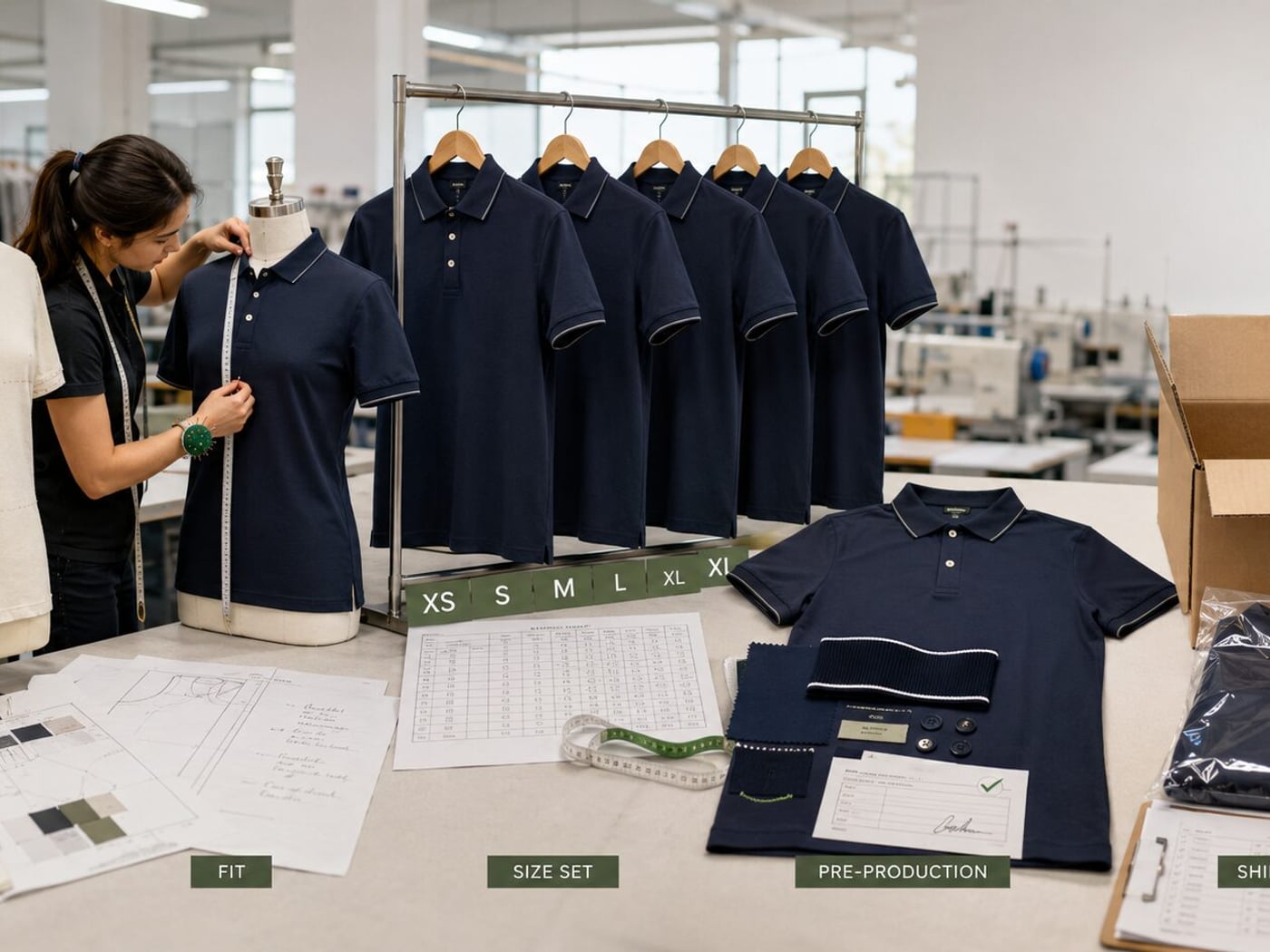
Horssle Knit samples in 7–12 days after fabric and tech pack approval and runs bulk in typically 20–35 days after sample approval, with inspection to AQL 2.5. For hand-finished styles, the sample round should include the finishing specification, not only the fit, because the finishing is what the buyer is buying.
A minimum of 300 pieces per style applies. Where a programme mixes hand-finished and machine-finished styles, label them separately in the inspection plan: the same AQL applied to two different standards of finishing produces a report that compares nothing. Keep the two inspection plans apart from the first delivery, because the second order will inherit whichever plan is on file.
FAQ
Is hand-finished the same as hand-knitted?
No. The panels are machine-knitted and the finishing is done by hand. That is why the checks focus on joins, edges and ends rather than on stitch irregularity.
How many mends are acceptable per garment?
The number is yours to set, and it should be written down. One or two small mends may be normal on a fine gauge; visible repair on a premium piece usually is not. Ask for the mend to be photographed.
Can hand finishing be inspected statistically?
It can, but it is better inspected closely at the start of the run. AQL 2.5 gives a statistical view of bulk; the first pieces off the line give a direct view of the finisher’s standard.
Does hand finishing change the lead time?
It can, because the work is slower and less easy to parallelise. The published window of 20–35 days after sample approval still applies, but a heavily hand-finished style has less slack inside it.
Sources: Intertek textile testing, OEKO-TEX Standard 100, Better Work on labour compliance, Higg facility indexing, EU Regulation 1007/2011 on textile fibre names, and US CBP informed compliance.
Working on a knitwear project?
Let’s talk yarn, gauge and timing.
Send a reference or tech pack and we will come back with a practical development route.