
Two oversized cardigans, same size label, same body length. One hangs from the shoulder with a clean line and a sleeve that finishes at the wrist; the other pulls the shoulder seam down the arm and leaves the sleeve past the knuckles. The difference is not the amount of ease. It is where the ease was added, and that is a specification question rather than a styling one.
Oversized cardigan fit specifications are often written as a set of large numbers on a standard block. A block built for a fitted garment will not produce a relaxed one by scaling it up, because the parts that make an oversized cardigan hang are the shoulder position, the sleeve length and the front opening, not the chest width alone.
Oversized cardigan fit specifications: where the ease belongs
Oversized cardigan fit specifications have to state where the ease is added: at the body, at the shoulder, or through both. Adding it only at the body produces a wide garment with a small armhole; adding it at the shoulder as well produces the drop that makes an oversized cardigan hang.
The three places ease can go are the body, the shoulder and the sleeve. Each produces a different garment from the same chest measurement, and only a combination of them produces the relaxed line the brief usually has in mind.
| Where ease is added | Effect on the silhouette | Effect on the sleeve | Risk |
|---|---|---|---|
| Body only | Wide and boxy, narrow through the shoulder | Sleeve stays at the shoulder point | Reads as a large fitted cardigan |
| Shoulder only | Dropped seam, softer line | Sleeve starts further out on the arm | Sleeve ends short unless lengthened |
| Body and shoulder | Relaxed, hangs from a wide shoulder line | Sleeve lengthened to reach the wrist | Too much weight in the front panels |
| All three, including sleeve width | Very relaxed, almost a coat shape | Wide sleeve that can swamp the hand | Cuff and rib look undersized |

What oversized has to mean before it can be sampled
Oversized is not a number, it is a relationship. A cardigan is oversized when the shoulder sits past the shoulder point, the body clears the torso by a visible amount and the sleeve still finishes where the wearer expects it to. Change one of the three and the garment reads as badly sized rather than relaxed.
That is why the brief should say which relationship it wants: a drop-shoulder oversized cardigan that still looks tailored at the cuff, or a fully relaxed shape with a wide sleeve. Sampling both takes a sample round each, and the choice is cheaper to make on paper than in the sample room.
It also matters how the garment is worn. An oversized cardigan is usually worn open over a layer, which changes the measurement that decides comfort: the front panels hang away from the body, so a chest width that looks generous on a hanger can be tight once a sweater is underneath it.
Should cardigans be oversized?
Only when the yarn can carry the weight. An oversized cardigan on a soft, drapey yarn collapses at the shoulder and the front opening pulls; on a firmer wool or a tighter gauge it holds the line. The decision is a trade-off between the fit the brand wants and the structure the fabric can keep after a wash.
Shoulder position and the drop decision
The shoulder position decides everything downstream. A seam placed two centimetres past the shoulder point gives a modest drop that most wearers read as relaxed; four or five centimetres past it gives the deliberate oversized look, and beyond that the garment starts to behave like a cape at the arm.
The decision also fixes the armhole. Once the seam moves out, the armhole has to be re-shaped, because the same curve that suited a set-in shoulder will pull when it is moved onto the arm. A cardigan with a dropped shoulder and an unmodified set-in armhole will show a fold under the arm that no pressing removes.
The button-through cardigan construction adds one more constraint: the front panels hang from that shoulder line, so a drop that is too deep pulls the front opening out of vertical and the buttons no longer line up when the cardigan is closed.
Sleeve length and the balance point
When the shoulder seam moves out, the sleeve has to be lengthened by the same amount to keep the cuff at the wrist. That sounds obvious and is frequently missed, because the sleeve measurement is often taken from the shoulder seam, and the spec sheet keeps the number while the seam has moved.
The balance point is the wrist bone. A sleeve that finishes there looks deliberate; one that finishes at the knuckle looks borrowed, and one that stops above the wrist looks like the sleeve was shortened to save yarn. Ask for the sample to be measured from the shoulder seam and from the centre back neck, so both numbers are on the record.
The front opening under its own weight
An oversized cardigan carries more fabric in the front panels than a fitted one, and knitted fabric has weight. The opening hangs, and the way it hangs decides whether the garment looks considered or sagging.
A ribbed front band resists the pull better than a plain one, and a band that is knitted slightly tighter than the body holds the line without stiffening the whole front. The interlining decision from the button-through construction applies here too, and on a heavy oversized cardigan it matters more, because there is more fabric pulling on the same edge.
Trade-offs: drape against structure
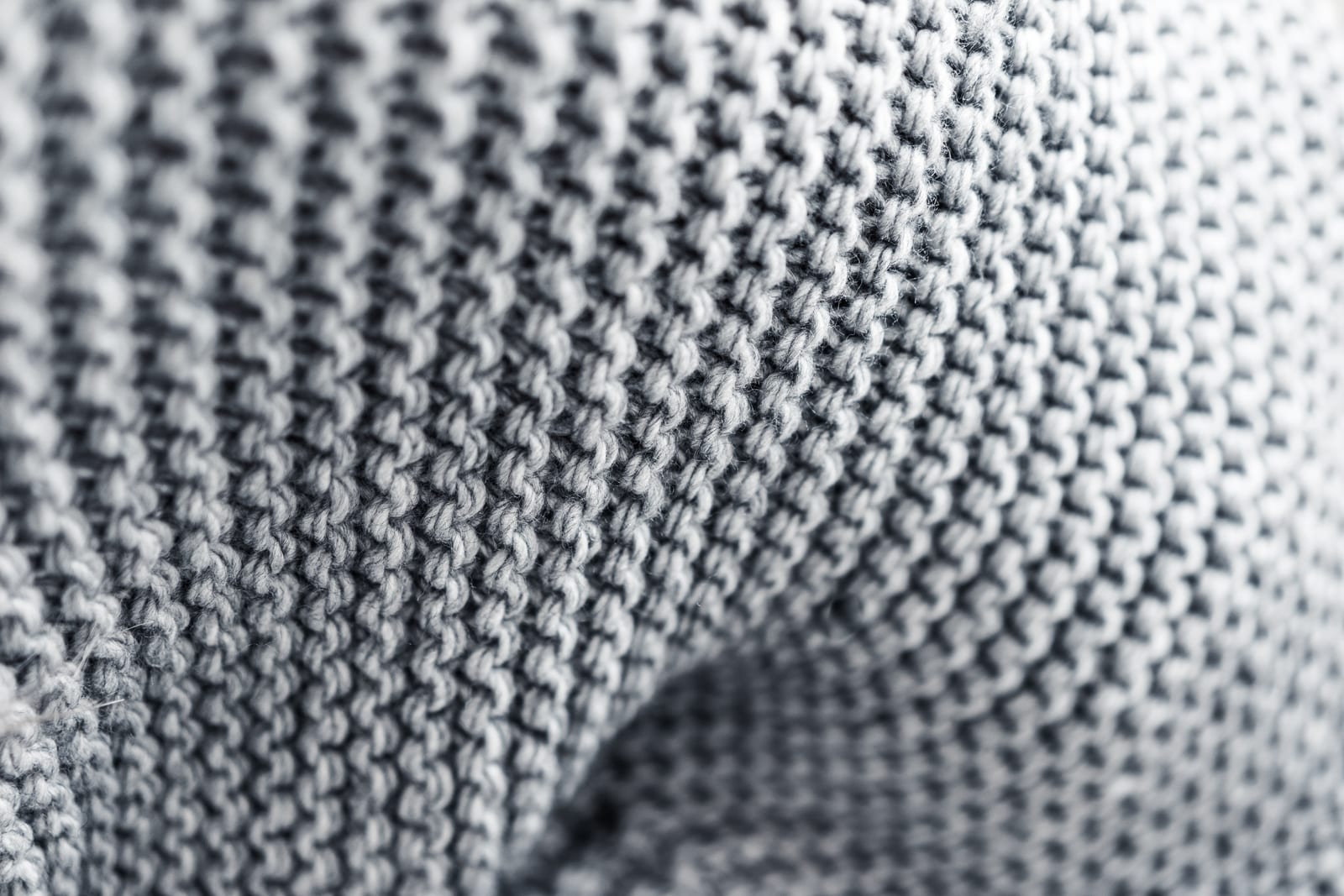
Every oversized cardigan sits somewhere between drape and structure, and the yarn chooses the position more than the pattern does. A soft alpaca or a loose lambswool drapes and reads relaxed; a firm merino or a cable holds a shape and reads tailored even at the same measurements.
The trade-off is visible in wear. A draped cardigan collapses at the shoulder after a few weeks and needs a firmer band to keep the opening straight; a structured cardigan holds its line but can feel heavy and stiff, which defeats the reason for an oversized fit. The compromise is usually a mid-weight yarn with a slightly tighter band.
The pattern can compensate a little. A slightly shorter body stops a heavy front from swinging, a deeper armhole gives the arm room without widening the sleeve, and a ribbed hem adds weight at the bottom edge so the line hangs down rather than out.
Grading an oversized block
Grading an oversized shape proportionally exaggerates the drop. If the shoulder moves out by a fixed step at every size, the largest size ends up with a seam well down the arm and a sleeve that has to grow by more than the body does to stay in proportion.
The grade rules should treat the shoulder drop as a fixed amount rather than a percentage, and the sleeve length as an addition that follows the drop. That keeps the silhouette consistent across sizes instead of turning the extra large into a different garment.
A size set proves it. Measure the drop on the smallest and the largest size and compare the two: if the drop has grown, the rule is wrong rather than the pattern, and no amount of re-cutting the middle sizes will fix it.
Where oversized cardigans fail
Three failures repeat. The first is a dropped shoulder with an unmodified armhole, which produces a fold under the arm. The second is a sleeve that was not lengthened when the shoulder moved, which reads as a sizing error rather than a design choice.
The third is a front band that is too soft for the weight of the panels, which shows as a wavy opening after the first wash. Each is a specification gap rather than a making fault, and each is cheaper to fix on paper than on a bulk order inspected at AQL 2.5.
FAQ
How much drop makes a cardigan oversized?
Enough that the seam sits visibly past the shoulder point, and no so much that the armhole loses its shape. The right amount is judged on a body in the intended yarn, not from a number on a sheet.
Can we keep the standard sleeve length?
Only if the shoulder stays at the shoulder point. Once the seam moves out, the sleeve has to lengthen by the same amount or the cuff climbs up the arm.
Does an oversized cardigan need a different block?
Yes. The shoulder, armhole and band are different, and the grade rules change with them. Scaling a fitted block produces a large garment rather than a relaxed one.
What yarn suits an oversized cardigan?
A mid-weight yarn with enough body to hold the shoulder and enough softness to drape. Very soft yarns collapse at the seam; very firm ones make the shape feel like outerwear.
If the shape is still open, send the intended drop, the yarn and the sizes to the oversized cardigan team and ask for the shoulder and sleeve to be specified together. A zip front version should be sampled separately, because the tape changes how the front hangs.
Sources: The Woolmark Company on wool fibre specification, OEKO-TEX Standard 100 on restricted substances, Intertek on textile testing, EU Regulation 1007/2011 on fibre names and labelling, and Higg on environmental assessment.
Working on a knitwear project?
Let’s talk yarn, gauge and timing.
Send a reference or tech pack and we will come back with a practical development route.

