
The difference between a cardigan that closes and one that gapes is often a single centimetre of ease across the bust. The measurement sheet can match the approved sample, the buttonholes can be perfectly sewn, and the front still opens between the second and third button when the wearer breathes in.
Cardigan placket gaping is a fit problem before it is a sewing problem. The closure is being asked to hold a front that does not have enough room, and no amount of reinforcement at the placket will fix a garment that is too tight across the bust.
Cardigan placket gaping: the short answer
Cardigan placket gaping happens when the front panel has too little ease across the bust, the buttons are spaced too far apart, or the placket lacks stability. Check the bust ease first, then the spacing, then the placket build. A gap that appears only when the wearer moves is a fit issue, not a trim issue.
The checklist below runs in that order, because the fix gets more expensive the further down the list you go.
One centimetre decides it
Ease is the room between the body and the garment. In a fitted cardigan, that room is small by design, which leaves little margin. When the chest expands, the fabric has to move somewhere, and the front edge is the weakest point because it is the only place with an opening.
So the front edge opens. The button does not fail, the buttonhole does not tear, and the placket does not stretch: the gap appears because the two front edges are pulled apart by a body that needs more room than the panel provides.
The fix is to add ease where the body needs it, which is usually across the bust and through the armhole rather than evenly around the whole chest.
The gaping checklist
Work through these six checks on a worn sample, in order. Each one eliminates a cause before the next becomes relevant.
- Bust ease. Does the front panel lie flat across the chest without strain?
- Armhole ease. Can the wearer move an arm forward without the front pulling?
- Button spacing. Do the gaps stay closed when the wearer breathes deeply?
- Placket stability. Does the front edge curl or stretch under the button load?
- Buttonhole size. Does each button sit without strain, and stay closed when moved?
- Fabric recovery. Does the knit return after stretching, or does it stay open?
The order matters. A button spacing change will not fix a garment that lacks bust ease, and a more stable placket will not fix either.
| Symptom | Likely cause | Fix |
|---|---|---|
| Gap at the bust, closed elsewhere | Too little ease across the front panel | Add front ease and check the armhole |
| Gap between two specific buttons | Spacing too wide at that point | Add a button or tighten the spacing |
| Front edge curls outward | Placket lacks stability | Tape or face the placket |
| Buttons pop open | Buttonhole too large for the button | Resize the buttonhole or the button |
| Gap grows through the day | Fabric recovery is poor | Change the yarn or the blend |
Two rows can be true at once, which is why the checklist is ordered rather than diagnostic by inspection.
Bust ease and the front panel
In a fitted cardigan, the front panel carries the closure and the bust shape at the same time. Adding ease evenly around the body makes the garment larger without solving the gap, because the extra room sits at the side seam rather than where the body needs it.
The useful change is a front panel adjustment: more room across the bust, taken out below it, so the panel follows the body rather than standing away. That is a pattern decision and it should be made before the button positions are finalised.
Check the armhole as well. A tight armhole pulls the front panel forward when the arm moves, which opens the placket even when the bust ease is correct.
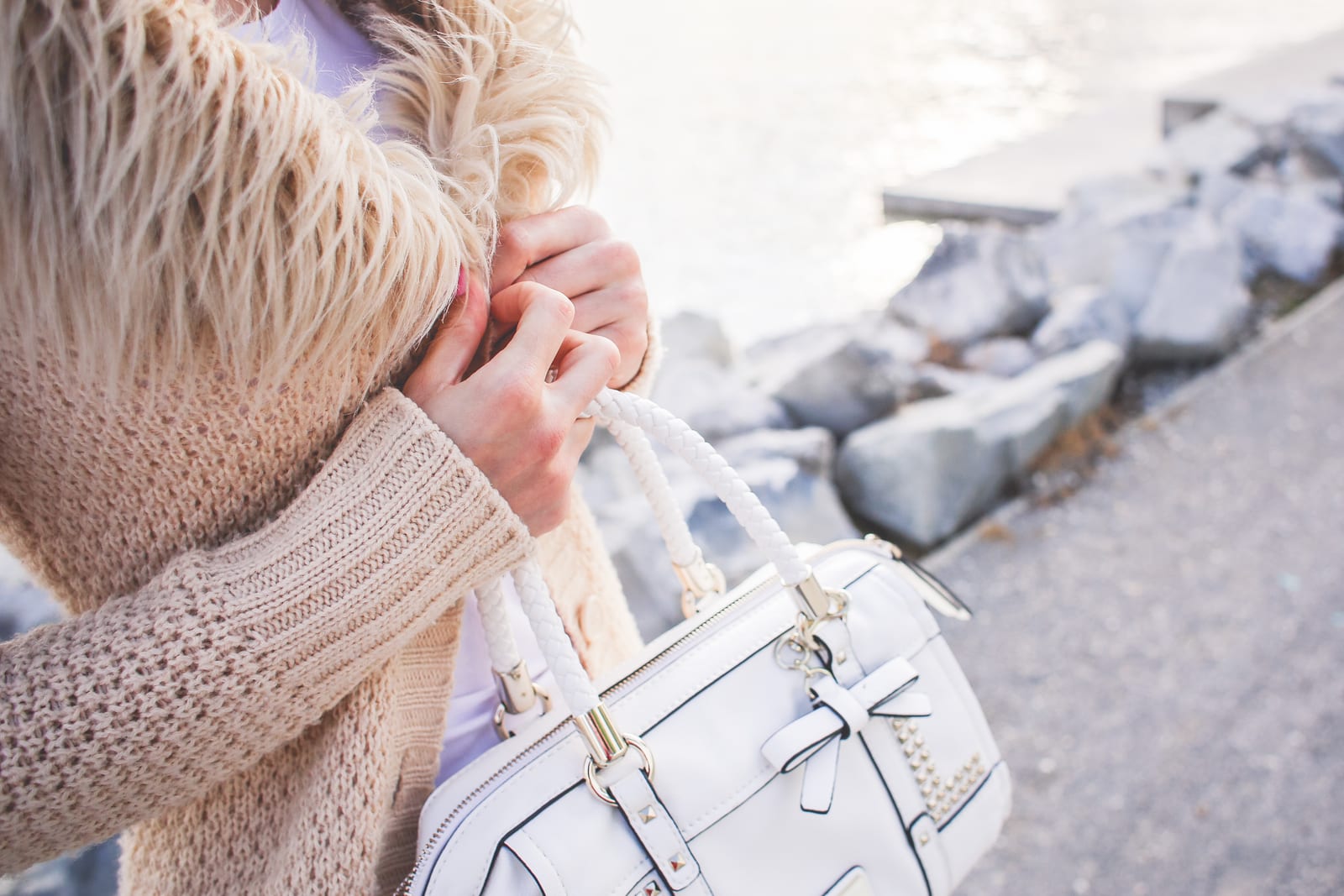
Some knits improve with a shaped front panel that narrows at the waist and gives room across the bust. A dart in a knit is unusual but not impossible; a shaped panel achieves a similar line without a seam, and it keeps the closure where the body needs it.
Button spacing, step by step
Mark the button positions on a worn sample rather than on a flat one. Start at the point where the garment naturally closes, usually just below the bust, and space outward from there.
Check the gap between buttons by asking the wearer to breathe in deeply and to reach forward. The fabric between two buttons should not open into a visible slot. Where it does, add a button at that point rather than moving all of them.
Then check the lowest button. A cardigan that gapes at the hem usually needs the last button lower or the hem rib firmer, and this is a quick change at sample stage.
Placket stability and buttonhole size
A placket that curls outward makes a small gap look larger. Stabilising the front edge with a tape or a faced band holds the line, but it also makes the placket firmer, so the sample should be worn to check the hand at the chest.
Buttonhole size should match the button diameter, not the button’s visual size. A buttonhole that is too large lets the button slide and the front open; one that is too small strains the buttonhole and distorts the placket.
Test on more than one wearer if the range serves different bodies. A cardigan that closes on the fit model can gape on a wearer with a fuller bust in the same size, and the largest size in the range is the one most likely to show it.
The dynamic test
A cardigan that closes while standing still can gape the moment the wearer moves. Test it in motion: sit down, reach forward, lift both arms and breathe in deeply. Each action loads a different part of the front.
Photograph the garment during the test, from the side as well as the front. The side view shows the placket line, which is where a gap begins before it becomes visible from the front.
Repeat the test after washing. A knit that relaxes slightly may close better; one that grows may gape more. Either result belongs in the file.
Grading the front across the range
The front panel changes more across a size range than the back. If the grade adds width evenly, the largest sizes gain room at the side seam and still gape at the closure, because the bust depth did not grow with the chest.
Check the largest size on a body before approving bulk. Where the range serves a fuller bust, the front grade has to carry that change, and the button spacing may need to change with it.
Fixes that do not work
Adding a hidden hook or a second row of buttons treats the symptom. It holds the front closed at one point and concentrates the strain at the next, and it changes the design of a garment that was meant to be simple.
Interfacing the whole front makes the cardigan feel like a jacket and does not add the ease the body needs. A heavier yarn changes the garment’s character rather than solving the fit.
FAQ
Why does my cardigan gap between buttons?
Usually because the front panel has too little ease across the bust, so the fabric is pulled apart at the opening. Spacing that is too wide at that point makes it worse. Check the ease first, then the spacing.
Will a bigger size fix the gaping?
It may, but it also adds room everywhere else. If the gap is caused by bust ease, a front panel adjustment solves it without changing the shoulder or the waist. Try the pattern change before sizing up.
Does the yarn affect gaping?
Yes. A yarn with poor recovery stays stretched after the wearer moves, so the gap grows through the day. A yarn with good recovery closes again. Test the worn sample after an hour to see which behaviour you have.
Can the placket be reinforced after the garment is made?
Sometimes, by adding a tape or a facing along the front edge, but it is a visible change on a finished garment. It is cheaper to specify the placket build at sample stage, before the pattern is finalised.
Closing the gap before bulk
Check ease, spacing, stability, buttonhole and recovery, in that order, on a worn sample that moves. The fix that belongs at the pattern stage is cheaper than any correction at the placket.
Send the target wearer and the intended fit with the tech pack. Our merino cardigan, zip-front cardigan and cable cardigan programs show how the same front changes with yarn, closure and structure. Sampling is 7–12 days after fabric and tech pack approval.
Photograph the gap, not only the garment. A close picture of the opening between two buttons tells the pattern maker more than a full-length shot, and it is the evidence that justifies a pattern change.
Sources: The Woolmark Company, OEKO-TEX Standard 100, Intertek, EU Regulation 1007/2011 on textile fibre names, Higg and Control Union.
Working on a knitwear project?
Let’s talk yarn, gauge and timing.
Send a reference or tech pack and we will come back with a practical development route.

