
The tee was specified as ring-spun cotton and the fabric that arrived printed beautifully and felt like a shop towel. The mill had not lied: the yarn was cotton, the weight matched the sheet and the stitch count was correct. The spinning route had changed, and nothing on the specification said which route was required.
Ring spun vs open end t shirts is the decision sitting behind that trap: the fibre is only the first choice, and how it is spun, how long the fibres are and how the yarn is twisted decide the surface the customer touches and the surface the print sits on.
Ring spun vs open end t shirts: the short answer
Ring-spun yarn is drafted and twisted from longer, better-aligned fibres, giving a stronger, softer yarn with a smoother fabric. Open-end yarn is spun faster from shorter fibres, giving a more even but weaker yarn that feels drier. The route changes hand, surface and print behaviour, and it belongs in the specification.
Neither route is a defect. The failure is a specification that names a fibre and a weight but not the yarn, which leaves the mill free to choose the cheaper route.
How the two routes spin cotton
Ring spinning draws a thin ribbon of fibres, adds twist with a traveller running on a ring, and winds the result. The process aligns fibres along the yarn, which is why a ring-spun yarn is stronger and softer for a given count. Combed ring-spun goes further, removing short fibres before spinning, so the yarn carries less loose material and the fabric surface is cleaner.
Open-end spinning, also called rotor spinning, opens the fibre mass and collects it in a rotating rotor before twist is added. It is faster and uses shorter fibres, which is why it costs less. The yarn is even in thickness and uniform along its length, and it is weaker and less extensible than a ring-spun yarn of the same count, which shows in the hand and in how the fabric behaves after washing.
What you see on the surface
Hand is the first difference and the hardest to put in a specification. A ring-spun jersey feels softer and drapes with more movement; an open-end jersey feels drier and flatter, and it can read as thinner even when the weight matches.
Surface comes next. Combed ring-spun fabric has a cleaner face, which takes a print with a sharp edge and holds a fine line. Open-end fabric can print well too, and the ink sits differently because the surface texture differs, which is why the same artwork can look crisp on one blank and slightly softer on another.
Wash behaviour is the third. A weaker yarn loses shape sooner at the neck and the shoulder, and a jersey that starts to pill or fuzz will do so at the underarm and the hem first. Those are the places a customer notices, and they are the places a sample should be checked.
A simple comparison settles more than a specification sheet: knit both yarns at the same count and stitch, wash both twice, and handle them side by side. The difference that appears after the second wash is the one a customer will live with, and it is the difference a photograph will never show.
Building the cost of a tee
A tee’s cost builds line by line, and the spinning route sits near the bottom of the stack because it changes everything above it.
Fibre. Longer, cleaner cotton costs more, and combed ring-spun uses the longer portion of the crop. Open-end can use shorter fibre, which is part of why it is cheaper.
Yarn. Spinning speed, yield and the number of processes all contribute. Ring spinning is slower per kilogram, and combing adds a process before spinning begins.
Knitting. The same machine knits both yarns, at slightly different efficiencies, and the stitch density is a separate decision from the yarn.
Dyeing and finishing. A cleaner surface can need less finishing to look acceptable, and a rougher one can need more, which is one of the quieter cost differences between the routes.
Making and packing. These lines are largely the same for both, which is why the yarn decision dominates the difference rather than being one factor among many.
That is also why two spinners’ quotations for the same jersey are not comparable until the route is named. Two prices for cotton jersey can sit far apart because one is combed ring-spun and the other is open-end, and the gap sits in the yarn line rather than in the making.
Reading a fabric specification
A specification that can be compared names the yarn, the count, the weight and the construction. The table is what to look for and what each field actually tells you.
| Field | What it should say | What it does not tell you |
|---|---|---|
| Fibre | Cotton, and the origin if it matters | How the yarn was spun |
| Yarn route | Ring-spun, combed ring-spun or open-end | The count or the weight |
| Count | Ne or tex, with the system named | The fabric weight |
| Weight | Grams per square metre | The stitch density or the hand |
| Stitch density | Stitches per unit, or gauge | The yarn’s strength |
| Finish | Washed, brushed, compacted | How it will behave after five washes |
The row that is usually missing is the yarn route, and it is the one that decides whether the garment feels like the sample. Ask for it in writing, and ask for the combed or carded status as well, because combed ring-spun and carded ring-spun are different products at different prices.

Checking a mill’s claim
You cannot see the spinning route in a photograph, and a label that says cotton is not a claim about the yarn. The practical checks are a lab test for count and weight, a hand panel against a sealed standard, and a wash trial on the finished garment.
Ask for the yarn ticket with the fabric specification. A mill that can supply it is working from a document; one that cannot is working from a description, and the description is where the substitution usually happens. Where a supplier offers a lower price on the same specification, the first question is which line moved, and the second is whether the yarn route moved with it.
What each route suits
Ring-spun, and especially combed ring-spun, suits garments where hand and print detail matter: a retail tee, a promotional tee that has to feel better than its price, a logo tee with fine artwork. Open-end suits volume garments where durability and cost dominate and the hand is secondary, such as workwear or a basic layer sold on price.
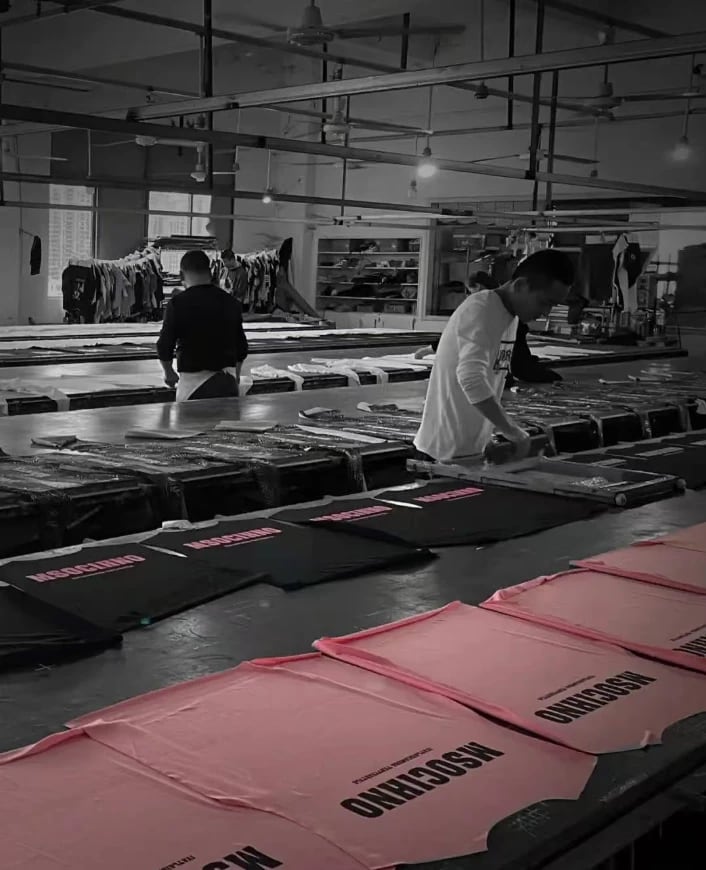
An oversized tee is a useful test of the choice, because the larger panel shows drape and surface more than a fitted one. A heavier weight does not fix a drier yarn; it only makes a heavier version of the same hand.
Where the decision goes wrong
Three failures repeat. A specification that names a fibre and a weight but not the yarn route. A sample approved in one route and produced in the other. And a price comparison between two quotes that were never costed on the same yarn.
Each is closed by writing the route into the specification and asking for the yarn ticket with the quotation. The t-shirt programme quotes on a named yarn for that reason, and the difference between the two routes shows up in the sample rather than in an argument after bulk.
It helps to say what the tee is for. A retail tee that will be photographed needs the cleaner surface; a workwear tee that will be washed hard needs the stronger yarn; a promotional tee needs whichever the budget allows, stated honestly rather than assumed.
FAQ
Is ring-spun always better than open-end?
For hand and print detail, usually yes. For a volume garment where cost and durability dominate, open-end can be the rational choice. The mistake is buying one and expecting the other.
Can you tell the difference by looking?
Sometimes, on a washed garment, by the surface and the way it has worn. On a new sample, the hand and the wash behaviour are more reliable than the eye, which is why the comparison should include a wash trial.
Does a heavier weight make a tee feel softer?
Not by itself. Weight adds substance, and a heavier open-end jersey still feels drier than a lighter ring-spun one. Hand comes from the yarn and the finish before it comes from the weight.
What should we ask for in the specification?
The spinning route, the count and the system, the weight, the stitch density and the finish, plus the yarn ticket. Those six fields make two quotes comparable and make a substitution visible.
Sources: OEKO-TEX Standard 100, EU Regulation 1007/2011, Intertek, Higg, US CBP and The Woolmark Company.
Working on a knitwear project?
Let’s talk yarn, gauge and timing.
Send a reference or tech pack and we will come back with a practical development route.


