
The page that most often changes a knitwear quote is not the sketch. It is the yarn line — or the absence of one.
We read a tech pack the way a machine operator reads a drawing: looking for the dimensions that decide the work. A pack with a clean flat sketch and the phrase “soft cotton, 12 gauge” comes back with a range wide enough to be useless, because the factory is quietly pricing three different garments and choosing a number in the middle. The sketch was never the problem. The missing yarn line was.
What follows is the order in which we read a pack, the pages that move the number, and the fields that are specific to knitwear rather than cut-and-sew.
What a tech pack is for
A tech pack is the document set that tells a factory what to make and to what tolerance. It covers construction and yarn, stitch, measurements, colour and labelling. Its job is to remove interpretation: a good pack means two factories quote the same garment; a bad one means each prices something different.
That sounds obvious until you see how often a pack is written as a design brief rather than a manufacturing document. A brief describes intent. A pack has to describe the garment precisely enough that two people who have never spoken produce the same thing.
The pages that change the quote
Not every page carries equal weight. In our reading, seven do the work and the rest support them.
| Page | What it fixes | If it is missing |
|---|---|---|
| Yarn and fibre line | Composition, count, spin, ply | The quote rests on an assumption you did not make |
| Gauge and stitch | Needles per inch and structure | Gauge is guessed and the band widens sharply |
| Measurement chart | Points, base size, tolerances | Each factory quotes its own block |
| Colour standard | Pantone TCX or approved lab dip | Three shades answer to the same word |
| Trims and branding | Labels, buttons, drawcords, thread | Trim is priced as an afterthought |
| Care and content label | Fibre percentages and care symbols | Labels are rewritten after the first order |
| Packing and carton | Fold, polybag, ratio, carton marks | Packing cost arrives at the end of the quote |
Six of those seven cost nothing but an afternoon to write, and all seven are expensive to guess. The pattern is consistent: when a page is missing, the factory does not stop. It substitutes its own assumption and prices the assumption.
A missing page never blocks a quote. It just widens the range.
Knit-specific fields: gauge, stitch, yarn
This is where knitwear packs most often arrive under-specified, because the vocabulary of knitting is not the vocabulary of sewing.
Gauge is the number of needles per inch on the machine, and sweaters commonly run at 7, 12 or 14. It is not a quality grade, it is a resolution. A 14-gauge knit is finer, uses finer yarn, takes longer per panel and holds a tighter measurement tolerance. A 7-gauge knit is coarser and faster. The same sketch at a different gauge is a different garment at a different price.
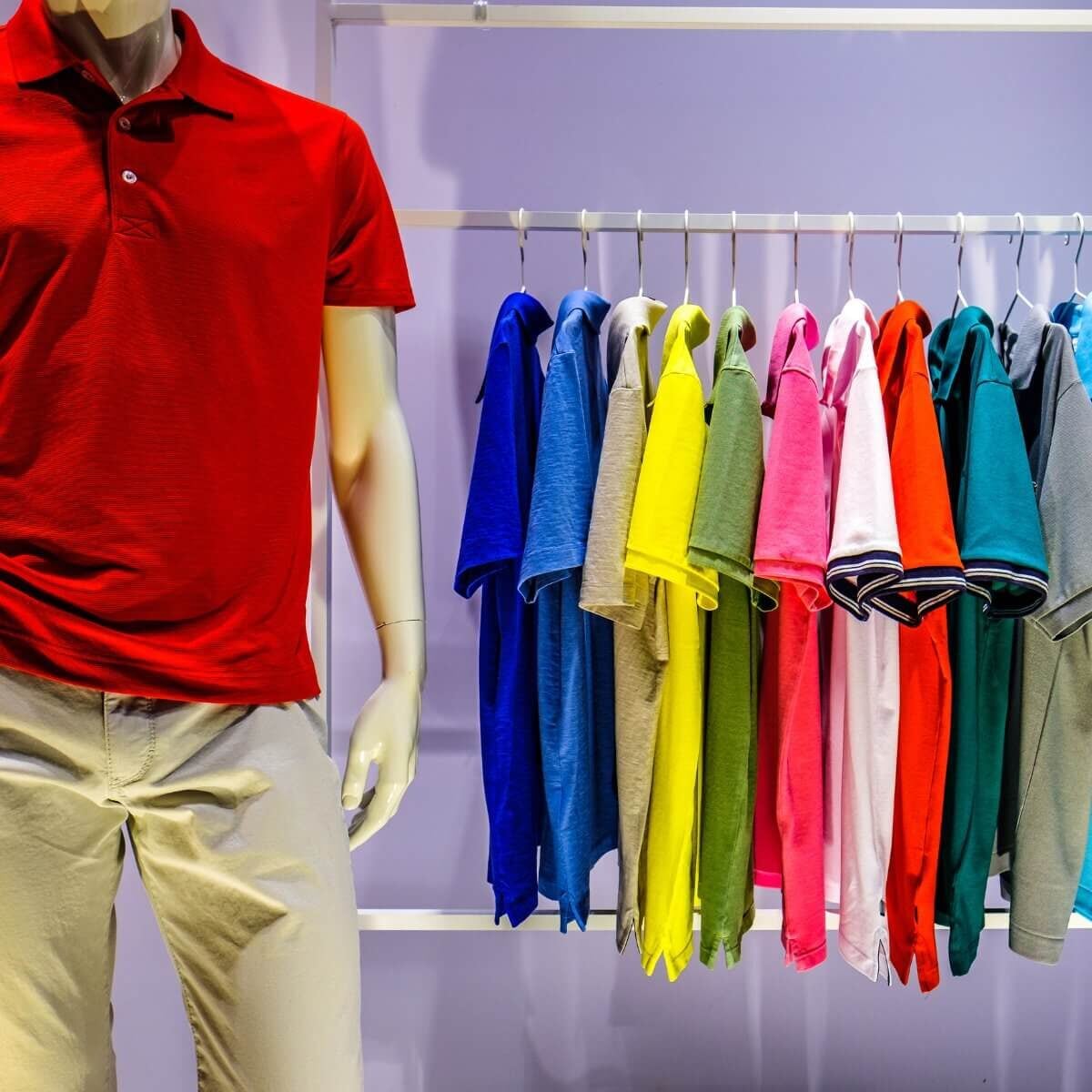
Stitch is the structure the needles form: plain jersey, 1×1 or 2×2 rib, links-links, cable, jacquard, or a tuck structure that reads as texture. Naming the stitch family is enough for a first quote; naming the exact structure matters for the second. “Ribbed” on its own leaves at least four structures on the table, and they do not cost the same.
Yarn needs a count and a composition, not an adjective. “2/28 Nm cotton” and “2/32 Nm combed cotton” behave differently on the machine and in the wash. If the fibre is certified, the certificate belongs on this page too: a STANDARD 100 report names the article it covers, and that name decides what can be bought. Sweater-specific fields (neckline, armhole shaping, rib heights) are set out in our sweater tech pack checklist.
Without those three lines, a pack is a mood board with a sewing note.
Measurement points and tolerances
Measurement pages fail in a predictable way: they list points without saying how each one is measured. Five steps fix that before the pack leaves your desk.
- Fix one base size. Grade from it, quote from it, fit on it.
- Name each point the way a pattern maker reads it, in that order.
- State flat or circumference for every point.
- Give a tolerance per point, not one tolerance for the page.
- Attach the grade rule, even roughly, so the size run is not re-derived at bulk.
| Point | How to state it | What goes wrong otherwise |
|---|---|---|
| Chest | Circumference, measured below the armhole, flat then doubled | Flat-only figures get doubled twice |
| Body length | From high point of shoulder, flat | Some factories measure from centre-back neck |
| Sleeve length | From shoulder seam or centre-back neck — say which | The two conventions differ by several centimetres |
| Neck width | Seam to seam, relaxed | Rib opens after pressing and the number drifts |
| Rib height | Finished height, after pressing | Measured before pressing, so it is quoted short |
| Armhole | Straight or curved, and where it is measured | Curved armholes drift with gauge |
Tolerances deserve one extra sentence, because this is where knitwear separates from woven. A knitted panel relaxes after pressing and can move again in the wash, so write the tolerance for the state you will measure in: relaxed, after pressing, before wash.
Colour and trim references
Colour is a reference system, not a word. A Pantone TCX number plus a lab dip approved under a stated light source is a specification; “oatmeal” is a conversation. Ask for one lab dip per colour and approve it in writing, because the dip is what bulk is judged against under AQL 2.5.
Trims are where a pack quietly loses time. Each one is a purchased part with its own lead time and artwork approval: the main label, the care label symbols, the hangtag, the buttons, the drawcord, the thread. Put them on one page with a photo and a supplier reference, and state who supplies what. A pack that leaves trims to the factory gets factory-standard trims.
Label content is a compliance field, not a graphic one. Care wording has to satisfy the market you sell into — the US care rule sits in 16 CFR 423, while fibre content is enforced separately by the FTC in the US and by Regulation (EU) 1007/2011 in Europe. Write the wording into the pack before the label is ordered.
What you can send instead
A pack is not the only starting point. A reference sample is often a better brief than a document: a garment you already sell, or a competitor’s piece you are willing to cut. It carries the drape and the hand-feel that a drawing cannot, and the rib behaves the way it will in bulk.
The trade-off is time and interpretation. We measure the sample and write the specification, then send it back for correction. That adds a step before sampling begins. In exchange you get a document that describes a garment that exists. If you have neither, a short call with a bill of materials and three photographs gets a range quote, clearly marked as a range rather than a price.
Version control
Most bulk disputes we see do not come from a bad decision. They come from two good decisions made a week apart, with no record of which one reached the cutting table. A pack needs a revision number on every page, a one-line change log, and a single named person who signs off.
Keep one file as the source of truth, export it as PDF, and send the whole file when something changes rather than the changed page alone. If the pack carries licensed artwork or a brand you are not ready to show, an NDA before circulation solves that; we sign them routinely and run projects in English.
A one-page template
If the pack is drifting, collapse it to one page and let the rest become appendices. That page needs a style header and a six-line bill of materials. It also needs the gauge and stitch, the measurement table with tolerances, the colourway references, the trim list, and a sign-off with a date and version.
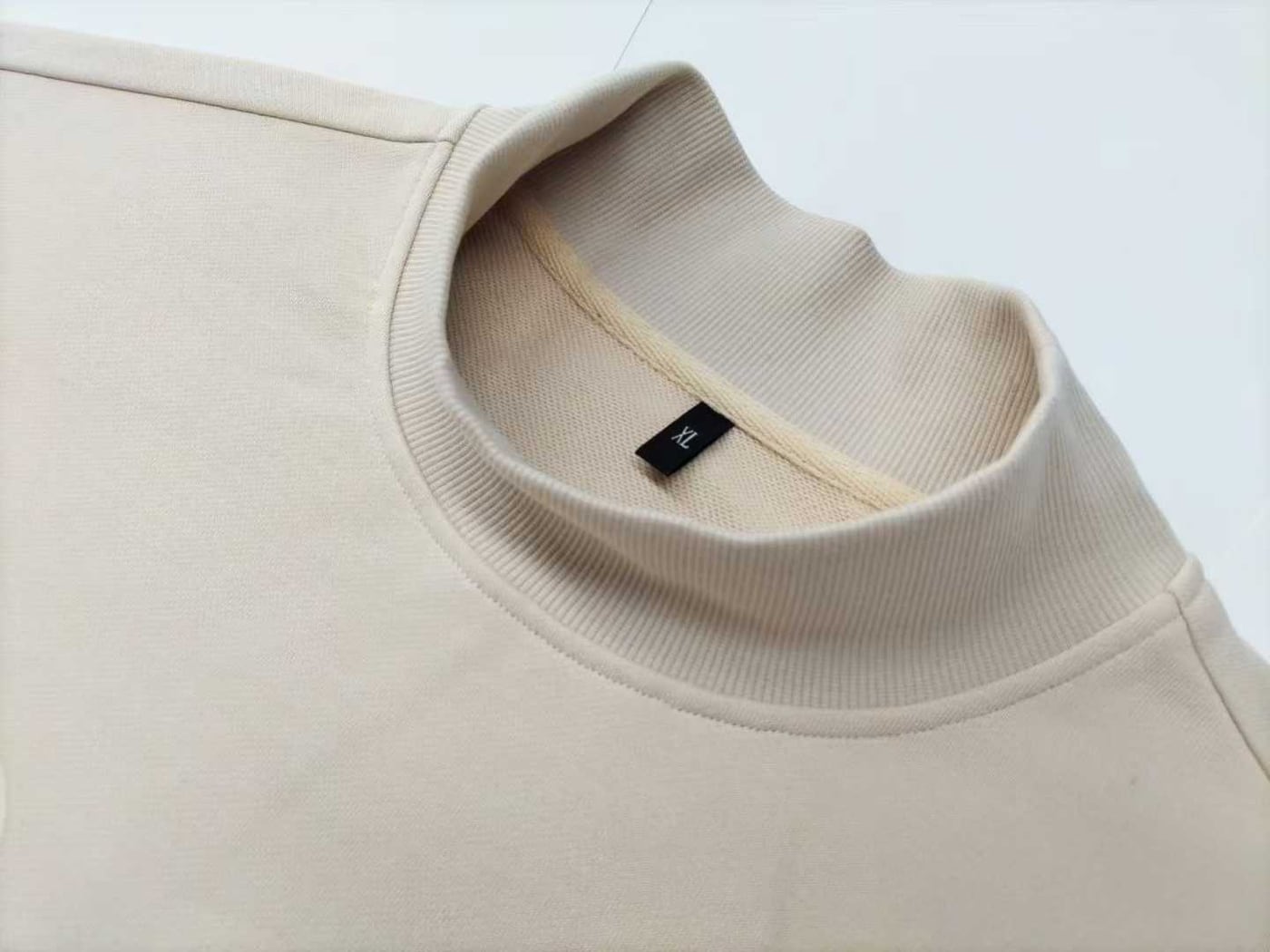
That page is enough for us to quote and enough for you to compare quotes. Send it, or send the sample it should describe, and we will come back with the questions that matter instead of a range that covers everything.
FAQ
Can you work from a reference sample instead of a tech pack?
Yes. We measure the sample, write the specification and send it back for correction before sampling starts. It adds a step, but the document ends up describing a garment that exists rather than one that is imagined.
What gauge should I specify for a knitwear style?
Specify the gauge the design was developed on. If there is no development yet, describe the hand-feel and weight you want and we will propose a gauge. The same sketch at 7, 12 and 14 gauge gives three different garments and three different prices.
How much measurement detail is enough for a first quote?
One base size, ten to fifteen points, flat or circumference stated, and a tolerance per point. That is enough to quote and to grade. The full chart can follow with the fit sample.
Will you sign an NDA before I send a tech pack?
Yes, routinely. Send yours with the pack or ask for ours. Keep the revision number on every page so the protected version is unambiguous if the file is shared further.
Working on a knitwear project?
Let’s talk yarn, gauge and timing.
Send a reference or tech pack and we will come back with a practical development route.

