
Here is the counter-intuitive part: the acrylic sweater often survives the first twenty washes better than the wool one. It keeps its colour, it does not felt, and it comes out of the machine looking close to new. Then, around wear thirty, it starts to pill, the cuffs soften into shape loss, and the customer decides the garment was cheap. Wool does the opposite: it looks tired early if it is washed badly, then stabilises and lasts for years.
That difference — how a fibre fails over time — matters more than the price difference at the counter, and it is the argument that should decide which one goes into a given style.
The two fibres, side by side
| Property | Wool | Acrylic | What it means for the garment |
|---|---|---|---|
| Source | Protein fibre from sheep | Synthetic, polyacrylonitrile | Different care routes, different end-of-life story |
| Moisture regain | Around 15–16% | Around 1–2% | Wool stays warm when damp; acrylic feels clammy then dries fast |
| Warmth per weight | High, with loft | High, but flatter over time | Acrylic feels warm initially, then compresses |
| Pilling | Moderate; depends on fibre length and twist | High; pills form and stay attached | The most visible ageing difference |
| Colourfastness | Good to very good | Excellent, especially on brights | Acrylic holds neon and reds better |
| Shrinkage and felting | Felts if agitated in heat | Dimensionally stable | Wool needs a care label that is actually followed |
| Price per kg | Higher and volatile | Lower and stable | The main reason blends exist |
Why the price gap is so large
Wool is an agricultural product with a clip, a season and a quality spread. Merino at fine micron counts trades at a premium; coarser wool is cheaper but prickle-prone. Acrylic is a petrochemical polymer produced to a specification, so its price tracks oil and energy rather than weather.
That is why a 50/50 wool-acrylic blend is so common in the mid-market: it keeps the wool hand and warmth, cuts the cost, and improves shape retention. The blend is not a trick; it is a legitimate engineering choice, as long as the label states it accurately.
Hand-feel is not one thing
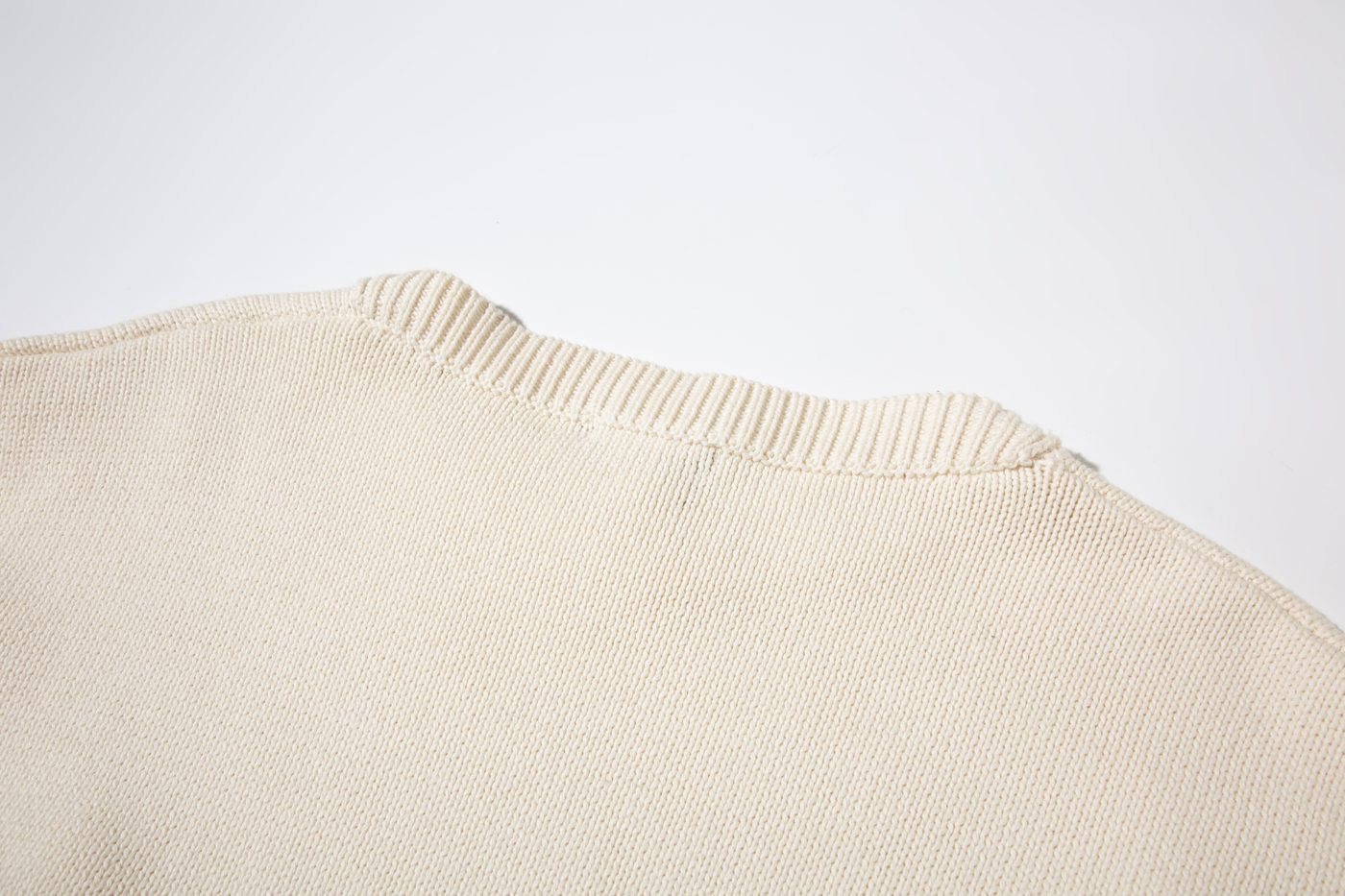
Buyers often describe both fibres as “soft”, which hides the difference. Wool has loft and a dry, springy hand; acrylic has a smoother, flatter hand that can feel slightly plastic when the gauge is coarse and the twist is low.
- Fine merino at 12–16 gauge gives a soft, next-to-skin surface with good recovery.
- Acrylic at the same gauge feels soft initially and develops a fuzzy surface as fibres migrate.
- Blends can get close to wool hand at a lower price, but the pilling profile follows the acrylic content.
What the label has to say
Both fibres are regulated names, and the rules differ by market. In the EU, fibre names are defined in Regulation (EU) No 1007/2011, and a blend has to be stated with percentages in descending order. In the United States, the Wool Products Labeling Act governs wool claims, including what “wool” and “virgin wool” may mean, and the Textile Fiber Products Identification Act covers the rest.
Two practical rules follow. First, “wool” is not a synonym for “merino”: merino is a breed descriptor, and using it implies a fibre fineness you should be able to document. Second, an acrylic-rich blend described as “wool blend” without percentages is a labelling problem waiting for a retailer audit.
Which fibre for which product
| Product | Better default | Why |
|---|---|---|
| Next-to-skin fine gauge crewneck | Fine merino or merino blend | Prickle and moisture management matter against skin |
| Mid-market fashion sweater | Wool-acrylic blend | Hand and price balanced; shape retention from acrylic |
| Bright colour, low price point | Acrylic or acrylic-rich blend | Colourfastness and cost; accept the pilling profile |
| Chunky outdoor cardigan | Wool or wool-rich blend | Loft, warmth when damp, durability under abrasion |
| Kids’ knitwear | Blend, machine washable | Wash frequency and shrinkage risk dominate |
Pilling is the deciding test
If the style is acrylic or acrylic-rich, budget for a pilling test rather than discovering the result in reviews. The test (ISO 12945 or the equivalent ASTM method) gives a grade after a defined number of rubs; the question is whether that grade holds at the price point.
Wool is not exempt: a short-staple wool at a loose gauge pills too. The fibre matters less than the staple length, the twist and the gauge. Our notes on pilling test requirements explain how to set the acceptance limit, and the merino programme shows how fineness and gauge are paired in practice.
The sustainability question, honestly
Neither fibre is straightforward. Wool is renewable and biodegradable, but it carries land use, methane and animal welfare questions that vary enormously by farm and certification. Acrylic is fossil-based, does not biodegrade, and sheds microplastics in washing. A brand that says “natural” to mean “better” is making a claim it may not be able to defend; a brand that says “recycled acrylic” needs the transaction certificate to back it.
If a sustainability claim is part of the product story, the certificate chain matters more than the fibre name. That is a documentation question, and our factory page lists which certified yarn routes we can source to requirement.
FAQ
Is acrylic just cheap wool?
No. It is a different fibre with different behaviour: better colourfastness and wash stability, worse pilling and no warmth when damp. It is cheaper, but that is a consequence, not a definition.
Does wool always pill less than acrylic?
Not always. A short-staple wool knitted loosely can pill as badly as acrylic. Staple length, twist and gauge decide the result as much as the fibre class.
Can a wool-acrylic blend be called a wool sweater?
Only with the blend percentages stated as the law requires. Calling a 30% wool blend a “wool sweater” without qualification is a labelling risk in both the EU and the US.
Which one should a first collection use?
If the price point allows, merino or a wool-rich blend for the hero style and an acrylic blend for the volume style. That gives you a quality story and a price entry point without pretending they are the same product.
Sources: Regulation (EU) No 1007/2011, 16 CFR Part 300 (Wool Products), and ISO 12945 (pilling).
If you are choosing between the two for a specific style, send the gauge, the price point and the wash instruction you want to print. We will tell you where the fibre will fail before the sample does.
Working on a knitwear project?
Let’s talk yarn, gauge and timing.
Send a reference or tech pack and we will come back with a practical development route.

