Mock neck sweater collar height often looks different on a sketch, on a table, and on the wearer. A short standing collar can touch the chin at the front or flare away at the back even when a single stated dimension appears correct. Record where the measurement starts before asking the sample room to change the height.
Last updated: November 26, 2026
How do you specify mock neck sweater collar height?
Specify mock neck sweater collar height from an agreed neckline join or transition to the finished top edge, with the knit relaxed. Record front and back separately when the design needs it. Fit the sample to check contact, entry, and recovery, then repeat the same flat measurements and wear checks after approved laundering.
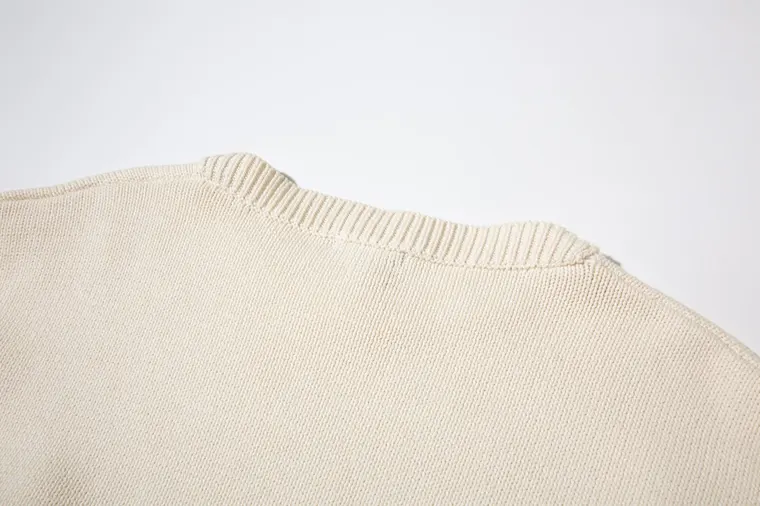
Define the finished edges you will measure
Mark center front and center back on a drawing or photo. For an attached collar, show whether the lower reference is the center of the join or a specified edge of the seam. For a collar knitted in one piece with the body, mark the stitch or visual transition that a second person can find. A written instruction to measure from the neckline needs that physical reference, especially when the surface is soft or the stitch pattern changes gradually.
Write whether the tape follows the standing collar or runs in a straight line from the marked base to the finished top edge on a relaxed sample. Use the chosen method consistently rather than comparing one measurement taken with the collar upright and another taken with it flattened. Let the fabric settle before reading the tape and keep the collar’s ribs in their natural position. Woolmark’s explanation of machine-washable wool describes why the fiber’s treatment matters when planning the laundering check. Your drawing should specify the actual edge on your sample.
Fit the sample before changing the height
Start with the wearer looking straight ahead. Mark whether they feel contact at the front throat, at the side, or below the hairline. Have them turn and lower the chin, then put the sweater on and remove it again. Record whether the top edge presses at one point or the entire opening feels restrictive. A collar that is hard to pull over the head can need a different opening or stretch behavior even if the final standing height is right.
If the back falls away while the front remains upright, show the sample room both views. Indicate where shape is lost and whether the neckline join lifts with it. A collar intended to stand on its own should be measured in that finished configuration. Use the turtleneck fitting article for relevant neck comfort checks and the crewneck specification guide when the issue originates at the body opening. Explain which garment you are sampling and which feature will be approved.
Check recovery and carry the result to the next sample
For the fit review, let the collar relax after dressing before checking the edge again. Photograph it at the same angle and record any section that remains flared or rolled. Repeat the agreed measurements after the intended care route and document the sample’s drying state. Woolmark’s drying guidance for suitable wool sweaters explains the importance of flat support and garment-specific care. Use the approved route for your material and trims.
AATCC’s test method for garment dimensional changes after home laundering is a reference for formal before-and-after work. It does not define the point of measure for your collar. Give the lab or sample room the marked photo, and distinguish a straight height change from a collar that returns to height but no longer sits in the same position. A custom knitwear buyer can use that record to request a revised neckline sample without reopening the whole fit specification.
In the specification, list the relaxed front height, relaxed back height, and the observation from dressing on separate lines. Write which face of the collar is visible on the wearer. If the sample maker suggests a deeper rib or a different knit, remeasure the finished edge instead of comparing stitch rows between different structures. Keep the earlier sample for a side-by-side hand and recovery check, because changes in the collar fabric and shape can otherwise be difficult to separate.
Questions about short standing collars
Should front and back collar heights match?
Only if that is the shape intended for the design. Record them independently when the front and back look or feel different. Describe whether the difference should come from the collar section or from the shape of the body neckline.
Can I measure the collar while stretching it out?
Take the finished height while the knit is relaxed. Record entry stretch and recovery as separate observations. A stretched height cannot be compared directly with a relaxed measurement after caring for the garment.
What if a collar clears the chin when standing still but touches when moving?
Record which movement produces contact. Compare the front edge, the shape of the opening, and any upward movement of the join. Ask for a marked revision that addresses the observed point.
Working on a knitwear project?
Let’s talk yarn, gauge and timing.
Send a reference or tech pack and we will come back with a practical development route.


