Compare how the inside layer and outer layer lie before tightening the stitches that hold a folded knit hem in place. A knitter on Reddit described a folded rib edge that kept flapping up and asked what adjustment would help. A folded edge can lift if the two layers relax to different lengths, or if the attachment draws one layer up. Locate the first point that lifts, then determine whether the fold was unstable before attachment or changed when it was sewn down.
Last updated: November 28, 2026
What should you check when the folded edge lifts up?
Check the fold in three states
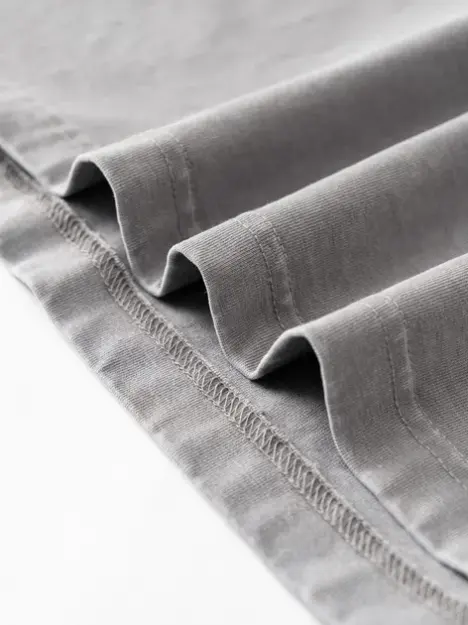
First, support the hem without stretching the body. Observe the face, then look behind it. See whether the inside layer can lie smoothly at the intended finished depth. Trace the same section around a side seam or join. A bulky seam or an uneven attachment may lift one area without affecting the rest. In a sample with no permanent join yet, fold it against the body and compare before attaching.
Second, assess the attachment. Brooklyn Tweed’s sewn-down facings tutorial illustrates attaching the edge of a facing. Before changing stitch count or yarn, check how the join aligns against the face. Record whether a short piece of attachment is drawing up the body, whether excess inside length has nowhere to go, or whether the fold comes up evenly even when the join is loose. Compare it along the straight area and around a join. Avoid cutting an attached hem until you know how the stitches are secured.
Third, assess the finished hem after the agreed care or finishing step. Lay the sample flat and repeat the observation after it has rested. Capture the same two points without pressing it flat first. ISO 5077 covers measuring textile dimensional change after washing and drying. It does not provide a universal tolerance for a hem turning over. Use the location and amount of lift as part of your buyer-approved appearance reference.
Compare the construction before changing the whole hem
CottonWorks’ knitting reference explains how knit structures differ. A fabric with noticeably different faces can behave differently from a balanced construction at a free edge. A folded hem also introduces the behavior of a second layer plus its attachment. On a swatch, compare one changed condition at a time. If you alter the facing depth and join tension together, you may get a flatter edge without knowing which change produced it.
When both layers are designed in different stitches, measure the inside and outside separately at a defined position. Record the condition after finishing. Check whether the inside layer is longer than the distance it needs to cover, or has less give than the outer layer when you flex the hem as it will be worn. If an elastic thread is involved, record whether removing tension at the join changes the behavior in a new sample, without making that assumption on a finished garment.
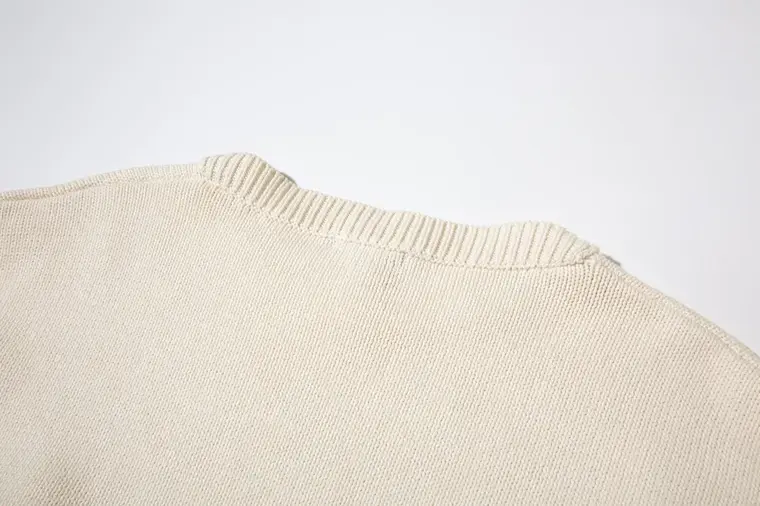
What we would compare on a crewneck sweater sample
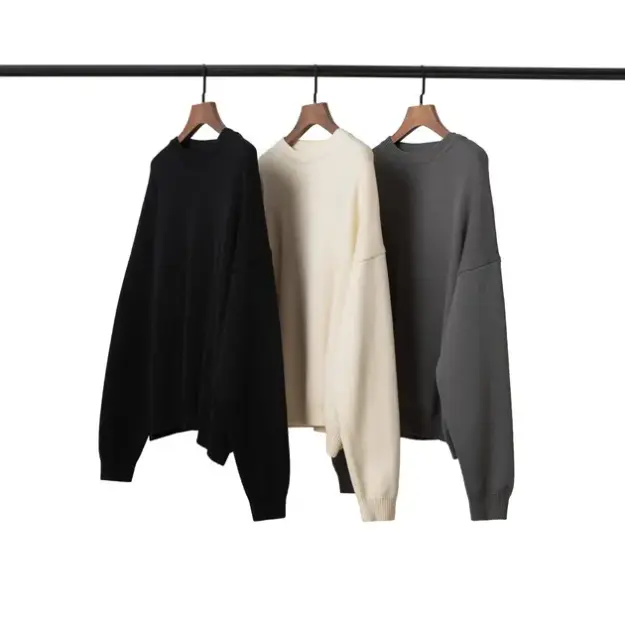
Our crewneck sweater development program covers knit structures, rib details and sample fit. Set the fold depth and inside finish alongside your body measurements. Give the sample room two photos showing where the edge lifts, and ask for the approved fold and attachment to stay together on a physical reference. Leave enough of the knit in the picture to show whether the rest of the garment stays flat.
Our sweater hem flare troubleshooting article covers a rib hem that gets wider than the body. In a folded hem, the bottom width might still match the brief while the facing makes the edge turn up. Record width and visible edge lift separately so the sample room knows which problem to correct.
Ask the sample room to note whether the join is visible on the face in normal light. If the new join holds the hem down when the piece is flat but forms a ridge when worn, compare the original and revised folds together before adding the new reference to the specification.
Concerns to resolve before approving a change
It lies flat only when pressed
Compare before pressing and after the material has rested under the finishing conditions you actually use. Do not treat a pressed display as the regular-wear reference if the fold moves again with handling.
It only flips at one seam
Inspect how multiple folded and seam layers meet there. Ask for a sample of that junction if the next full garment is not yet ready. A change to one point should preserve the look and feel elsewhere.
The shop asks to tighten the entire join
Check the hem under normal movement on the sample model and compare one shorter trial first. A tighter join can trade a turned edge for a visible line or restricted opening.
Share the fold and the inside join
Send the relaxed front photo, the inside seam photo, and the intended fold depth and finish. Send your knitted hem brief.
Working on a knitwear project?
Let’s talk yarn, gauge and timing.
Send a reference or tech pack and we will come back with a practical development route.