
At AQL 2.5, a black polo lot can pass inspection and still look wrong three months later, because a visual inspection under workshop light does not measure a shade. That is why a black polo colourfastness specification starts from a test method rather than from a shade card. The number that matters for black is not the defect count. It is the fastness rating on the fabric and on the sewn garment.
Black is also the shade where a small change is most visible. A fraction of a shade towards red or green shows on a black polo in a way it never would on a mid-grey, and the change often appears after the first wash rather than at the factory gate.
Black polo colourfastness specification: the short answer
Black is the shade where a small change shows most. Agree a physical standard, a light source, a wash method and a colourfastness limit, then test the dyed fabric and the sewn garment. A photograph cannot carry a black; a standard and a number can.
The questions below are the ones that come up in the sample room, in the order that they decide the order.
Why black is the shade that shows every change
Black is a colour built from several dyes rather than a single one, and the dyes do not fade at the same rate. A black that reads neutral in the lab dip can drift warm or cool after washing, because one component of the recipe leaves the fibre faster than another. On a dark navy the drift is invisible; on black it is the first thing a customer mentions.
It is also the shade that reveals construction. A seam that puckers, a collar that has been pressed flat and a print that has been cured too hard all show more against black, because there is no colour variation to distract the eye. That is why a black polo program usually ends up with a stricter standard than the same style in another colour.
The practical effect is that black forces a decision earlier than other colours do. The standard has to be approved before the fabric is dyed rather than after the first sample, because a re-dye changes the hand as well as the shade, and the second attempt is rarely the same cloth.
What do we agree before the first metre is dyed?
Four things, and none of them is a photograph. A physical standard, approved under a stated light source. A colourfastness limit for washing, rubbing and light. A wash method that matches the care label. And a rule for how a bulk lot is compared with the standard, including who approves it.
Write the light source into the file as well, because black is the classic metameric colour: two blacks can match under a tungsten lamp and separate under daylight. Most programs approve under a daylight-equivalent source and check again under the store’s lighting, which is the light the customer will actually see.
| Test | What it measures | What to write into the specification |
|---|---|---|
| Wash fastness | Colour change and staining after a defined wash | Method, temperature, rating and the grey scale used |
| Rubbing fastness | Colour transferred by dry and wet rubbing | Separate dry and wet ratings, both recorded |
| Light fastness | Fading under controlled exposure | Rating and exposure method for the market |
| Perspiration fastness | Colour change at the collar and underarm | Acid and alkaline results, not one figure |
| Shade against standard | Whether the lot matches the approved standard | Light source, viewer and approval record |
The third column is the one that gets argued about later. A specification that says “good fastness” has no threshold, and a report that says “4” without naming the scale cannot be compared with a report from another lab.
Why does the collar fade before the body?
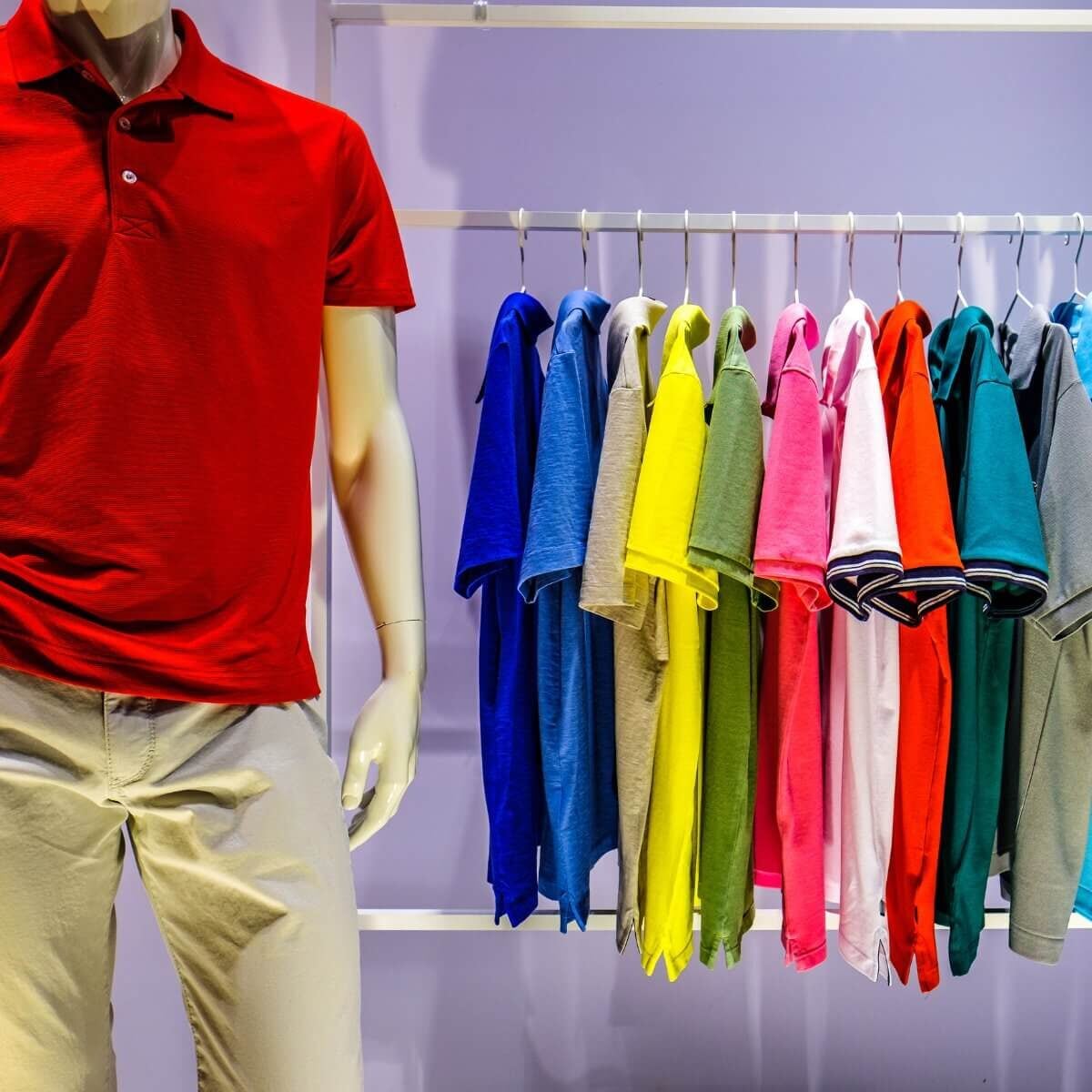
The collar takes more friction, more sweat and more washing than any other part of the shirt, and it is usually a different knit from the body. A rib takes dye differently from a piqué, so the collar and the body can start the same shade and separate after a few washes.
Dye them as one lot where the mill allows it, and test them as one garment. A fastness report on the body fabric alone will not predict the collar, and the collar is what the customer sees when they look in the mirror.
Check the placket and the underarm too. A black polo shows the first sign of rub-off where a bag strap or a seat belt crosses the shoulder, so the rubbing test is read at the collar, the placket edge and the underarm rather than on a flat piece of fabric.
Does a photograph prove a shade?
No. A photograph carries the light, the white balance and the screen, and two black polos that look identical on a phone can be visibly different in a shop. Use photographs to record condition and construction, and use the physical standard to judge shade.
That is not a rejection of photography. A dated photograph beside the standard is a useful record of what was approved, as long as nobody uses it to approve the next lot.
What does a colourfastness rating mean?
Fastness is reported on a grey scale, usually from 1 to 5, where a higher number means less change or less staining. The number is only meaningful with the method attached: a wash fastness result at one temperature cannot be compared with a result at another, and a light fastness figure depends on the exposure standard.
Ask for the method code beside every rating. A lab report that lists a rating without a method is a number without a unit, and it will not survive a conversation with a retailer’s technologist.
Ratings are read by a trained pair of eyes against a standard light box, not guessed from a photograph of the grey scale. That is why the report matters more than the number a supplier puts in an email, and why the same lab should be used across lots if a comparison is likely.
Wash appearance: the other half of the specification
Fastness measures colour leaving the fabric. Wash appearance measures what the garment looks like after it has been washed: the seam puckering, the collar edge, the surface fuzz and the press marks. On black, all four are more visible than on any other shade.
Test the sewn garment rather than the fabric alone, wash it three times at the care label temperature and photograph it beside an unwashed sample. A custom black polo program that approves wash appearance as well as fastness catches the collar and the seams in the same review.
What happens when a lot fails?
A failed shade is usually a lot problem rather than a garment problem, and the decision is commercial as much as technical. A lot that is half a shade off can be sold at a discount, held for a later drop or rejected; a lot that fails fastness has a different risk, because the failure will show up in the customer’s hands.
Test before the goods leave the factory. A fastness test on a cutting from the bulk lot costs far less than a return, and it gives both sides a number to discuss instead of an impression.
Decide the remedy with the numbers in front of you. A fastness failure is a technical problem with a technical remedy, usually a change of dye class or a different after-treatment, while a shade failure is often a sorting problem that can be solved by keeping the lot together.
What the specification should say in one page
One page is enough: the standard and its storage, the light source, the wash method, the fastness limits with their methods, the collar and body comparison rule, the wash appearance requirement and the approval route. Add the test report references and the date. Keep the page with the purchase order rather than in a technical folder, so the inspector sees it before the goods are packed rather than after.
A logo polo program can carry the same page for the thread and the embroidery backing, because a black garment makes every component visible. The thread, the backing and the interlining are part of the shade, not separate from it.
FAQ
Is black harder to dye than other colours?
It is harder to hold. Black is built from several dyes, and they fade at different rates, so the shade can drift without any single failure. That is why the specification needs a fastness limit as well as a standard.
Can we approve a shade from a photo?
No. Approve from a physical standard under a stated light, and use the photograph as a record of the approval rather than as the approval.
What rating should we ask for?
Set the rating with the market and the end use, and name the method beside it. A figure without a method cannot be compared with a report from another lab, and the comparison is the point of asking.
Why does the embroidery look different from the shirt?
Thread and fabric are different substrates and take dye or colour differently. Approve the thread on the black fabric rather than on a thread card, because the contrast between them is what the customer sees.
Sources: OEKO-TEX Standard 100, EU Regulation 1007/2011, Intertek, Higg, US CBP and The Woolmark Company.
Working on a knitwear project?
Let’s talk yarn, gauge and timing.
Send a reference or tech pack and we will come back with a practical development route.

