
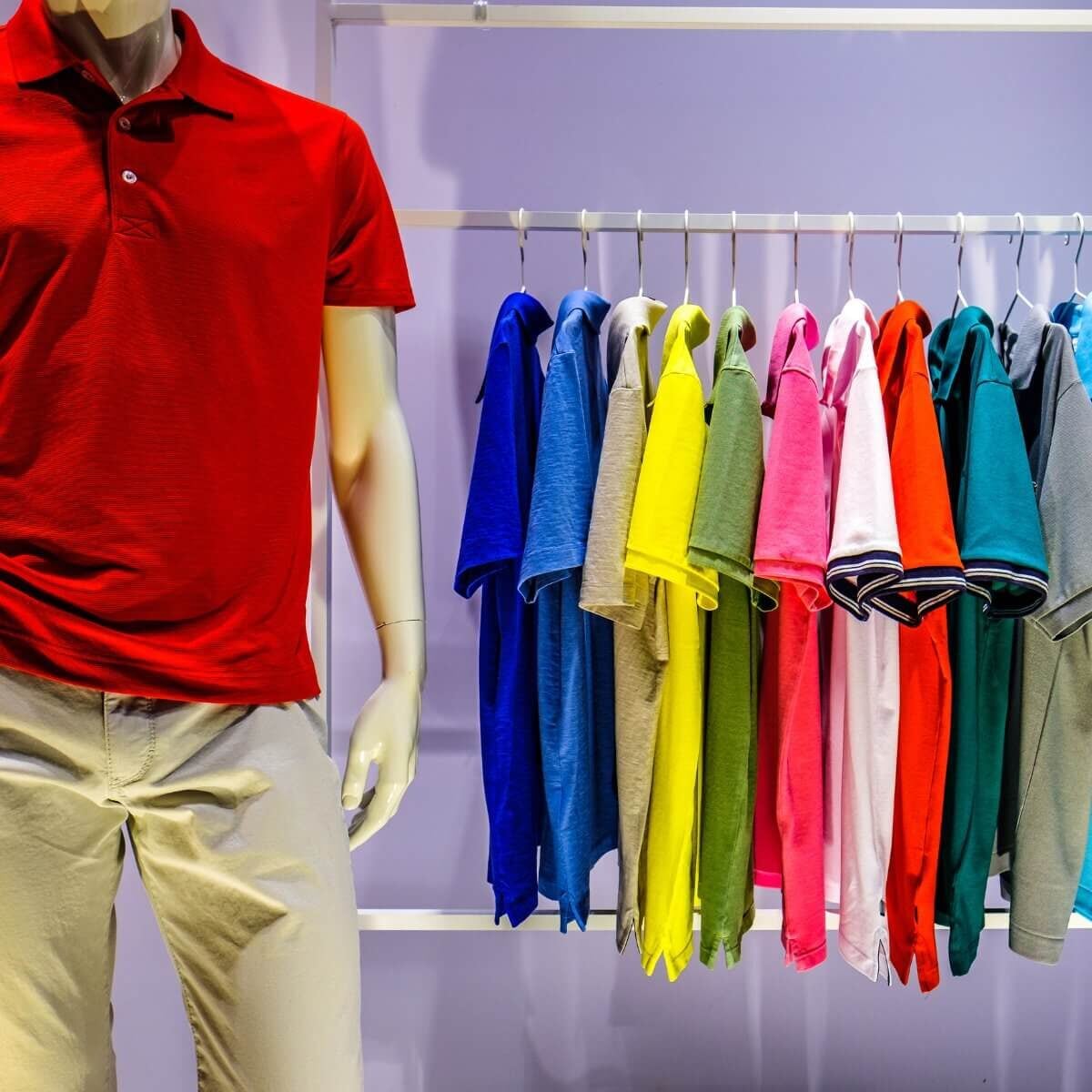
A contrast-trim polo is not a two-colour garment, and it is not a single approval either. It is usually five references: body, collar, cuff, placket and thread, plus a button that has to sit with all of them. Each one is a different material, and each material takes the same dye differently.
Contrast trim polo color matching is decided by that number: five references, not one, and each of them has to be matched on its own ground.
A buyer who approves a single lab dip and expects it to carry across a piqué body and a flat-knit collar will find the collar darker, the cuff lighter, and the thread somewhere else again.
Contrast Trim Polo Color Matching: One List, Five References
The matching works from one reference list that names every component, its material and its target shade. Each component is matched on its own substrate, then approved together on a sewn sample under two light sources, because a dip card cannot show what a folded collar does to a colour.
Without the list, matching becomes a series of local decisions, and local decisions do not add up to a garment that reads as one colour story.
Why the Same Dye Reads Differently
On a custom piqué polo, the body, a flat-knit collar and a 2×2 rib cuff are three different structures. They absorb dye at different rates, reflect light differently and have different surface textures, so a shade that is correct on one reads lighter or greyer on another.
The collar is usually the darkest of the three because it is dense and absorbs more dye. The cuff can read lighter because the rib opens the surface. Thread is a different fibre altogether, and a thread matched to the body will look wrong against the collar unless it is matched to both.
| Component | Material | Why the shade shifts |
|---|---|---|
| Body | Piqué knit | Textured surface reflects light unevenly |
| Collar | Flat knit, dense | Absorbs more dye; reads darker |
| Cuff | Rib, open structure | Reads lighter; shadows in the rib |
| Placket | Body cloth or flat knit | Depends which, and changes the front |
| Thread | Polyester or cotton | Different fibre; takes dye differently |
| Button | Polyester, corozo or shell | Cannot be dyed to match; chosen, not matched |
Build the List Before the Dips
Write the list first: component, material, target shade and the reference it came from. Name the shades rather than describing them, and give each one a code the factory can quote back. “Navy collar” is a description; “Navy 19-3920 on flat knit” is an instruction.
Keep the list on the purchase order, and give a copy to the sample room. A list that lives only in the buyer’s spreadsheet is a list the cutting table never sees, which is how a collar in the right shade and the wrong knit gets made.
The list also settles which component leads. Usually the body leads, because it is the largest area, and the trims follow it. If the collar leads, say so, because the whole match will be judged against the smaller area and the body will look slightly off even when every dip is correct.
What the Buyer Sees at Three Metres
Colour is judged at three distances and each one asks a different question about the same garment. At arm’s length the question is whether the trim and the body belong together; at three metres it is whether the garment reads as one object; at ten metres it is whether the collar still reads as a contrast at all.
Most failed matches pass at arm’s length and fail at three metres, because a small shade difference disappears up close and reappears when the areas are seen together. Photograph the sewn sample at all three distances and compare the photographs rather than the swatches, because that is how the customer will see it.
Dip Each Substrate Separately
Ask for a dip per material, not one dip for the style. The collar dip, the cuff dip, the body dip and the thread card are four approvals, and they should be reviewed together on a table under daylight.
Then check them under the light the product will be sold in. Daylight, warm shop light and the cold light of a fitting room each pull a navy in a different direction, and a match approved under one can look wrong under another. Approve under two, and write down which two.
Sew It Before You Ship It
A dip card is a flat piece of fabric. A collar is a folded, interlined, sewn object with a shadow under the points, and the same fabric can look different once it is made. Ask for the trims to be sewn onto a body panel before the bulk is cut.
Ask for the sewn sample in the bulk fabric, not in a stock white. A contrast placed on white can look balanced while the same contrast on a mid-tone body reads as a different colour, because the surrounding area changes what the eye sees.
That sewn sample is the only place you will see the collar against the body, the cuff against the sleeve and the thread against both. Approve it, seal it, and label it with the dips it was made from.
Thread Is the Detail Buyers Forget
Thread is matched to the garment, not to the fabric. On a contrast polo there are usually two thread shades and sometimes three: body seams, collar topstitch and buttonhole. Each is visible at a different distance, and the one that shows most is the topstitch around the placket.
There is also the question of what the thread does after washing. A cotton thread can fade faster than a polyester one, and a thread that matches on day one can read lighter after a season of washing, which on a contrast polo means the topstitch disappears into the trim.
Ask for the thread cards with the dips, and check them on the sewn sample. A thread that is one step lighter than the collar reads as a highlight; one step darker reads as a shadow. Neither is wrong, but the choice should be made rather than inherited.
Where Matching Breaks in Bulk
Three things break it. A different dye lot for one component. A substitution of the collar knit because the original was unavailable. A pressing difference that changes the surface sheen on one panel.
A fourth risk sits in the pressing. A collar pressed harder than the body takes on a sheen that changes how the colour reads under light, and the difference is invisible on a hanger and obvious on a shelf.
Each is checkable. Ask for the lot numbers per component on the packing list, ask to be told before any substitution, and check the sewn sample against the bulk under the same two lights used at approval. A logo polo adds a fourth risk, because the embroidery thread and the trim have to agree as well.
Writing It Into the Order
Put the five references on the purchase order with their codes, the two light sources used for approval, and the sewn sample reference. Add the name of the person who approved them, because a colour decision outlives the email it arrived in.
Put the five references on the purchase order with their codes, the two light sources used for approval, and the sewn sample reference. Add a line that any substitution needs written approval before production, and name who gives it.
Name the person who signs a substitution, too. On most programmes it is the buyer, and the factory needs to know that before it accepts a replacement knit from a mill rather than after.
That line is what turns a colour conversation into a specification. It also gives the factory something to check against at the cutting table, which is where a wrong collar lot is easiest to catch.
The polo shirt range shows how far a contrast can be pushed before the trims start to compete with the body, which is a design decision as much as a colour one.
FAQ
Can one lab dip cover the body and the trims?
No. Different materials take dye differently, so each component needs its own dip approved on its own substrate, then a sewn sample to judge them together.
Why does the collar look darker than the body?
Because it is denser and absorbs more dye, and because a folded collar casts a shadow. The dip can be adjusted, but the sewn sample is where the final judgement is made.
Should the thread match the body or the trim?
Usually the trim, because the topstitch sits on the placket and collar. Decide it on the sewn sample and record it, rather than leaving it to the line.
What if the collar knit is discontinued?
Then it is a new approval, not a substitution. Ask for a dip on the proposed replacement, compare it on the sewn sample, and record the change on the order before bulk.
Sources: OEKO-TEX Standard 100, EU Regulation 1007/2011, Intertek, Higg, US CBP, The Woolmark Company.
Working on a knitwear project?
Let’s talk yarn, gauge and timing.
Send a reference or tech pack and we will come back with a practical development route.

