
The call comes about three weeks after delivery, and it is not about a defect. A hospitality group has put new polos on front desk, housekeeping and maintenance, and by the second week half of the housekeeping team is back in the old shirts. The embroidery is straight, the piqué matches the approved swatch, and the cartons passed inspection. What failed was the corporate polo uniform specifications: one garment, photographed once on one body, asked to dress three jobs, four body shapes and a laundry cycle that runs five days a week.
What Belongs in Corporate Polo Uniform Specifications?
A corporate polo uniform specification is one controlled document that fixes fabric, colour, fit, logo, size range and care for every role in a program, so a single purchase order can dress front desk, warehouse and field staff. It is written before sampling and kept as the reference for every reorder.
Most briefs describe a shirt. The ones that work describe a program: who wears it, how often it is washed, how the logo reads from two metres, and what the next order must match.
A specification that holds up has six blocks: wearer roles, fabric and colour standard, fit and size range, logo file and placement, care and wash regime, packing and reorder rules. Leave one out and the decision moves to the sample stage, where changing it costs a second round instead of an email.
Who Is Wearing It, and What Are They Doing?
Start with a role matrix, not a garment photo. Front desk, retail floor and client-facing roles need a collar that stands and a shirt that still looks pressed at hour nine. Housekeeping, kitchen and warehouse teams need room at the armhole, a hem that stays put when they reach overhead, and a colour that tolerates marks. Field and technical staff spend the day in sun or in a van, which changes both the fabric and the shade.
Two questions settle most of the rest. Does the wearer keep the shirt or hand it back at the end of a shift, and how many washes does it see in a month? A shirt that goes home and comes back ironed can carry more cotton. A shirt that circulates through an industrial laundry needs a construction and a colour that survive repetition, and that is a different specification.
Which Fabric Route Fits the Job?
Piqué is the default for corporate polo work because its cell structure holds a collar stand and resists the creasing that shows up in photographs. Jersey is lighter and smoother, and it reads more like a T-shirt on a tall frame. Performance knits move moisture and dry quickly, which is why field teams ask for them and why front desk sometimes rejects the sheen. None of these is wrong; each one answers a different question about the working day.
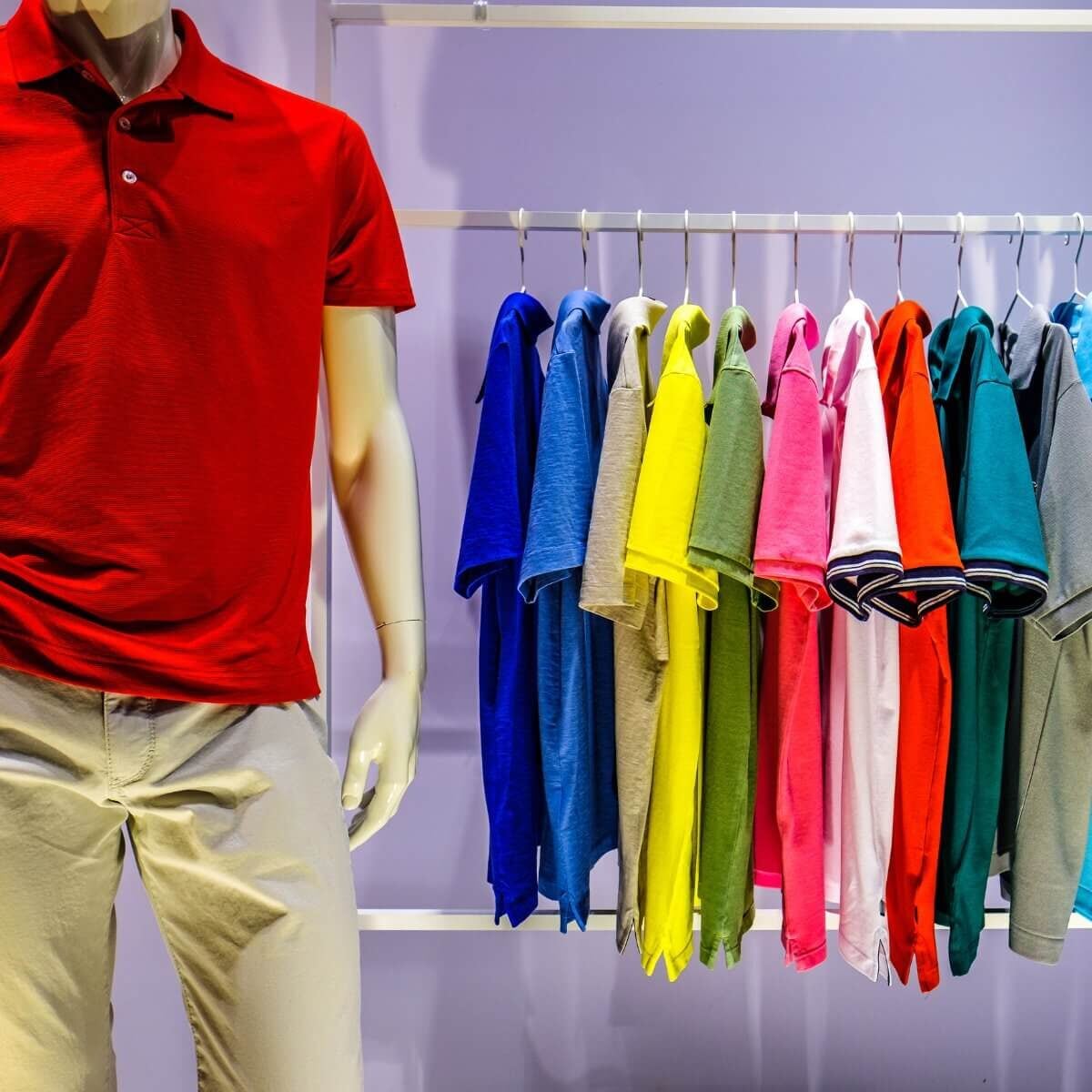
| Route | Surface and hand | Roles it fits | Trade-off to plan for |
|---|---|---|---|
| Cotton piqué | Textured cell face, firm hand, holds a collar stand | Front desk, retail floor, client-facing teams | Shows soil and creases sooner; needs a press between washes |
| Cotton or poly-cotton jersey | Smooth face, lighter, softer drape | Indoor teams with light activity and frequent washing | Collar can soften and lose height over repeated cycles |
| Performance polyester knit | Smooth face, wicking finish, quick to dry | Field, warehouse, warm climates | Slight sheen under interior light; thread shade must match the ground |
Sampling two routes on the same body is cheaper than choosing from a fabric card. Wash both to the care label you intend to print, then compare collar stand, hem twist, surface and shade. A cotton piqué polo and a performance knit polo built to the same measurements will answer that question in a way a swatch cannot.
How Do You Size a Workforce That Was Never Measured?
Uniform sizing leaks in the middle of the range, not at the edges. A program built on a unisex block fits most of the team adequately and a few people badly, and those few usually stop wearing it. Ask for the split between men’s and women’s cuts before sampling, and ask whether the client will accept one unisex shirt for part of the headcount.
Send a size set, not a single sample. A graded set shows how the collar, placket and logo move from small to extra large, and it lets a supervisor fit ten people in an afternoon. Measure the sample flat against a stated points-of-measure chart with a tolerance per point, so the bulk inspection has a reference rather than an opinion.
Tall and plus ranges are worth settling at brief stage; adding body length to an existing block is a pattern change, and it belongs in the first sample.
Where Does the Logo Go, and How Is It Reproduced?
The logo is the part of a uniform everyone notices and the part most often approved from a PDF. Ask for a sew-out on the actual fabric in the actual thread before you sign, because a vector file says nothing about how small type fills in or how a thin rule behaves at four centimeters wide. Placement should be written as distances, not as “left chest”: so many millimeters from the placket edge and from the shoulder seam, measured on the finished garment.
Grading changes the picture. A logo that sits correctly on a small drifts outward on an extra large if placement is copied as a percentage. Confirm the position on the smallest and largest sizes in the set, and let the factory adjust so it stays level across the range. For a custom logo polo program, that sew-out approval is the record the bulk order is checked against.
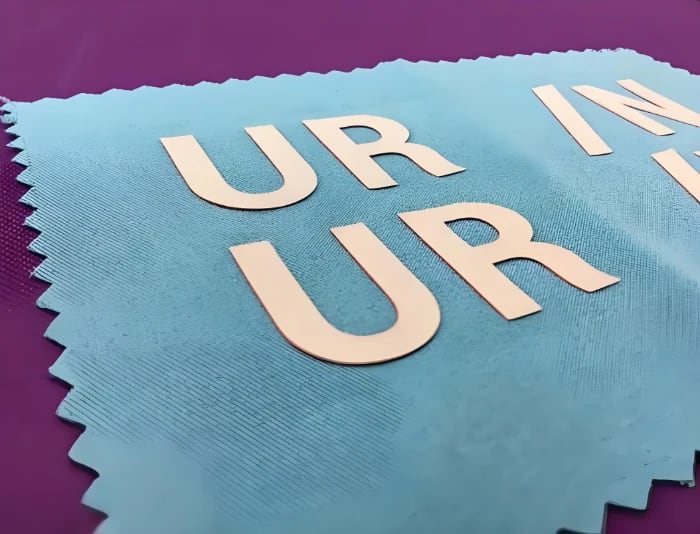
| Method | What it reproduces well | Placement it suits | Reorder risk |
|---|---|---|---|
| Embroidery | Solid shapes, lettering, small crests | Left chest, sleeve, back yoke | Thread lot and density drift; each order needs a fresh sew-out |
| Screen print or transfer | Fine detail, gradients, multi-colour art | Chest panel, back, sleeve | Ink shade and hand feel shift between print batches |
| Woven badge | Dense small text and crisp edges | Chest, sleeve, hem | Badge size and stitch border need approval per size range |
How Do You Hold a colour Across Reorders?
colour is where uniform programs age worst. The first order is approved against a lab dip, the second is dyed in a different lot, and by the third the navy has drifted enough that old and new shirts cannot be worn on the same shift. The fix is procedural: approve a physical standard, sign and date it, keep it sealed, and read every later submission against it under the same light. Write that into the specification as a colour system plus a swatch, not a photograph, and name the light source, because a navy that matches in daylight can read purple under warm lobby lamps.
What Happens After Fifty Washes?
A uniform shirt is bought once and washed for years, so the care regime belongs in the brief, not on the label at the end. If the client uses an industrial laundry, say so before fabric selection; the temperature and chemistry change which cotton count, dye class and finish will survive. Home washing allows a gentler label and more cotton.
Care labelling is also a compliance task. Markets following EU Regulation 1007/2011 require fibre names and percentages to be stated accurately, and the care instructions have to match the fabric the buyer approved. Settle the label text during sampling, then test the sample to that label rather than to a generic wash program, and keep the result with the approved sample.
What Should the RFQ and Sampling Plan Contain?
An RFQ for a uniform program should let a factory quote without guessing. Six items decide most of it:
- Headcount by role and by site, with the men’s and women’s split
- Size range, including tall and plus requirements
- Logo vector file, thread or ink reference, and placement distances
- colour standard with the approved physical swatch
- Care label text and the laundry regime behind it
- Quantity per style, colour and logo variant
Then set the calendar against published lead times. Our sampling runs 7–12 days after fabric and tech pack approval, and bulk production typically runs 20–35 days after sample approval. Minimum order is 300 pcs per style, which matters once a program splits into three colours and two logo variants. Inspection is carried out to AQL 2.5 unless the buyer’s own plan replaces it.
Ask for the quotation broken down by fabric, make, trims, logo and packing. A single unit price hides which variable moved, and on uniform work those variables are usually the logo method, the colour count and the packing.
FAQ
What is the minimum order for a corporate polo program?
Minimum order is 300 pcs per style. colours and sizes can be mixed inside that style, but each extra logo method or fabric route is quoted as its own line, so it is worth consolidating variants before the RFQ goes out.
Can you match our brand colour on a reorder?
We work to a physical colour standard that is approved, signed and dated at sampling, and each later dye lot is read against it under the same light. A reorder is matched to that standard, not to the previous shipment, which is why the sealed swatch matters more than a photo.
How long does sampling and bulk production take?
Sampling takes 7–12 days after fabric and tech pack approval. Bulk production typically takes 20–35 days after sample approval, and inspection follows AQL 2.5 unless the buyer’s plan replaces it.
Do you provide OEKO-TEX or recycled yarn documentation?
The atelier can source OEKO-TEX Standard 100, GRS and RWS yarns by requirement, with traceability documents where available. Certification applies to the specific yarn and supplier named on the document, so ask for the certificate number and its scope rather than a general claim.
Sources: OEKO-TEX Standard 100, EU Regulation 1007/2011, Intertek testing, Higg, US CBP informed compliance, The Woolmark Company.
Working on a knitwear project?
Let’s talk yarn, gauge and timing.
Send a reference or tech pack and we will come back with a practical development route.

