
Twenty to thirty-five days is the published bulk window at Horssle Knit after sample approval. That figure is why the cotton vs polyester polo uniforms question belongs in the first meeting rather than the third. Once a sample is approved, changing fibre means new fabric, a new lab dip and a new round, and the launch date absorbs the cost.
The decision runs in a fixed order: where the shirt is worn, how it is laundered, what the wearer will accept against the skin, how the logo is applied, and what the buyer must be able to claim on a specification sheet. Work through those five and the fibre usually chooses itself. Skip them and the choice becomes a preference argument.
Cotton vs Polyester Polo Uniforms: The Short Answer
Cotton wins on hand feel and heat comfort; polyester wins on drying, shape retention and colour life. Neither is right for every uniform programme. Decide from the wearer’s day and the laundry cycle, then confirm the choice on a washed sample of each, because the two fabrics age differently.
Both fibres are sold into uniform programmes for good reasons, and most arguments in favour of one turn out to be arguments about a specific site, a specific laundry contract or a specific climate.
Decision One: Where the Shirt Is Worn
Start with the site. A polo worn outdoors in dry heat behaves differently from one worn on a shop floor with air conditioning, and both differ from a shirt worn in a humid, still environment where sweat does not evaporate quickly.
Cotton absorbs moisture and feels cool against the skin while it dries, which is why it survives in hot, dry climates. Polyester moves moisture to the surface and dries quickly, which helps in humid air but can feel clammy when the fabric sits against the skin without airflow. A golf programme played in the sun and a reception desk in a cool lobby are different problems.
A site that moves staff between a hot yard and an air-conditioned office is the hardest brief, because one shirt has to work in both. There a blend usually beats either pure fibre, and the wash cycle breaks the tie.
| Wearing scenario | Fibre route | Watch for |
|---|---|---|
| Outdoor work, dry heat | Cotton or cotton-rich | Slow drying once soaked |
| Humid indoor, low airflow | Polyester or blend | Clammy feel in a dense knit |
| Shared industrial laundry | Polyester or blend | Odour retention over months |
| Retail-facing brand uniform | Cotton-rich | Shrinkage and shade fade |
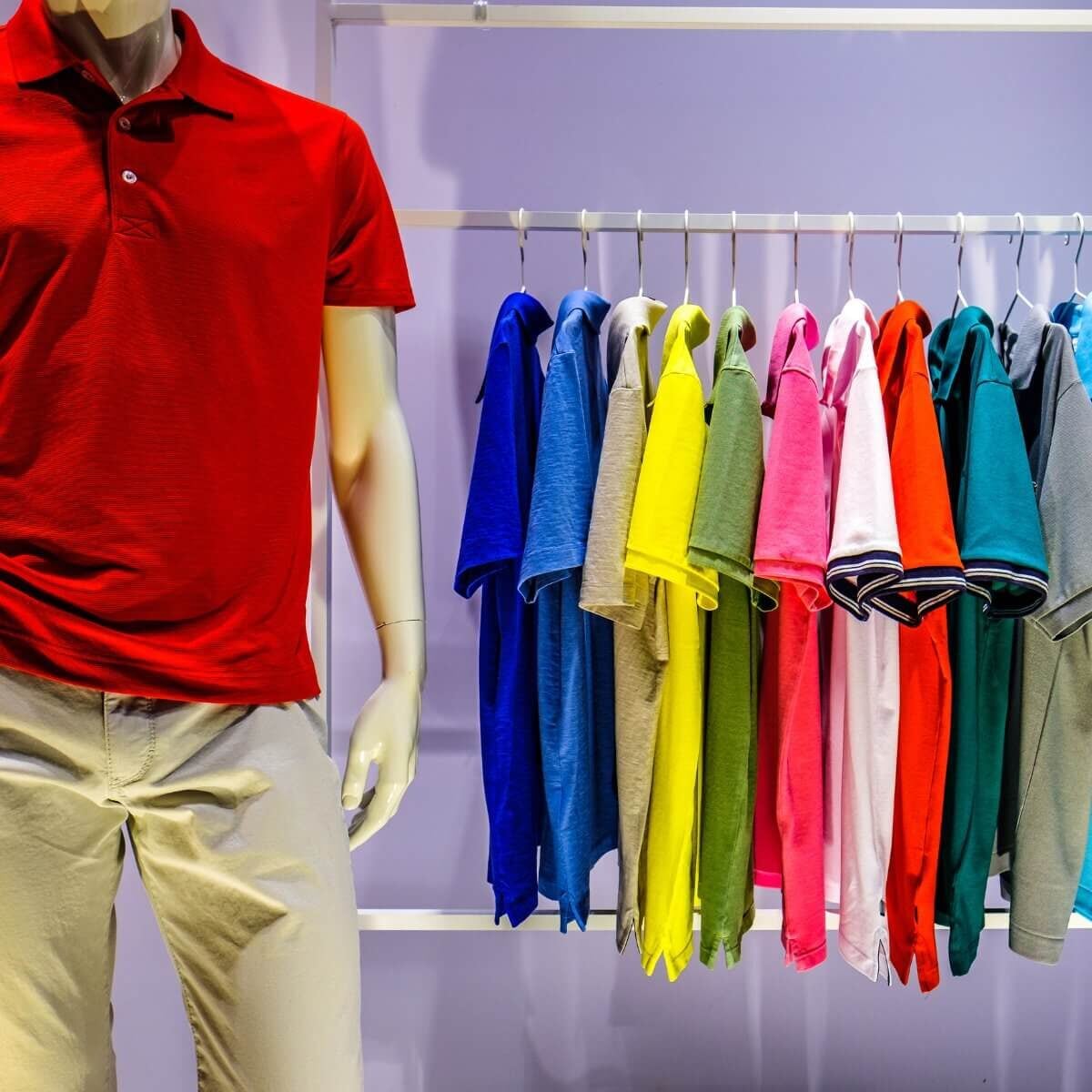
Decision Two: How It Is Laundered
The laundry contract decides more than the climate. An industrial wash at high temperature with strong detergent punishes cotton: shrinkage, colour loss and edge wear appear first at the collar and the cuffs. Polyester holds colour and shape through that cycle, and it tolerates chlorine better than cotton does.
Check the detergent as well as the temperature. Oxygen bleach is kinder to cotton than chlorine, and a polyester knit can yellow under the wrong chemistry. A laundry trial on three shirts tells you more than a care-label discussion.
The reverse is also true. Cotton can be washed hot and bleached in a hygiene programme where a polyester knit would keep odour and hold stains, and a cotton-rich polo often survives stain treatment that would mark a polyester one. Ask who washes the shirt, at what temperature, and with what chemistry, before the fibre is chosen.
Decision Three: What the Wearer Will Accept
Hand feel decides adoption. A polyester polo that feels slick or clammy will be worn open at the collar, and a cotton polo that creases by mid-morning gets replaced by a personal shirt. Test with the people who will wear it, not with a buyer’s hand on a swatch card.
Weight and drape matter as much as fibre. A heavier knit hides more and reads more formal; a lighter knit feels cooler and shows more of what is underneath. Ask for the same weight in both fibres, because a 200 GSM cotton polo and a 160 GSM polyester polo are not a fair comparison.
Run the trial before the bulk order, not after. Ten wearers for two weeks will surface a collar that scratches, a shirt that clings or a sleeve that rides, and those findings are cheaper to fix in a sample than in a shipment.
Decision Four: How the Logo Is Applied
Embroidery behaves differently on the two surfaces. Cotton takes dense stitching without shine, and the texture of a pique hides small distortion. Polyester can pucker under a dense logo and shows needle marks, so a lower stitch density or a different backing usually settles it.
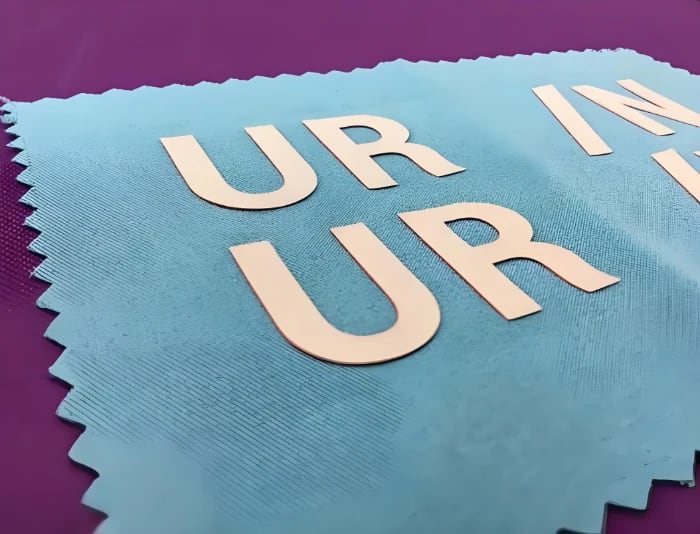
Print runs the other way in places. Cotton prints matte and absorbs ink; polyester needs ink that bonds to a smooth surface, and dye migration is a real risk on dark shades. Ask for a strike-off on the actual fabric, in the actual colour, before the order is costed.
Decision Five: What You Must Be Able to Claim
Claims decide the shortlist. A buyer who needs OEKO-TEX Standard 100 for restricted substances is choosing a yarn route, not a fibre: the atelier can source certified yarns by requirement, with traceability documents where available, and the claim belongs to the material in that order rather than to the factory.
Fibre labelling is separate. EU Regulation 1007/2011 sets the fibre names and the content statement for that market, and the care label has to match the wash test you approved. For US imports, CBP informed compliance publications describe the records an importer should hold, and a wicking claim needs a test method agreed with the lab in advance.
The Comparison Table Buyers Actually Use
Put both fibres on one page with the criteria your programme scores, then fill the columns from washed samples rather than from a supplier summary.
| Parameter | Cotton | Polyester | Blend |
|---|---|---|---|
| Moisture handling | Absorbs, feels cool, dries slowly | Wicks, dries fast, can cling | Moderate on both counts |
| Shape after washing | Shrinks unless compacted | Holds shape | Holds shape with a cotton hand |
| Colour life | Fades with hot wash and light | Holds colour well | Between the two |
| Pilling | Pills in softer yarns | Pills at abrasion points | Follows the yarn quality |
| Hand feel | Soft, dry, matte | Smooth, cool, slight sheen | Cotton-like, dries faster |
| Decoration | Embroidery and print both settle | Needs ink and stitch control | Test both before approval |
Read the rows in the order your programme scores them. A uniform judged on comfort first and colour second will land on a different row than one judged on laundry cost, and that is the point of putting the criteria in writing before the samples arrive.
A row that scores equal on both sides is still useful: it tells you the decision will be settled by something else, usually the laundry contract or the logo.
Cost, Minimums and the Honest Trade-Off
Cost follows the yarn, the knit and the finish, not the fibre name. A combed, compacted cotton pique and a recycled polyester knit are different cost lines from their commodity versions, and a quotation that names only cotton or polyester cannot be compared with one that names the same.
At Horssle Knit the minimum is 300 pieces per style, sampling runs 7–12 days after fabric and tech pack approval, and bulk typically takes 20–35 days after sample approval. Those figures apply to either fibre, so the fibre choice does not change the minimum, only the fabric booking and the price line behind it.
Book the fabric before the shade is finalised. Both fibres carry a mill minimum per colour, and a late shade change can push the fabric booking past the sampling window, which is the one delay that lands directly on the launch date.
Mixing fibres inside one programme is legitimate and common: a cotton-rich shirt for customer-facing roles, a performance polo for the loading bay. The complication is colour. The same shade number in two fibre systems will not match under every light, so approve the pair together if the two shirts will be seen side by side.
A cotton polo also has a place in programmes that need a pique surface for a formal look, while the performance route usually starts from a smooth knit. Both are available, and the choice should follow the site rather than the catalogue.
FAQ
Is polyester cooler than cotton in summer?
Only in moving air. Polyester wicks and dries quickly, which helps when there is airflow, while cotton feels cooler against still, dry skin. Test both in the conditions the wearer actually works in.
Does cotton always shrink in an industrial wash?
Not always, but it moves more than polyester. A compacted cotton knit shrinks less than an untreated one, so ask for the finish and check a washed sample before you accept a tolerance.
Can a uniform polo be a blend?
Yes, and blends are common where a programme wants cotton hand feel with faster drying. Name the blend ratio on the spec sheet, because a 60/40 and a 90/10 behave differently in the wash.
Which fibre takes a company logo better?
Cotton takes embroidery and print with fewer complications. Polyester can hold a sharp print and a fine embroidery, but it needs the ink, backing and stitch density tested on the fabric before bulk.
Sources: OEKO-TEX Standard 100, EU Regulation 1007/2011 on textile fibre names, US CBP informed compliance publications, Intertek for test methods, and Higg for facility indexing.
Working on a knitwear project?
Let’s talk yarn, gauge and timing.
Send a reference or tech pack and we will come back with a practical development route.

