
A cropped cardigan that stops at the waist and one that stops two centimetres lower are different garments, even when they share a block, a yarn and a button. The first reads as a layer over high-waisted trousers; the second reads as a short jacket and changes what it can be worn with.
That is why length is decided with the outfit rather than with the measurement chart. Once the hem is fixed, the button line and the rib follow from it, and development becomes a short sequence of decisions instead of a series of sample corrections.
Cropped cardigan fit development: the short answer
Cropped cardigan fit is decided by three numbers: the body length from the shoulder, the hem position relative to the waist, and the top button’s distance from the neckline. Set those against the trousers or skirt the cardigan will be worn with, then test sitting and reaching before you grade.
The order matters, because a change to the hem moves the button line and a change to the button line moves the neckline balance. Doing them in the other order means re-approving the same garment twice.
Start from the hem, not from the chest
Most cardigan development starts with the chest and works down. A cropped style has to start at the hem, because the hem is the design: it decides the proportion against the waist, the rise of the trousers and the length of the skirt. A chest-led process produces a cardigan that fits the body and sits at the wrong place on it.
The hem is also the number a buyer will change last, after seeing the sample on a model. Build the sample range around two hem positions rather than one, and the conversation moves from opinion to comparison.
Body length and the outfit it belongs to
Length is a relationship rather than a measurement. The same cardigan reads differently over a high-waisted trouser, a midi skirt and a dress, and the difference is the distance from the hem to the waistband rather than the length itself. Write that distance into the brief, not only the body length.
Then check the back. A cropped cardigan rises when the wearer sits down and when the arms go up, and the back hem is where the rise shows first. Photograph the garment from behind in both positions before the length is signed off.
Length also has to survive the layer underneath. A cropped cardigan worn over a fine knit sits close and keeps its hem line; the same cardigan over a chunky sweater rides up and reads shorter than it measures. Ask the fit model to wear both, and note which one the brief was written for.
Button placement is proportion, not spacing
Buttons are usually specified by count and spacing. On a cropped cardigan the more useful specification is the position of the top button relative to the neckline and the position of the bottom button relative to the hem. Those two anchors decide how the front reads when it is open and how much of the body the cardigan covers when it is closed.
Spacing then follows from them. An evenly spaced line between two anchors looks deliberate; an evenly spaced line set by count alone drifts as soon as the body length changes. That is why a cropped version of an existing cardigan needs its own button chart rather than a shortened copy of the original.
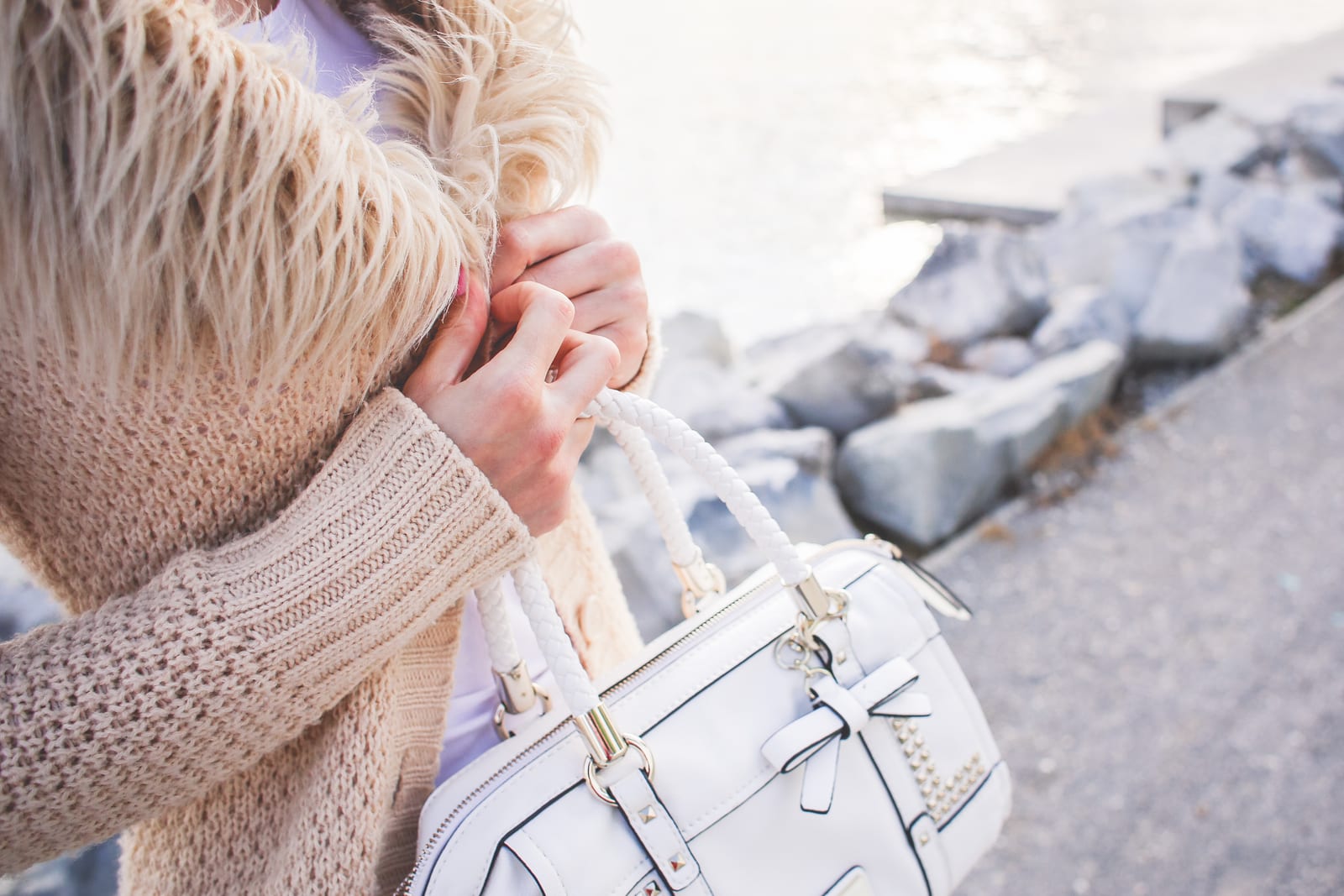
The button line across the size run
A button chart that is graded as a percentage of body length fails at the extremes. The top button moves away from the neckline in the largest size, and the bottom button drifts into the hem rib. The result is a cardigan that looks correct in the middle size and wrong in the size the fit model never tried.
Grade the anchors, not the spacing. Keep the top button at a fixed distance from the neckline, keep the bottom button at a fixed distance from the hem, and let the number of buttons change if the gap between the anchors grows beyond the button spacing you set. That is a decision to make when the grade rule is written rather than after the size set arrives.
Sitting, reaching, and the gap at the back
Three movements expose most cropped cardigan faults. Sitting pulls the back hem up and opens the gap between the hem and the waistband. Reaching forward pulls the front away from the body and shows whether the neckline holds. Raising the arms lifts the whole garment and shows whether the underarm is cut high enough.
Run all three on a fit model in the garment it will be worn with. A cardigan tested over a shirt reads differently over a knit dress, and the test is only meaningful when the layer underneath is the one the customer will wear.
| Decision | What it changes | How to test it |
|---|---|---|
| Hem position | Proportion against the waistband | Photograph front and back with the intended trousers |
| Body length | Where the cardigan reads on the body | Sit, then raise the arms, and compare the hem line |
| Top button anchor | How the front closes at the neck | Close the cardigan and inspect the neckline balance |
| Bottom button anchor | How much of the body stays covered | Check the gap to the hem rib while sitting |
| Rib depth | Whether the hem stays flat | Compare a washed sample with a new one |
| Button weight | Whether the front hangs straight | Hang the garment closed and look along the button line |
The last two rows are the ones that surface after a wash rather than at the fitting. A heavy button on a light rib pulls the front out of line, and a rib that relaxes lets the hem curl. Both are visible on a washed sample and invisible on a pressed one.
Rib, hem and the weight of the button
A cropped cardigan carries its closure on a short front, so the button weight matters more than it does on a long style. A horn-look button on a fine gauge rib will pull the front edge forward when the cardigan is worn open; a lighter button on the same rib stays flat.
Solve it in the sample rather than in the specification, then write the answer down: button diameter, button weight relative to the rib, and the interlining or tape behind the button stand if one is used. A cropped cardigan with a soft stand and a heavy button is a garment that will be photographed once and returned.
Rib depth has a second job on a cropped style. The hem has less body below it to weigh it down, so a shallow rib curls and a deep rib can look like a band. Two depths on the same sample are worth more than a conversation about the width of the band.
The decision path, in order
The sequence that avoids a second sample is short. First, fix the hem position against the outfit. Second, set the body length and confirm it sitting and reaching. Third, place the two button anchors. Fourth, choose the rib depth and the button weight together. Fifth, write the grade rule for the anchors, not for the spacing. Sixth, approve on a washed, worn sample.
Each step closes with a photograph and a number, and each is cheaper than the step it prevents. A button-through cardigan program that runs this order produces a size set that needs one review rather than three.
What the size set has to prove
A size set for a cropped style should prove the hem line in the smallest and largest sizes, the button line against the neckline in both, and the rib recovery after a wash in the middle size. If those three hold, the rest of the range is a calculation.
Then photograph the set on a model in the intended outfit and keep those photographs with the approved sample. A cropped cardigan is judged on the whole look, and the look is the part a measurement sheet cannot carry.
Finally, check the closure across the grade. The button anchors stay fixed and the spacing changes, so the largest size is where the line either holds or fails. That is the size to photograph first.
FAQ
How cropped should a cropped cardigan be?
It depends on the waistband it will meet. A hem that lands on the waistband reads neat, and a hem a little above it reads deliberate. The number to agree is the distance from the hem to the waistband, not the body length on its own.
How many buttons should a cropped cardigan have?
As many as the two anchors need. Place the top button at a fixed distance from the neckline and the bottom button at a fixed distance from the hem, then divide the space. The count is an output of that decision rather than an input.
Should the button line be graded with the body?
The anchors should be graded; the spacing should be recalculated. Scaling the spacing as a percentage of length moves the top button away from the neck in the largest sizes, which is exactly where the fit is judged.
Can a cropped style use the same block as a long cardigan?
Usually not without work. Shortening the body changes the balance between the front edge, the underarm and the hem rib, and a block shortened without adjusting the armhole and the button line tends to swing forward.
Sources: The Woolmark Company, OEKO-TEX Standard 100, Intertek, EU Regulation 1007/2011, Higg and Control Union.
Working on a knitwear project?
Let’s talk yarn, gauge and timing.
Send a reference or tech pack and we will come back with a practical development route.

