
Five centimetres is the difference between a hoodie and a cropped hoodie, and it is rarely the only difference. Take that much off the body and the hem band lands somewhere else on the torso, the pocket loses the anchor the hand expects, and the garment behaves differently the moment the wearer raises an arm.
Cropped hoodie development gets treated as a length edit on an existing block: shorten the body, keep the rest. That works on a paper pattern and fails on a person, because the crop changes the ratio between body, band and hood, and the wearer feels that ratio before they see it.
What Does Cropped Hoodie Development Have to Settle First?
Cropped hoodie development settles three things before sampling: the finished body length per size, the hem band depth and tension, and the coverage the wearer actually needs with arms raised. Those three decide whether the garment reads as cropped or as a hoodie that shrank in the wash.
The order matters. Length first, band second, coverage third, because each one constrains the next. A length chosen without the band in mind produces a hem that curls, and a band chosen without the coverage check produces a crop that lifts above the waist every time the wearer reaches for a shelf.
Why Body Length Is Not the Whole Ratio
Shortening the body moves the hem upward, and everything that relates to the hem moves with it. A kangaroo pocket placed for the hand’s resting point ends up at the waistband of the trousers; a drawcord cut for the original length hangs too low; a hood that balanced a long body now overwhelms a short one. Each of those is a separate pattern change, and each is cheaper before sampling than after.
The band decides the balance more than any other detail. A deep band on a cropped body holds the hem down and makes the crop look deliberate; a narrow band on the same length can curl and ride, and the garment reads as too small rather than as cropped. Depth and tension are a pair, because a band knitted loosely will not hold whatever its depth.
That is also where a cropped block diverges from the rest of a sweatshirts and hoodies range. The same body length that works on a full-length pullover will not work when the band carries more of the visual weight, so a custom cropped hoodie needs its own sample rather than a shortened version of an approved style.
Measuring Length on a Banded Hem
Measure body length from the high point of the shoulder, or from the back neck seam, to the bottom edge of the hem band, not to the seam where the band is joined. On a cropped garment the band is a large share of the visible length, so the gap between those two points is not a rounding error.
Write the measurement point, the band depth and the tolerance in the same row of the spec sheet. A sample measured to the band join can pass a check and still be short by the depth of the band, which is exactly the error that makes a first bulk feel tighter than the approved sample.
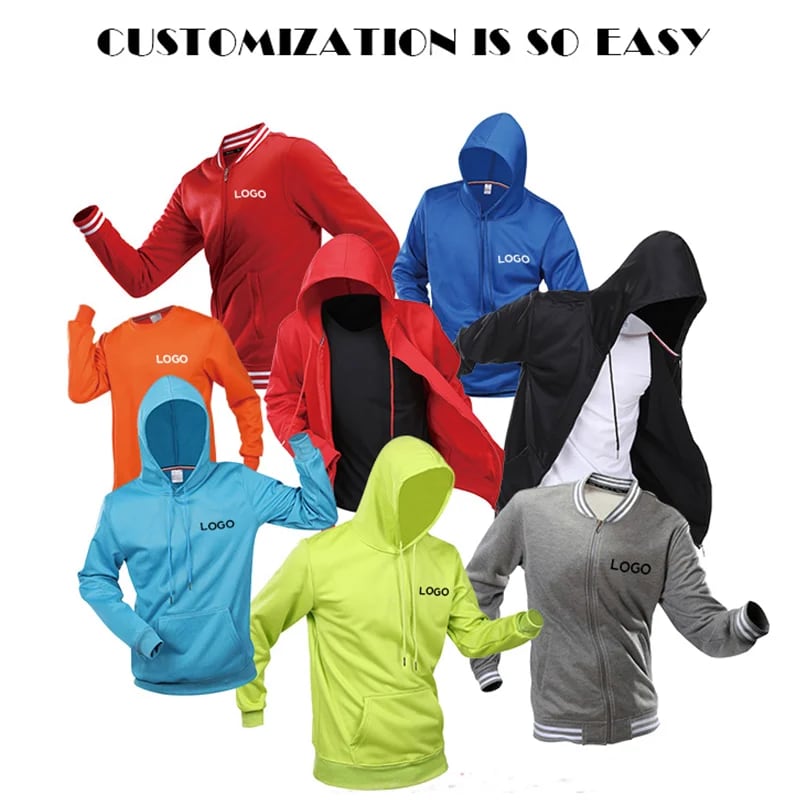
How to shorten a hoodie without breaking the hem
Shortening a finished hoodie is a five-step alteration, and the hem is where most attempts fail. The band has to come off, the body has to be cut square to the grain, and the band has to go back on at the same tension it had before.
- Mark the finished length on the body, not on the band.
- Remove the hem band with a seam ripper, keeping the stitch line intact.
- Cut the body square to the grain, allowing the original seam allowance.
- Reattach the band, distributing any ease evenly around the circumference.
- Press, measure against the spec, and wash one piece before repeating the change on bulk.
Arms Up, Seated, Layered: What the Checks Catch
Three checks catch most crop faults, and they take ten minutes on a real person. Run them before the sample is approved, then run them again after washing, because the band relaxes and the body can shorten.
| Check | How to run it | What it catches |
|---|---|---|
| Arms raised | Both arms overhead, hold for five seconds | Hem rise and how much of the waist shows |
| Seated | Sit on a stool and reach forward | Back length and whether the band rolls |
| Layered | Wear over a tee and a light sweatshirt | Hem pull, bulk and how the band sits |
| Stairs | Walk up a flight | Front hem lift and band stability |
| After washing | Wash to the care label, dry flat, repeat the checks | Band recovery and any change in length |
Record the result rather than the impression. A photograph taken at the moment the arms are raised is more useful in an approval meeting than a note that says the sample sits fine, and it is the document a factory can work from when the next size is developed.
Grading a Crop Across Sizes
Body length does not grade at the same rate as the chest. If a block adds a fixed step to the chest and the same fixed step to the body, a crop becomes proportionally longer as the size increases, and the largest size stops reading as cropped. Choose the rule before grading, hold either the absolute length or the crop ratio, and check the smallest and largest sizes side by side.
The band should not grade like the body either. As the opening widens, the band has to keep enough tension to sit flat without cutting in, so it is usually re-tensioned at the top of the range rather than scaled with the body. That is one more reason to sample a size set instead of a single size, which on a crop is the only way to see whether the rule you chose survives the extremes.
Labels, Care and Market Rules
Cropped styles raise two labelling questions that are easy to postpone. Fibre composition and care instructions follow the same rules as any sweatshirt, but the finish can change what the care label should say: a garment-dyed crop, a brushed back or a heavy print each carry their own washing advice, and the label has to match the fabric the buyer approved rather than the fabric on the original brief.
If the range includes children’s sizes, cord and drawcord rules apply and differ between markets, so the drawcord has to be settled before the pattern is finalised rather than after the first sample. Claims about recycled or organic content need a certificate whose scope covers the yarn, not just a supplier’s statement that the content exists.
A cropped zip-through has one more variable, because the zip length has to match the shortened body and the band. On a custom zip-up hoodie block, a zip cut for the original length will either run past the band or stop short of it, and the correction is a new zip order rather than a pattern tweak.
The Development Sequence
The order that avoids surprises looks like this:
- Set the finished body length per size and the measurement point.
- Set the hem band depth and the tension it is knitted at.
- Move the pocket, drawcord and hood to suit the new length.
- Sample in the target fabric as a size set.
- Run the arms-raised, seated and layered checks.
- Wash, dry, re-measure and approve.
Steps three and six are the ones that get compressed when a season is short, and they are the two that decide whether the crop works in motion. A pulled-in hood on a cropped body, or a band that has relaxed after the first wash, shows up in returns rather than in the sample room.
Bulk, Inspection and Reorder
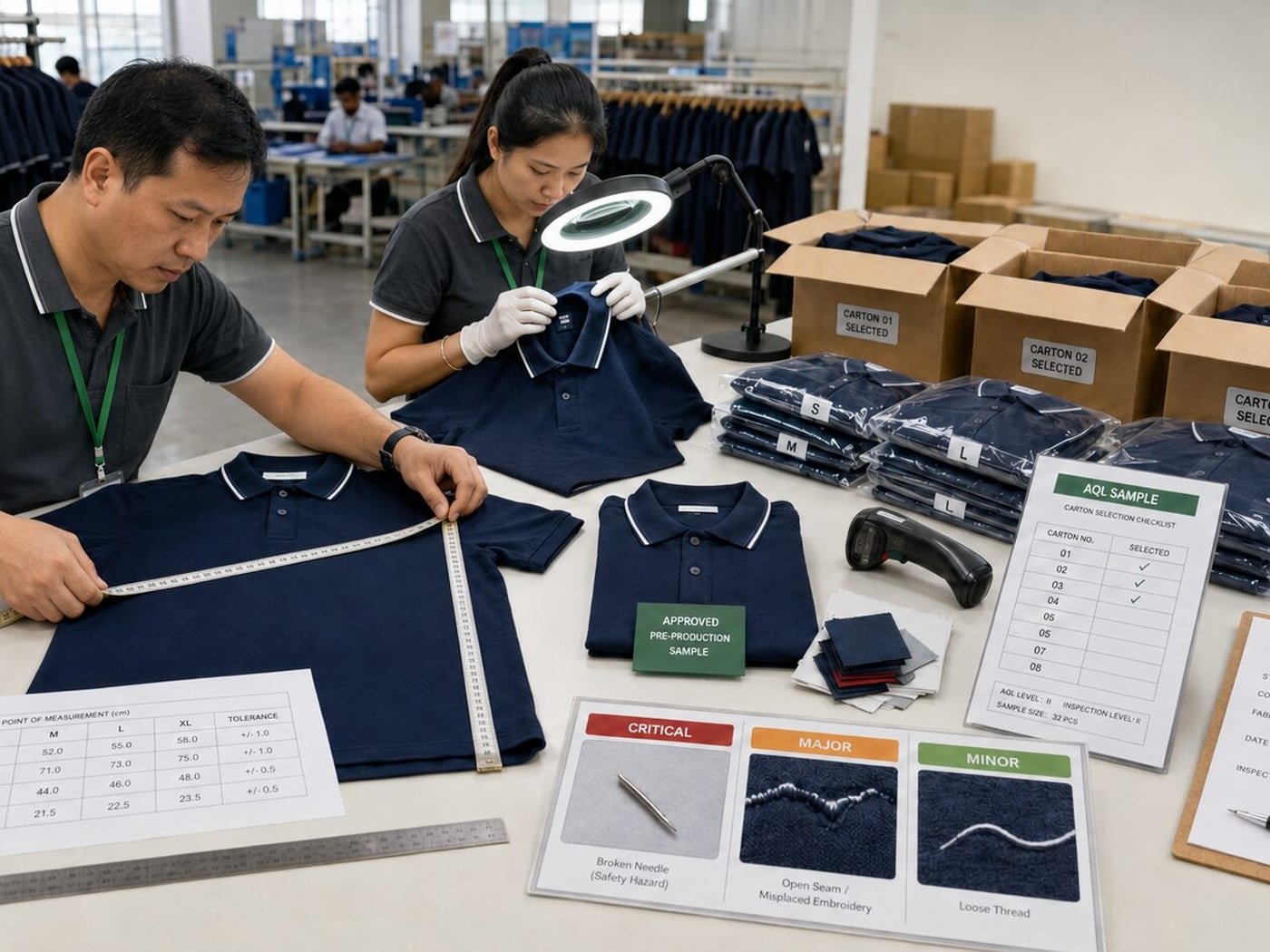
Bulk runs on the approved size set. Minimum order is 300 pcs per style. Sampling runs 7–12 days after fabric and specification approval, and bulk production typically runs 20–35 days after sample approval. Inspection is carried out to AQL 2.5 unless the buyer’s own plan replaces it.
Keep the washed sample with the measurement sheet. A cropped garment has less margin than a full-length one, because the band sits nearer the waist and the eye reads any shift in length as a fit fault, so the wash record is the evidence that the length is stable rather than a claim that it should be.
FAQ
How short is a cropped hoodie meant to be?
There is no single length. A crop is defined by where the hem lands on the body, at the waist or above the hip, and by how much coverage remains with the arms raised. State the finished length per size and the measurement point, then confirm it on a wearer rather than on a chart.
Will the hem band roll or ride up?
It depends on the depth and the tension the band is knitted at. A deep band with enough tension sits flat and holds the hem down; a shallow or slack band curls and climbs. Check both before and after washing, because rib relaxes and a band that holds on the sample can move in bulk.
Can one cropped pattern be graded across sizes?
Yes, if the grading rule is stated. Holding absolute length keeps every size equally cropped; holding the crop ratio keeps the proportion consistent and makes larger sizes longer. Either can work, but they produce different garments, so the choice belongs in the brief.
What is the minimum order and lead time?
Minimum order is 300 pcs per style. Sampling takes 7–12 days after fabric and specification approval, and bulk production typically takes 20–35 days after sample approval, with inspection to AQL 2.5 unless the buyer’s plan replaces it.
Sources: OEKO-TEX Standard 100, EU Regulation 1007/2011, Intertek testing, Higg, US CBP informed compliance, The Woolmark Company.
Working on a knitwear project?
Let’s talk yarn, gauge and timing.
Send a reference or tech pack and we will come back with a practical development route.

