
At three hundred pieces per style, a blanket order is a packing problem before it is a knitting problem. The sample can be beautiful and the carton can still be wrong: too few per box, too much air, a freight cost built on a volume nobody checked.
That is the order worth working in. Size and weight first, because they decide the knitting; edge finish second, because it is what fails after a wash; packing last, because it is the number that travels furthest through the budget. Get those three right and the knit is straightforward.
Custom knit blanket development: the short answer
A knit blanket is specified by size, weight and edge finish, and proved by a wash. Set the finished dimensions with a tolerance, choose a weight that drapes rather than stands, and test the border on a washed sample before bulk. Packing volume then decides the carton and the freight.
The sections below follow that implementation path, from the brief to the carton, with the check that closes each step.
Packing volume is a development decision
A blanket is mostly air. The same finished size can pack to very different volumes depending on how it is folded, whether it is pressed flat, and how thick the border is. That volume decides the carton size, the number of pieces per carton, and therefore the freight per unit.
Check it at sample stage rather than at dispatch. Fold the sample the way the packing specification will fold it, put it in the intended polybag, and measure the packed dimensions. Then multiply by the quantity and compare the result with the carton you planned. A blanket that gains two centimetres in the fold can lose a piece per carton, and that change is invisible until the container is loaded.
Freight quotes make the same point from the other direction. A blanket is charged on volume as often as on weight, so a carton that is half air pays for the air. The fix is a tighter fold and a smaller bag, not a thinner blanket, so build one prototype carton before the order.
Size stability: what a blanket does in the wash
A blanket is washed less often than a garment and more aggressively when it is. That combination makes dimensional change the first specification to fix, and the test has to use the wash the care label will recommend rather than a gentle cycle chosen for the sample.
Measure the finished length and width before washing, after the first wash and after the third, drying the sample the way the label instructs. A knitted blanket that is hung wet will grow under its own weight, and that growth will be read as a knitting fault rather than a drying one if the method was never written down.
| Parameter | What to write in the specification | How to check it |
|---|---|---|
| Finished dimensions | Length and width with a tolerance in each direction | Measure flat, relaxed, on the same table |
| Garment weight | Weight per piece, not per square metre | Weigh the sample and compare with the brief |
| Edge finish | Border type, depth and how it is attached | Wash, then inspect for curl, twist and fraying |
| Stitch and gauge | Structure, gauge and any pattern repeat | Stretch the panel and look through it in daylight |
| Packed volume | Fold method, bag size, pieces per carton | Fold, bag, measure and multiply by quantity |
The third column is the part a factory can run without a buyer present. Every check in it produces a photograph or a number, which is what makes the specification portable to a second order.
Weight and drape: the hand that sells it
Blanket weight is usually described per piece because that is what the customer lifts off the shelf. Two blankets of the same size can differ by a few hundred grams and feel like different products: the lighter one drapes over a sofa arm, the heavier one sits where it is put.
Drape is decided by the yarn and the stitch as much as by the weight. A loose gauge in a soft yarn falls; a tight gauge in the same yarn stands. Ask for the same yarn in two gauges at sample stage, because that pair answers more than a conversation about grams.
Weigh the sample twice: once as knitted and once after a wash. A blanket that gains weight in the wash has been compacted, and one that loses it has a finish that will keep losing for a few cycles. Neither is a fault, but the number the customer lifts should be the second weight rather than the first.
The edge finish is what fails first
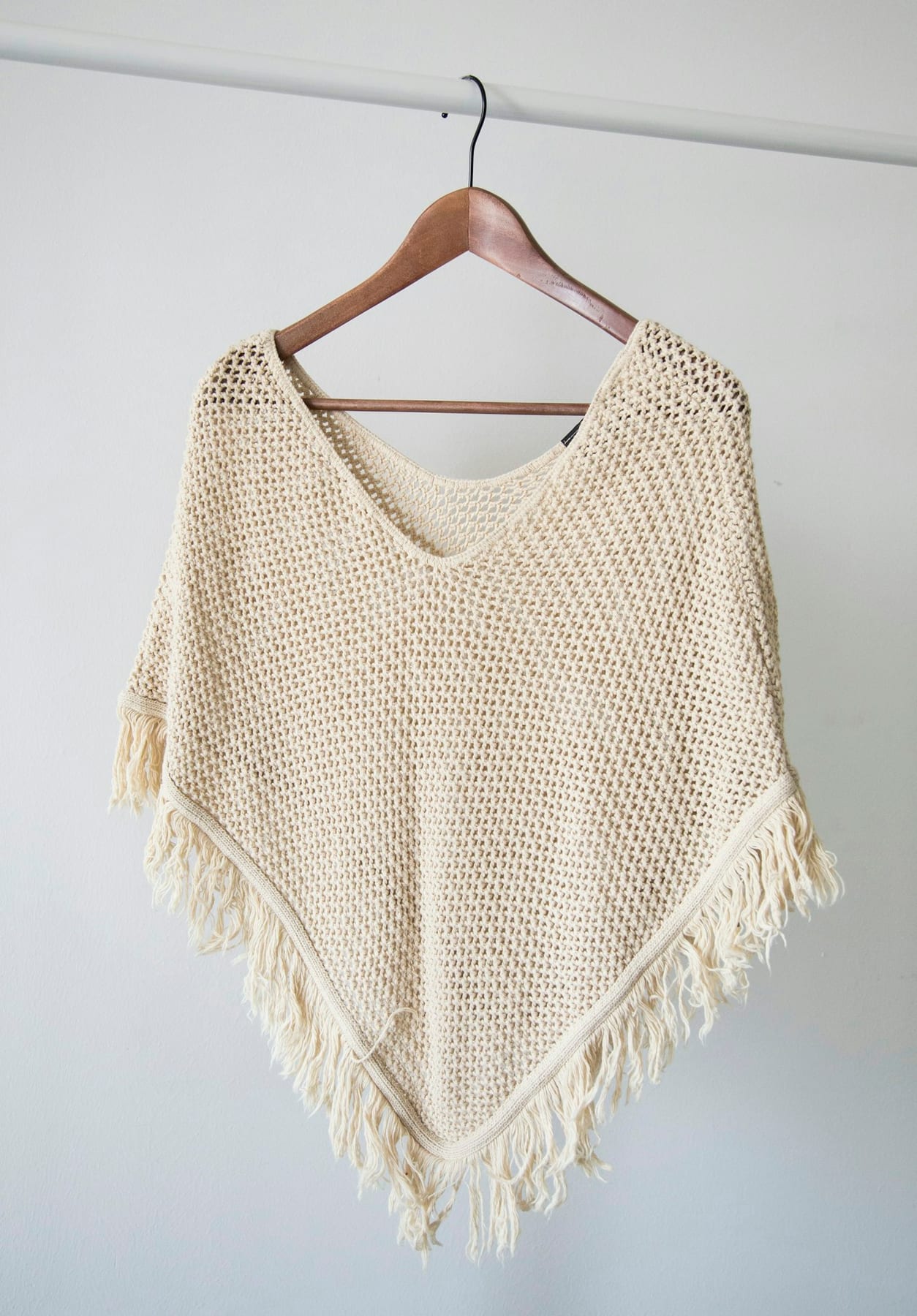
A blanket edge takes more handling than any other part: it is gripped, folded, dragged and washed. A border that looks crisp on the sample can curl at the corners after the first wash, and a fringed edge can twist into a rope if the yarn has no memory.
Choose the finish with the wash in mind. A ribbed border in the same yarn is the most stable and the least decorative. A contrast border in a different yarn needs its own shrinkage test, because the two yarns will move differently and the seam will pucker. A fringe needs a twist or a knot that survives handling, and it needs to be measured after washing rather than before.
Check the corners separately, because a border can be sound along the sides and still fail where two directions meet. A mitred corner in a rib is a different construction from a folded one.
Yarn, colour and the label
Wool, cotton and acrylic blends behave differently in a blanket, and the difference is mostly about weight and wash. Wool gives warmth and recovery at a lower weight; cotton gives a cooler hand and more weight for the same coverage; an acrylic blend can hold a colour and a price point that the natural fibres cannot match at the same size.
Whatever the blend, the label has to state it. Fibre names and percentages follow EU Regulation 1007/2011 for the European market, and a claim such as “pure new wool” needs the documentation behind it before it is printed. A merino accessories range that shares a yarn with the blanket can share the composition statement, which is one less label to approve.
Care instructions follow the fibre rather than the product. A wool blanket that needs a cool wash and a flat dry cannot share a care label with a cotton one, even when the two are sold as a set, and a mixed set with a single label will mislead one of the two customers.
The implementation path, step by step
Step one: fix the finished size and the tolerance, in both directions. Step two: choose the yarn and knit the same yarn in two gauges. Step three: select the edge finish and knit it on both samples. Step four: wash each sample three times, dry flat and re-measure. Step five: fold, bag and measure the packed volume, then set the carton.
Each step produces one document: a measurement sheet, a pair of swatches, a washed border photograph, a wash record and a packing test. Those five documents are the development, and they also make a handover pack if the program moves. A custom knit blanket program that carries them can add a colour or a size without re-approving the construction.

Packing, folding and the retail presentation
The fold is part of the design when the blanket is sold in a box or on a shelf. A ribbon, a band or a printed sleeve adds a step and a minimum, so decide each with the carton rather than after it.
Then test the pack. Fold the sample the way the specification says, seal it, and open it again after a week. A blanket that has taken a fold line across the middle of a cable panel will show it in the shop, and the fix is a different fold rather than a different knit.
Then check the label and the barcode on the packed piece, not on the flat sample. A blanket in a sleeve is handled by the edge, so the label position has to survive being picked up by the border rather than by the body.
FAQ
What tolerance should a blanket size carry?
Set it per direction and state it in the specification rather than borrowing a garment tolerance. A blanket is measured flat and relaxed, and a knitted one will move more in length than across, so the two directions need separate numbers.
Can a blanket be made from the same yarn as a sweater?
Yes, and it is often a good idea for a coordinated range. The gauge and the stitch will differ, because a blanket needs more coverage at less weight, but the yarn and the colour can be shared.
How do we stop the border curling?
Knit the border in a stitch that has memory, in the same yarn as the body, and test it after a wash. A border in a different yarn needs its own shrinkage test, because the two will move at different rates.
Should the blanket be pressed before packing?
Only if the packing specification says so. Pressing flattens the stitch and changes the hand, and a pressed blanket packs smaller than an unpressed one. Decide which look the retail presentation needs, then keep the method consistent across the order.
Sources: The Woolmark Company, OEKO-TEX Standard 100, Intertek, EU Regulation 1007/2011, Higg and Control Union.
Working on a knitwear project?
Let’s talk yarn, gauge and timing.
Send a reference or tech pack and we will come back with a practical development route.

