
Buyers spend most of a sample meeting on the hood. The wearer makes up their mind within a week, and the decision is usually taken at the cuff. Ribbing that has lost its snap makes a new sweatshirt look tired long before the body shows a fault, which is why this custom hoodie development guide starts at the edges and works inward.
Picture the garment in use. A student wears it open over a T-shirt, sits on it, pushes the sleeves up, and washes it every ten days. A warehouse team wears it under a jacket for eight hours and pulls the hood up and down all shift. A retail customer tries it on once and judges the weight across the shoulders. None of those people reads a specification, and all of them notice the same three things: how the cuffs grip, how the hood sits, and whether the whole garment feels hollow.
Custom Hoodie Development Guide: Decisions in the Order They Are Made
A custom hoodie development guide is a decision path with six stops: fabric route, fit block, hood and neckline, ribbing, decoration, and a sealed sample. Each stop narrows the next, and the order matters because the fabric chosen first decides which hood and cuff will hold shape at the weight you are selling.
Taken out of order, the sample meeting turns into an argument about symptoms — a hood that will not sit, a cuff that has gone slack — when the cause sits two decisions earlier.
Start With the Week It Will Be Worn In
A hoodie is bought for a season and worn for a year. The brief should name the season, the climate, and how often the wearer washes it, because those three answers decide the fabric weight before anyone opens a colour card. A spring drop and a winter programme cannot share a body cloth and still feel right in both.
Workwear and retail pull in different directions. A uniform programme wants a dark, hard-wearing body that hides marks and survives frequent laundering; a retail drop wants a surface that photographs well and a hood that holds its shape on a shelf. A promotional run wants a blank that takes a large print cleanly and packs flat.
Fabric Route: Loopback, Brushed Fleece or Heavyweight
Three routes cover most briefs, and the difference is on the inside face rather than the label.
| Route | Inside face | Warmth for weight | Drape | Decoration surface | Suited to |
|---|---|---|---|---|---|
| Loopback French terry | Visible loops, dry hand | Moderate | Relaxed, moves with the body | Smooth face takes print and embroidery cleanly | Spring and autumn retail, layering pieces |
| Brushed fleece | Brushed pile, soft hand | Higher | Fuller, less drape | Pile can swallow fine print detail | Winter retail, hoodies worn as an outer layer |
| Heavyweight loopback or fleece | Dense loops or tight pile | High, with structure | Holds a boxy shape | Firm surface holds dense embroidery | Premium retail, workwear, boxy fits |
Weight and trim have to agree. A heavy body with a light cuff looks borrowed from another garment, and a light body with a stiff rib looks like a workwear sample that missed its market. Pull the two decisions together before the first sample is cut.
Fit Block: Drop Shoulder, Set-In or Raglan
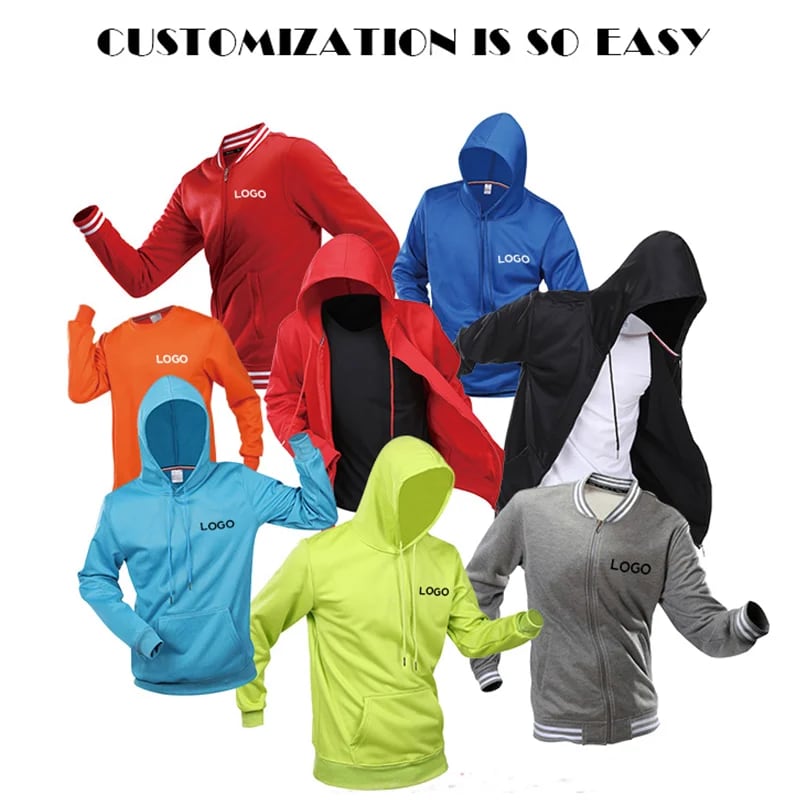
Drop shoulder is the familiar hoodie shape. The seam sits off the shoulder, the body is boxy, and grading is forgiving, which is why it carries oversized retail fits so well. The trade-off is that a drop shoulder hides the shape of the wearer, so the hood and rib have to do the work of making the garment look deliberate.
A set-in sleeve reads smarter and follows the shoulder line. It needs a cleaner armhole and more careful grading, and it restricts the wearer slightly when reaching overhead. Raglan moves the seam from the shoulder to the neckline, gives the arm room, and opens a long diagonal panel that takes a sleeve print or a contrast colour. On a custom crewneck sweatshirt the same three blocks apply, minus the hood, so the neckline finish becomes the visible detail.
Hood and Neckline Construction
The hood is a structural decision, not a cosmetic one. It sits on the neck seam, so every gram of fabric and lining is weight the wearer feels, and every choice about layers shows in how the hood stands when it is down.
| Hood build | Shape when down | Weight on the neck | Making notes | Suited to |
|---|---|---|---|---|
| Single-layer self fabric | Flat, collapses | Light | Fastest to sew; the inside edge finish is visible | Lightweight spring styles |
| Double-layer self fabric | Stands, holds a line | Heavier | Layers joined at the front edge; bulk at that seam | Premium retail, workwear |
| Jersey lining | Soft, rounded | Medium | Lining lighter than the shell; shade can differ | Comfort-led retail |
The neckline is where the hood meets the body, and it fails quietly. A neck seam without tape stretches with the weight of the hood; a drawcord channel that is too narrow binds; a grommet placed too close to the edge pulls through. If the hood is for children’s wear, cord length and attachment are regulated in most markets, so the brief should say so before the sample, not after.
Ribbing Decides How Long It Looks New
Ribbing is the part buyers specify last and wearers judge first. A 2×2 rib with enough elastane returns after stretching; a loose 1×1 rib with little elastane gives up within a month and leaves the cuff hanging past the wrist. Cuff depth matters too: a shallow cuff rolls, a deep cuff holds.
Ask for the rib to be knitted from the same yarn lot as the body where the shade has to match exactly, and approve it on the garment rather than on a card. Rib that is too tight leaves a mark on the wrist and reads as a fit fault even when the measurement is correct.
Pockets, Trims and Decoration
The kangaroo pocket is a stress point. It carries hands, keys and a phone, so the pocket mouth needs bar tacks and the bag needs enough depth that it does not pull the front out of shape. Side-entry pockets and zip pockets change the pattern, and a custom zip-up hoodie adds a centre-front zip, a zip guard and a facing that all have to be sampled together.
Decoration follows the fabric. Dense embroidery needs backing on loopback and a stitch count that does not crush the pile on brushed fleece. Puff print and applique sit on top of the surface and can look heavy on a light body. Approve every decoration on a panel of the actual bulk cloth, washed the way the wearer will wash it.
Sealing the Sample
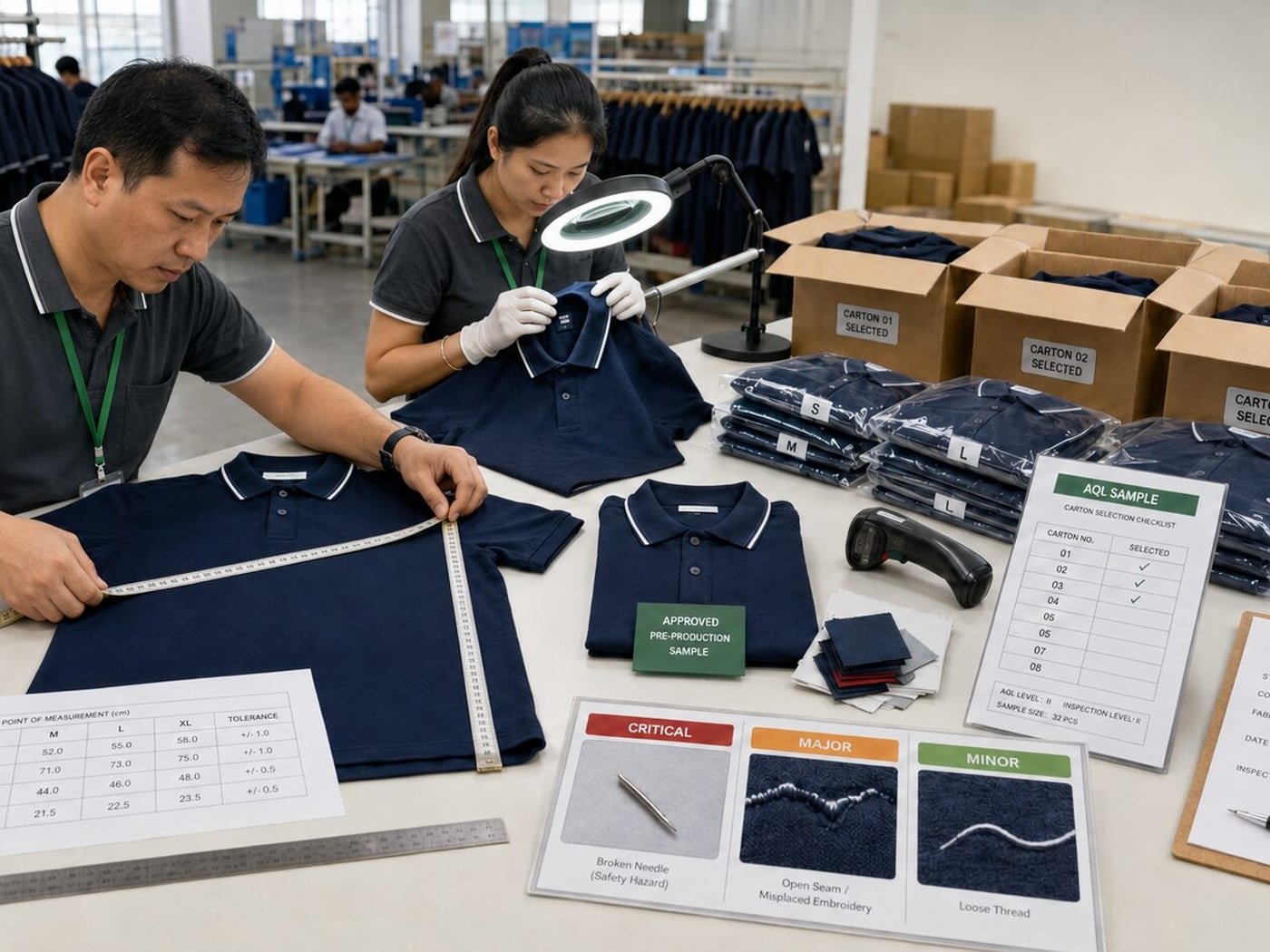
A sealed sample is the only document that ends an argument six weeks later. Measure it on the sheet the buyer will use for inspection, wear it, wash it, and record what changed: cuff recovery, pocket shape, hood stand, and any shade shift between body and rib.
Sampling takes 7–12 days after fabric and tech pack approval. Bulk production typically runs 20–35 days after sample approval, with an AQL 2.5 inspection before packing, and the minimum order is 300 pcs per style. The product range behind those figures sits on the sweatshirts and hoodies page.
Where Hoodie Orders Usually Go Wrong
Most failures are traceable to a decision that was never written down. The hood is approved in a photo where it is propped up, so the double layer that makes it stand is never recorded. The rib is approved on a card, so nobody notices it is a different shade from the body under shop light. The pocket is measured flat, so the bag depth is never checked against a hand.
Three fixes prevent most of it. Put the fabric route and the rib on the same approval sheet. Photograph the hood down as well as up. Wash one sample before signing, and keep the washed one as the reference rather than the fresh one.
FAQ
What is the minimum order for a custom hoodie?
The minimum is 300 pcs per style. That figure applies to the style, not to each colour, and how the 300 splits across sizes and colours is settled in the quotation because the cutting plan depends on it.
Can we mix sizes and colours inside the minimum?
Yes, within the style. The size and colour breakdown is agreed at quotation, and it has to fit the fabric and dye plan; a very thin split across many colours usually needs a conversation rather than a straight yes.
Do we supply the fabric or does the factory?
Either route works. We can source body cloth, rib and trims against the brief, or work with fabric you nominate, provided it arrives in time for sampling and meets the brief. Fabric you nominate still has to be tested before bulk.
How do we approve a sample if nobody on our team can visit?
The sample travels with a measurement sheet and photographs of the details that matter: hood down, cuff, pocket tack, neck seam. You mark it up, we correct once, and the approved piece is sealed. The AQL 2.5 inspection is then read against that sealed sample.
Sources: OEKO-TEX Standard 100, EU Regulation 1007/2011, Intertek, Higg, US CBP.
Working on a knitwear project?
Let’s talk yarn, gauge and timing.
Send a reference or tech pack and we will come back with a practical development route.


