
A kangaroo pocket is cut from one panel. A side-entry pocket is cut from four pieces and two linings. That difference in piece count is where most pocket problems start, and it shows up in sampling as a sag, a gap or a twist rather than as a pattern error.
Hoodie pocket construction is a load problem before it is a design problem. The pocket takes a phone, a hand and a set of keys while the garment hangs from the shoulders, which is why the checks below are about grain and reinforcement rather than about how the pocket looks on a hanger.
Hoodie Pocket Construction: What the Sample Has to Prove
A hoodie pocket has to prove three things on the sample: that it carries weight without pulling the front out of shape, that the opening sits flat against the body when empty, and that the corners survive being used. A pocket that looks right empty has not been tested.
Both constructions can pass those checks, but they fail differently. Knowing which failure belongs to which construction is what turns a sample review into a decision.
What is a kangaroo pocket?
A kangaroo pocket is a single front pouch joined to both side seams of a hoodie or sweatshirt, with two hand openings and no separate pocket bags. It is also called a front pouch or muff pocket. A side-entry pocket is cut separately and set into the seam, which changes where the hands sit and how the pocket hangs when loaded.
Two Pockets, Two Sets of Problems
The kangaroo pocket is a single panel joined at the sides and the bottom, with the top edge open on both sides of the centre. Its stress sits at the two upper corners and along the side joins, where the hand pulls the panel away from the body.
The side-entry pocket is a bag set behind an opening, usually in the side seam or the front panel, with a lining that carries the load. Its stress sits at the two ends of the opening, which is why those ends need a bar tack or a reinforced stitch.
The cost difference follows the piece count. A side-entry pocket needs more cutting, more sewing and a lining, and a fleece hoodie with two of them carries more labour than one with a kangaroo panel, even though the outside looks simpler.
There is a third option that behaves like neither: a welt or zip pocket set into the front panel. It reads the cleanest of the three and costs the most in construction, and it is the one most often sent back at sample because the opening is too small for a hand.
Symptom: The Pocket Sags When Loaded
Sag almost always starts with the bag fabric. A pocket bag cut from a lighter jersey than the body stretches under a phone, and once it has stretched it does not return, so the front of the hoodie begins to hang lower on that side.
The second cause is the corner. A kangaroo pocket joined only at the side seams has nothing holding the top corners back, so the load pulls the panel forward and the corners curl. Bar tacks at the corners, or a stitched-down top edge at the ends, spread the load into the body.
Check it with weight in the pocket, not flat. A phone is the honest test weight, and a pocket that sags with a phone in a sample will sag with a phone in bulk.
Bag length matters as much as bag weight. A bag that stops well above the hem hangs free and pulls on the opening; one that reaches near the hem shares its load with the garment, and that difference decides whether the front sags after a season.

Symptom: The Opening Gaps or Puckers
A gap at the opening is usually a cutting problem. If the opening is cut longer than the bag behind it, or the bag is cut on the bias, the two edges move differently and the opening stands away from the body.
Puckering is a sewing problem. The bag is stretched while it is attached, and when it recovers the opening ripples. Stay tape along the opening, or a strip of fusible, holds the length while the seam is sewn and is removed or left in depending on the fabric.
Check the opening by holding the hoodie up and looking along the edge against a light. A ridge you can see from the side will be visible when the garment is worn.
Symptom: The Pocket Twists After Washing
Twist is a grain problem. A pocket cut slightly off-grain, or a bag cut from a different grain than the body, will rotate in the wash and settle at an angle. The same fault shows in the side seam of a light sweatshirt, which is why grain direction belongs on the cutting ticket.
Check the pocket against the side seam after one wash, not before. A pocket that sits square when new and rotates afterwards was cut on the bias, and pressing will not correct it.
Sizing: Depth, Width and Hand Room
A pocket is sized for a hand and a phone, and the two are not the same shape. The opening has to admit a hand comfortably, the bag has to hold a phone without stretching, and the depth has to keep the phone from sliding out when the wearer sits.
Kangaroo pockets are usually sized as one width across the front, so the opening length is fixed by the panel width rather than by the hand. A narrow kangaroo panel looks tidy and is awkward to use, which is a design decision worth stating rather than discovering.
For a side-entry pocket, agree the opening length first. It fixes both the hand room and the load path, and an opening that is too short turns every use into a pull on the ends.
| Feature | Kangaroo | Side-entry |
|---|---|---|
| Pieces | One panel | Front, bag and lining |
| Opening | Two top edges, open | Two slots, reinforced ends |
| Load path | Side joins and corners | Bag, then the opening ends |
| Sag risk | High at the corners | High if the bag is light |
| Repair | Re-stitch the corners | Reinforce or replace the bag |
| Reads as | Casual, sport | Cleaner, more retail |
The Sampling Sequence
Work through four steps on the first sample. Load the pocket, then look at the opening, then wash it, then measure the placement against the pattern.
Loading comes first because it changes everything else: a pocket under weight sits lower, pulls the front and opens at the top. Judge the opening and the corners with the weight still in place, then repeat after a wash.
Only then measure. Record the pocket width, depth and opening length, the distance from the side seam and the height from the hem, and the position of any reinforcement. A placement that drifts a centimetre across a bulk run is a visible fault on a rack.
Run the same sequence on a heavyweight sweatshirt, where the pocket carries more fabric and the load is spread differently. A heavy fleece hides a light bag for a week and then shows it.
What to Write in the Spec
Name the construction, the bag fabric and the grain, the opening length, the placement measurements, and the reinforcement at the corners or the opening ends. Add the wash test and the loaded check, so the bulk inspection has something to repeat.
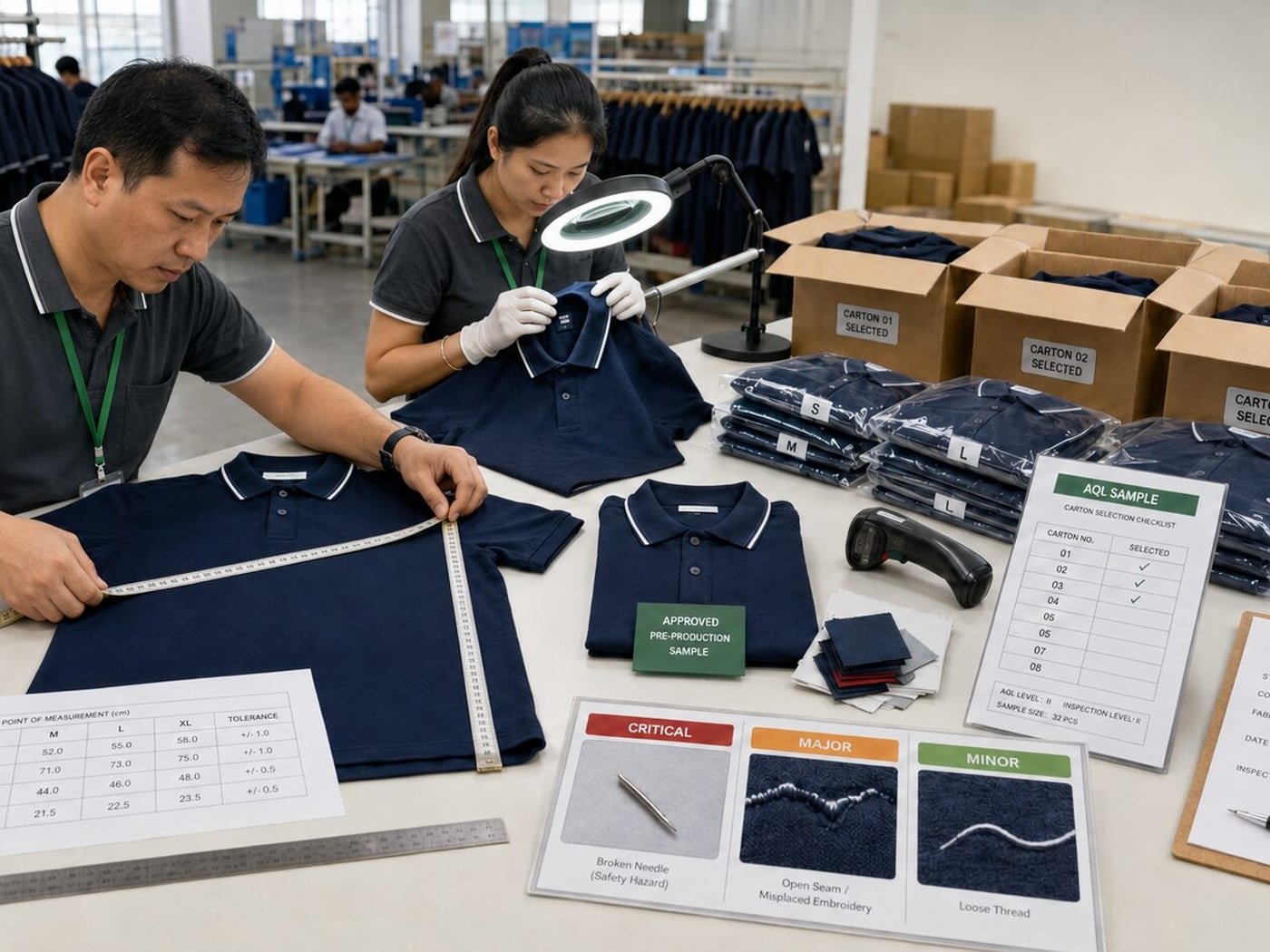
Horssle Knit inspects bulk orders to AQL 2.5, and a pocket placement that has a written measurement is a defect the inspector can find. A pocket described only as “as sample” is a judgement call at the end of a long line.
Photograph the pocket under load and keep the image beside the measurements, because a sag is easier to recognise than to describe.
Sampling runs 7–12 days after fabric and tech pack approval, and bulk typically takes 20–35 days after sample approval, with a 300-piece minimum per style. The pullover hoodie programme uses the same sequence whether the pocket is a kangaroo panel or a pair of side entries.
FAQ
Which pocket is more durable?
Neither by default. A kangaroo pocket with reinforced corners outlasts a side-entry pocket with a light bag, and the reverse is also true. Durability comes from the bag fabric and the reinforcement, not the style.
Can a kangaroo pocket be added to a zip hoodie?
Yes, though the zip divides the front and the pocket has to sit below or beside it. Check that the pocket does not interfere with the zip pull or the front panel shape when the hoodie is open.
Why does the pocket pull the front out of shape?
Usually because the bag is lighter than the body and the corners are not anchored. Both are cut-and-sew decisions, and both are visible on a sample loaded with a phone.
How much does the pocket affect the price?
Through piece count and labour rather than material. A side-entry pocket needs more cutting, sewing and a lining, so ask for the two options quoted separately rather than assuming one is cheaper.
Sources: OEKO-TEX Standard 100, EU Regulation 1007/2011 on textile fibre names, US CBP informed compliance publications, Intertek for test methods, and Higg for facility indexing.
Working on a knitwear project?
Let’s talk yarn, gauge and timing.
Send a reference or tech pack and we will come back with a practical development route.

