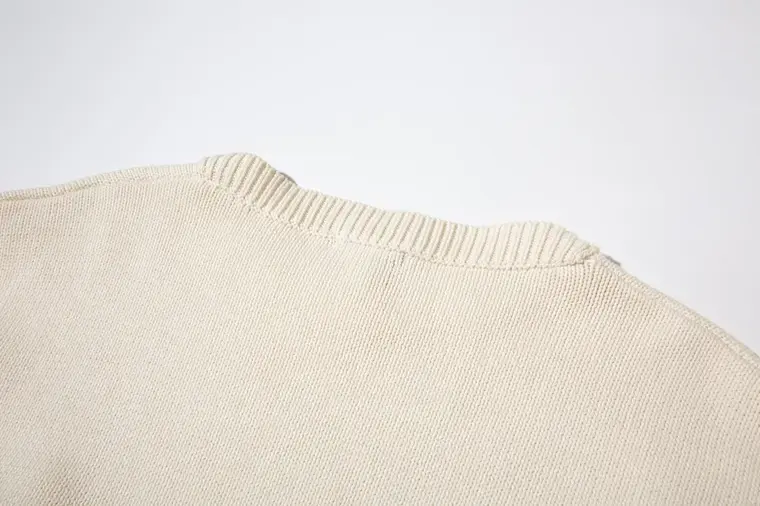
Lay the sweater down and check whether the snag is an intact loop, split yarn or a broken stitch before trying to move it. A sweater owner on Reddit caught a white merino knit on wood. The strand looked rough and split, so a simple method for moving an intact loop might overlook the damage. Start with a close view of the front and reverse. Do not cut the thread that still joins the neighboring stitches.
Last updated: November 28, 2026
What should you do first when the yarn snags?
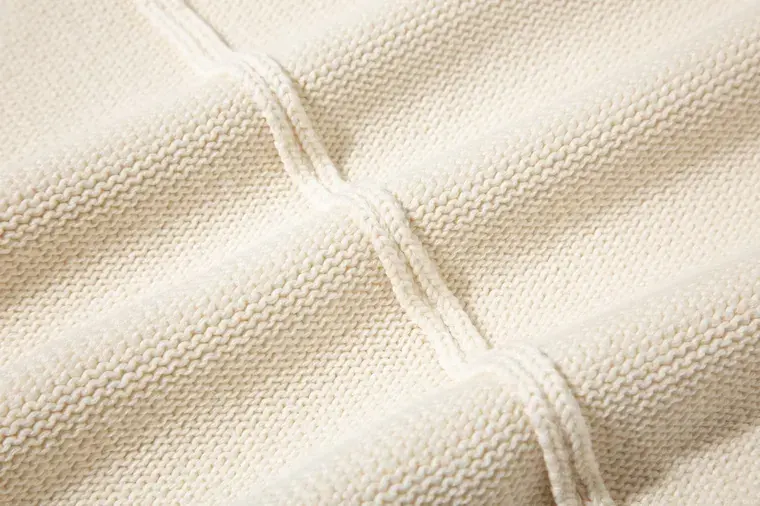
Follow the stitch path without pulling it
Use light from the side to see the center of the snag and nearby stitches. An intact loop is usually longer than the others, while surrounding loops may look small or drawn together. With damaged yarn, look for loose filament or fiber ends, a thinner section across the snag or an opening under the stretched area. If the stitch path is unclear, keep the sweater flat and bring it to a knit repairer. An apparently tidy front does not prove the reverse is secure.
Decathlon’s merino garment repair guidance distinguishes a pulled thread from a hole in its knitwear. Woolmark’s repair guidance describes separate approaches for an opening at a seam and a hole in wool fabric. Compare those conditions with the area you can see. On a loose intact loop, gentle redistribution toward adjacent loops may restore the surface if you can trace the same strand. A repairer can also sometimes bring the intact protruding loop to the reverse. Stop if the fabric begins to pull together or if the strand starts separating.
Decide whether appearance or integrity is at issue
Split yarn can be an intermediate problem. The loop can still hold but look fuzzy, thinner or uneven. Turning the snag inside might hide the fuzz without restoring the material that was damaged. If the sweater is valuable, the area is visible, the yarn is very fine or the stitch is starting to open, preserve the loose yarn and ask for a sample of the proposed repair or a careful visible comparison. Moving a broken end can change the shape of the opening before a repairer sees it.
On a purchased sweater with a suspected original defect, ask the seller how to document it before attempting a repair. Keep a close photo and a wider photo showing the position. A snag appearing at a sharp accessory or packaging contact can have a different cause from a repeated pulled loop at the same point on multiple unused pieces.
What we check on a development sample
Our custom merino sweater program compares yarn, structure and the physical garment reference through sampling. If a production-intended knit starts snagging during handling, keep that sample unchanged and take photos of both sides. Mark the yarn type, gauge and area. Compare the same position on another piece before deciding whether the cause follows one contact point or occurs across the construction. Document any edge or trim that touched the yarn when the damage occurred.
ISO 25086-1:2026 describes a Mace test for snagging resistance in textile fabrics within its scope. ASTM D5362 describes a separate Bean Bag method for appropriate fabrics. Ask a lab whether the design, openness and intended use make one of the methods suitable. Those methods evaluate resistance under agreed conditions. They cannot tell you whether an individual stitch can be repaired at home.
During a development review, keep one affected sample untouched even if the team attempts to repair another. A repaired reference can help estimate whether the defect is cosmetically recoverable. The untouched knit preserves the evidence needed to compare where the yarn changed, whether adjacent stitches are under tension, and what packaging or trim touched that point. Do not use a repaired sample as evidence that the cause has been removed from the production design.
What to do if the defect looks different from the reference
There’s a protruding loop with no hole
Check the reverse for the exact path before shifting it. Keep the fabric slack. If the loop sits in a highly open stitch or you cannot tell where the neighbors should lie, ask a knit repairer to see it rather than tightening the surface.
The snag looks like several frayed ends
Avoid trimming them. Photograph the area in good light with the sweater resting flat. A matching yarn reference and a close-up of an unaffected area help someone determine what should be stabilized.
Several new samples show the same pull
Hold acceptance on the affected material or position and keep the contact evidence. Ask the supplier to compare the known-good reference, affected sample, trim and packing materials. Check whether a revised combination survives the handling that produced the original change.
Send a photo of both sides of the stitch
Share the body location, yarn reference, affected side and contact point if known. Send your merino sample and snag notes.
Working on a knitwear project?
Let’s talk yarn, gauge and timing.
Send a reference or tech pack and we will come back with a practical development route.