
Most loungewear programmes are quoted at 300 pieces per style, and the number that decides whether they sell through is not the GSM on the swatch. It is how the ribbing recovers after the tenth wash. Softness wins the first touch; recovery decides the second season, and the two pull in opposite directions.
That tension is the brief, and a knit loungewear development guide is mostly about resolving it. A loose knit feels wonderful in the sample room and grows in the wash; a tight one keeps its shape and loses the softness the customer paid for. Development is the work of choosing where on that line each piece should sit, and then writing the choice down.
What a loungewear set has to survive
A set is worn at home, washed often, dried however the household dries things, and expected to look the same after a season of it. That is a harder brief than a sweater, which is worn twice a month and washed by habit rather than by need.
So the development brief has three requirements, in this order: comfort against the skin, recovery after repeated washing, and a shape that still reads as loungewear rather than as underwear. Colour, trim and packaging are decided after those three, not before.
Softness is a surface, recovery is a structure
Softness comes from the fibre, the yarn and the finish: a finer micron, a brushed or peached surface, a softer twist. Recovery comes from the knit structure, any elastane, and the way the garment is finished and pressed. They are produced by different parts of the process, which is why asking for both at once is a negotiation rather than a specification.
Ask for both on the same swatch. A fabric can be soft and loose, soft and firm, or firm and slightly dry; those combinations exist, and the price does not reliably tell you which one you are buying. The question is not which fabric is softest. It is which one is soft enough at the recovery your customer will test.
Knit loungewear development guide: the decisions that matter
A knit loungewear development guide comes down to five decisions: fibre and yarn, knit structure and weight, pattern and shrinkage allowance, waistband construction, and the wash protocol the fabric is tested against. Get those right and colour, trim and packaging are details. Get them wrong and nothing rescues the set.
Read the five as a sequence rather than a menu. The yarn sets the possible structures, the structure sets the shrinkage, the shrinkage sets the pattern allowance, and the waistband is where all three meet the body. Changing one later means revisiting the ones after it.

Sets: matching a top and a bottom through the wash
A set is two garments cut from the same fabric and expected to shrink together. If the top and the bottom come from different lots, or are finished on different lines, the two pieces can move apart after a handful of washes. The customer notices, because a set is worn together and judged together.
Cut both pieces from one fabric lot, record the lot number on the pack, and wash-test the set as a set rather than as two samples. A reorder that needs a new lot will bring a shade and a shrinkage difference, and it is better to allow for that in the grading than to explain it after the returns arrive. Keep one washed set from each lot as the reference for the next.
Trouser shapes and the waistband problem
Joggers, wide legs, straight legs and shorts all ask the same question in different ways: where does the fabric take the load? A drawcord waistband with elastic inside is forgiving of size error. A flat waistband with a wide elastic band looks cleaner and tolerates far less.
The waistband is also where a knit garment fails first, because it is stretched every time the piece is pulled on. Specify the elastic type, the channel width, the stitch that attaches it, and whether the drawcord is functional or decorative. A waistband that rolls or twists is a construction decision showing up later as a washing complaint.
Wash performance: what to write into the specification
Wash performance is only testable if it is written down, and the protocol decides the answer: temperature, cycle, detergent, drying method, number of cycles. Two suppliers can both say a fabric washes well while describing two different tests.
| Construction | Hand and drape | Recovery after washing | Where it suits |
|---|---|---|---|
| Single jersey | Soft, fluid, light | Moderate; edges can curl | Tops and shorts for warm climates |
| 1×1 rib | Stretchy, close to the body | Good, if the rib is firm | Bottoms, cuffs, waistbands |
| Interlock | Smooth on both sides, stable | Good; resists twisting | Sets that must look neat after washing |
| Brushed back fleece | Warm, soft inside, bulkier | Moderate; brushing can flatten | Winter sets and hooded pieces |
| Ribbed knit (2×2) | Textured, heavier, body-skimming | Strong, holds shape well | Lounge pants and long-sleeve tops |
Add the pass criteria: shrinkage limit per direction, pilling grade, colour change grade, and whether the garment is measured flat or relaxed. Without those four, a wash test produces an opinion rather than an acceptance standard, and opinions do not survive a second order. Write the protocol into the tech pack and repeat it at bulk, on the actual production lot rather than on the development swatch.
Sizing and the relaxed fit
Loungewear is cut relaxed, which makes the size chart more forgiving and the grading less so. An oversized top that adds four centimetres at the chest also adds at the shoulder, and a drop-shoulder seam cannot be graded the way a set-in sleeve can.
Decide the fit language in the tech pack — relaxed, oversized or straight — and grade shoulder, chest and length together so that a medium does not read as a large with shorter sleeves. Ask for two sizes in the sample round rather than one, because a single sample hides exactly the grading problem a set will show in the shop.
Packing and presentation
Loungewear is bought as a gift as often as a basic, so the packing brief belongs in development rather than in dispatch. A set folded into a printed box behaves differently from a set in a polybag: the fold lines, the tissue, the size sticker and the carton count all change, and a box adds cube that a polybag does not.
Ask for a packed sample before approving bulk. A garment that looks right on a hanger can look creased and thin after three weeks in a container, and the buyer discovers it at the point of sale rather than in the sample room.
Accessories that complete the range
A loungewear range usually grows sideways before it grows deeper: a beanie, a scarf, a throw, a pair of knit socks. Those pieces can share the yarn and the colour cards, which keeps the range coherent and the minimum order manageable.
The development logic differs, though. Knit beanies are shaped and finished in one operation and live or die on fit; knit scarves are about drape and edge finish; a knit blanket is judged on weight and how it holds a fold. A merino accessories programme can share the loungewear yarn, but the gauge and the finishing brief will not be the same.
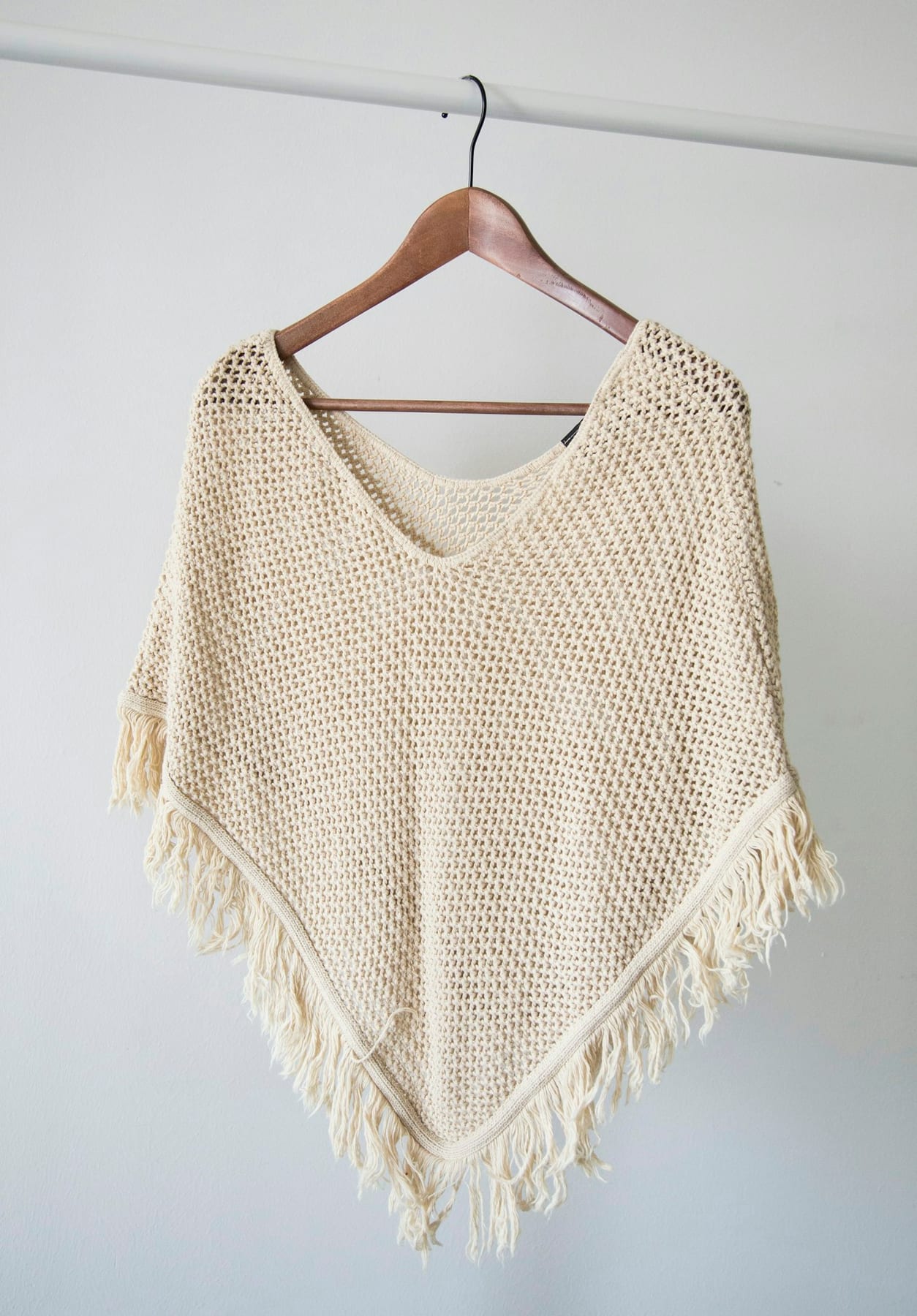
Horssle Knit samples in 7–12 days after fabric and tech pack approval and runs bulk production in typically 20–35 days after sample approval, with inspection to AQL 2.5. For a loungewear set, the sample round should include a washed piece rather than a pressed one, because the washed piece is what the customer receives.
FAQ
Should loungewear be brushed inside or smooth?
It depends on the season and the price position. A brushed back feels warmer and more generous in the hand, and it flattens slightly over time. A smooth interlock looks neater after washing and suits sets that are sold as everyday wear rather than as winter comfort.
How much elastane does a loungewear waistband need?
Enough to recover, not enough to feel tight. The right percentage depends on the knit structure and the elastic used in the channel, so it is settled on a worn sample rather than by a number. Ask for the sample to be worn and washed before approval.
Can one fabric serve both the top and the bottom?
Yes, and it usually should for a matched set, but the two pieces may need different allowances. A top hangs from the shoulders while a bottom takes load at the waist and knees, so the same cloth can need two shrinkage allowances and two pattern treatments.
What goes wrong most often in loungewear development?
Approving a pressed sample and shipping a washed reality. The fabric is approved flat and dry, the garment is packed, the customer washes it once, and the fit, the length and the hand all change. Approve the washed version and the argument disappears.
Sources: The Woolmark Company on wool fibre specification, OEKO-TEX Standard 100, EU Regulation 1007/2011 on textile fibre names, Intertek textile testing, Higg facility indexing, and Control Union certification.
Working on a knitwear project?
Let’s talk yarn, gauge and timing.
Send a reference or tech pack and we will come back with a practical development route.

