
A long-sleeve polo and its short-sleeve parent can share the same body block, the same collar and the same placket, and still be different garments to wear. The short sleeve ends where the arm moves freely; the long sleeve ends at the wrist, where every lift and reach is felt at the cuff.
That single comparison decides the long sleeve polo specifications. Once a sleeve reaches the wrist, its length, its width and its cuff become the fit, and the body measurements that dominated the short-sleeve brief become the background. Copy the parent pattern and lengthen the sleeve, and the polo will fit the torso and fail at the arm.
What changes when the sleeve gets longer
Three things, in order. The sleeve carries more weight, so the armhole and the shoulder seam take more load. The elbow becomes a wear point, which changes how the fabric must recover. And the cuff becomes a fixed opening that either slides over the hand or catches at the thumb base.
There is a fourth change that buyers notice late: layering. A long-sleeve polo is worn under a jacket, over a tee, or on its own, and each of those changes the ease the sleeve needs. A sleeve that fits well alone can bind under a blazer, and a sleeve cut for layering looks loose when worn alone.
Long sleeve polo specifications: the measurement set
Long sleeve polo specifications need four numbers beyond the body: sleeve length from the shoulder seam, bicep width, cuff opening and cuff rib depth. Those four decide whether the sleeve stacks, stops at the wrist or pulls at the elbow, and they change with the fabric and the layering the polo is sold for.
Write them per size and check them against the body chart rather than in isolation. A sleeve length that works on the medium can expose the wrist on the large if the grading is copied from the short-sleeve block.
| Measurement | Where to measure | What it controls |
|---|---|---|
| Sleeve length | Shoulder seam to cuff edge, laid flat | Whether the cuff sits at the wrist bone |
| Bicep width | Across the sleeve, 2 cm below the armhole | Room to bend and to layer |
| Elbow width | Across the sleeve at the elbow point | Pulling when the arm bends |
| Cuff opening | Finished circumference, relaxed | Whether it clears the hand |
| Cuff rib depth | Finished depth, not the knitted length | How much the cuff grips and recovers |
| Armhole depth | Pit to shoulder seam | Lift and reach without pulling the body |
Parts of a long-sleeve polo, named
Buyers and pattern rooms use the same eight names for the parts of a long-sleeve polo. Using them in a sample comment removes the ambiguity that costs a second sample round.
- Collar and collar band: the outer collar and the rib or self-fabric stand beneath it.
- Placket: the buttoned opening, with its length and facing width specified.
- Sleeve: the long tube, measured from shoulder seam to cuff.
- Cuff: rib, self-fabric or elastane-tipped, with its depth and opening recorded.
- Body: front and back panels, including any side seams or vents.
- Hem: straight, curved or side-vented, with the stitch and depth noted.
Cuff: rib, elastane and recovery
A polo cuff is usually a rib, sometimes with elastane, and its job is to hold the sleeve at the wrist without leaving a mark. The two failure modes are opposite: a cuff that is too loose slides down over the hand, and one that is too tight leaves a line and restricts the wrist.
Specify the finished circumference relaxed and stretched, the rib depth and whether elastane is included. A pique with elastane recovers differently from a pure cotton pique, and a pique polo that washes well can still have a cuff that relaxes after ten wears if the rib was knitted at the wrong tension.
Sleeve length and the wrist bone
Sleeve length is usually measured from the shoulder seam to the cuff edge on a flat garment, and the number that matters is where the cuff lands on the wearer. The wrist bone is the practical reference: a cuff that sits at or just below it reads as correct, and one that ends above it reads as short even when the chart says otherwise.
Test it with the arm bent. A sleeve measured straight can shorten by a centimetre when the elbow flexes, and the cuff then sits above the wrist. Length and elbow width have to be checked together, on a body, with the arm in the position the garment is worn in.
Layering ease: what to test
Layering is the specification most often left out. If the polo is sold as a mid-layer, the bicep and elbow need enough ease to pass over a shirt, and the cuff needs to sit over a shirt cuff or under it, which is a different length. If it is sold as a base layer, the sleeve should be closer and the cuff firmer.
Decide the wearing condition in the brief, then test the sample in it. A polo tested over a bare arm tells you about the fabric; a polo tested over the shirt the customer will wear tells you about the garment. Photograph both, because the difference between them is the ease the buyer is paying for.
Fabric behaviour in a long sleeve
A long sleeve shows the fabric’s behaviour more than the body does. A pique with a firm hand keeps a straight line to the cuff; a soft jersey or a light performance knit follows the arm and reads closer. The same pattern in two fabrics is two silhouettes, so the sleeve numbers belong beside the fabric name in the specification.
Weight matters at the cuff. A heavier sleeve pulls on the cuff and the cuff has to hold it; a lighter sleeve lies quietly and can take a softer rib. Match the cuff tension to the fabric weight rather than to the previous style’s cuff, which was probably a different cloth.
Bicep, elbow and the bend test
Bicep width is where a long sleeve either moves or binds. Measured flat below the armhole, it has to allow the arm to bend without pulling the body up at the shoulder. A sleeve that is correct at rest can still be too narrow once the elbow flexes, because the fabric has to travel over the joint.
Test it by bending the arm to ninety degrees and looking at the elbow. Pull lines radiating from the inside of the elbow mean the sleeve is short of fabric at the bend; a fold hanging at the outside means it is generous. Both are visible in a photograph, and both are cheaper to correct at the sample than in the marker.
Grading across the size run
Sleeve length and cuff opening grade differently from the body, and copying the short-sleeve grade is where a range goes wrong at the ends. Length usually increases in smaller steps than the body, and the cuff opening grows more slowly than the bicep, so the largest size can end up with a cuff that is tight relative to the sleeve.
Check the smallest and largest sizes as flat measurements, then fit the middle on a body. If the range runs from XS to XXL, the XXL sleeve is the one most likely to arrive short at the wrist, because the arm grows faster than a linear grade assumes.
Sampling and the wear test
Horssle Knit samples in 7–12 days after fabric and tech pack approval and runs bulk in typically 20–35 days after sample approval, with inspection to AQL 2.5. For a long-sleeve polo, the sample round should include a wear test with the arm bent, raised and reaching across the body.
Wash the sample before approval. Cuffs and hems are where a pique garment changes most after the first wash, and a polo approved dry can arrive at the customer with a cuff that has relaxed and a sleeve that has shortened. Record the washed measurement next to the dry one, and keep both in the specification.
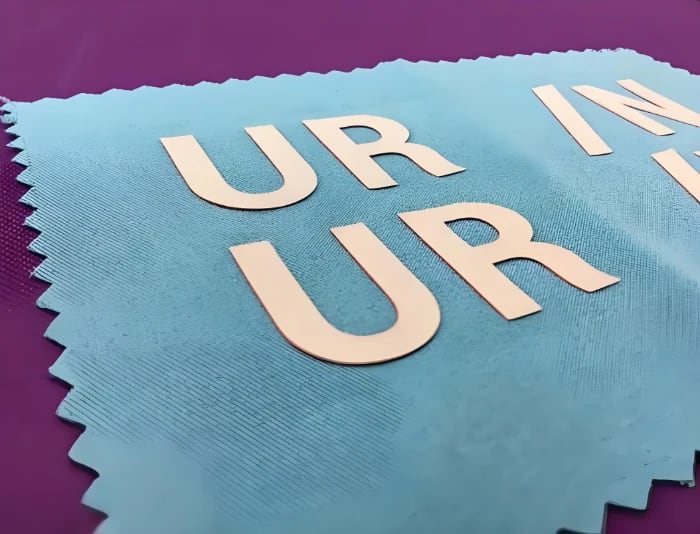
Decoration belongs in the same test. An embroidered logo on the sleeve adds weight and stiffens the fabric locally, and a cuff logo sits on the part of the garment that stretches most. Sample the decoration on the sleeve, not on a spare panel.
Related reading: Two-Button vs Three-Button Polo Plackets: What Changes in Production?.
FAQ
Should a long-sleeve polo cuff include elastane?
Usually yes, if the polo is worn as a base or mid-layer, because the cuff has to recover after every wear. A pure cotton rib can work on a heavy pique, but it needs a firmer tension and a wash test to prove it holds.
How long should the sleeve be?
Long enough that the cuff sits at or just below the wrist bone with the arm bent. Measure it on a body rather than from the chart alone, because a straight measurement shortens when the elbow flexes.
Can the short-sleeve pattern be lengthened?
The body can be shared, but the sleeve has to be redrawn: the bicep, elbow and cuff all change, and the armhole may need adjusting for the extra weight. Treat the short sleeve as a starting point for the body only.
Does a long-sleeve polo need a different fabric weight?
Often a slightly different one. The sleeve carries more fabric and the elbow takes more wear, so a golf polo in a light performance knit may need a firmer cuff or a slightly heavier sleeve than the short-sleeve version.
Sources: OEKO-TEX Standard 100, EU Regulation 1007/2011 on textile fibre names, Intertek textile testing, Higg facility indexing, US CBP informed compliance, and The Woolmark Company on fibre specification.
Working on a knitwear project?
Let’s talk yarn, gauge and timing.
Send a reference or tech pack and we will come back with a practical development route.

