
A wicking claim usually rests on one number, taken from one test, on one swatch, before the polo had been washed. The number may be perfectly accurate. The problem is that it describes a flat piece of fabric at a moment in its life, while the customer experiences a garment after twenty cycles in a domestic machine.
That gap is where claims become arguments. Closing it is mostly a matter of asking what the number measured, under which method, and on what.
What Evidence Should Support Moisture-Wicking Polo Testing?
Moisture-wicking polo testing should produce three things: a method, a condition and a result. It should name the standard used, the fabric and wash state tested, and the limit the buyer set for the garment at approval rather than afterwards. A claim without those three is marketing rather than evidence.
The buyer’s job is to set the limit before the test, not after. A result of “good” means nothing unless the brief said what would count as good for this polo, in this market, for this wearer.
One Number, Three Questions
The first question is which method. Wicking can be assessed by how quickly a drop absorbs, how far moisture travels along a strip, or how a fabric manages moisture over time under a defined procedure. Each answers a different question, and results from different methods are not comparable.
The second is which sample. A flat swatch, a finished garment and a washed garment are three different specimens, and a result on the first tells you least about the third. The third question is what limit applies, and who set it: a buyer’s own specification, a retailer’s requirement, or a standard the market recognises.
Fibre, Structure or Finish: Where the Effect Comes From
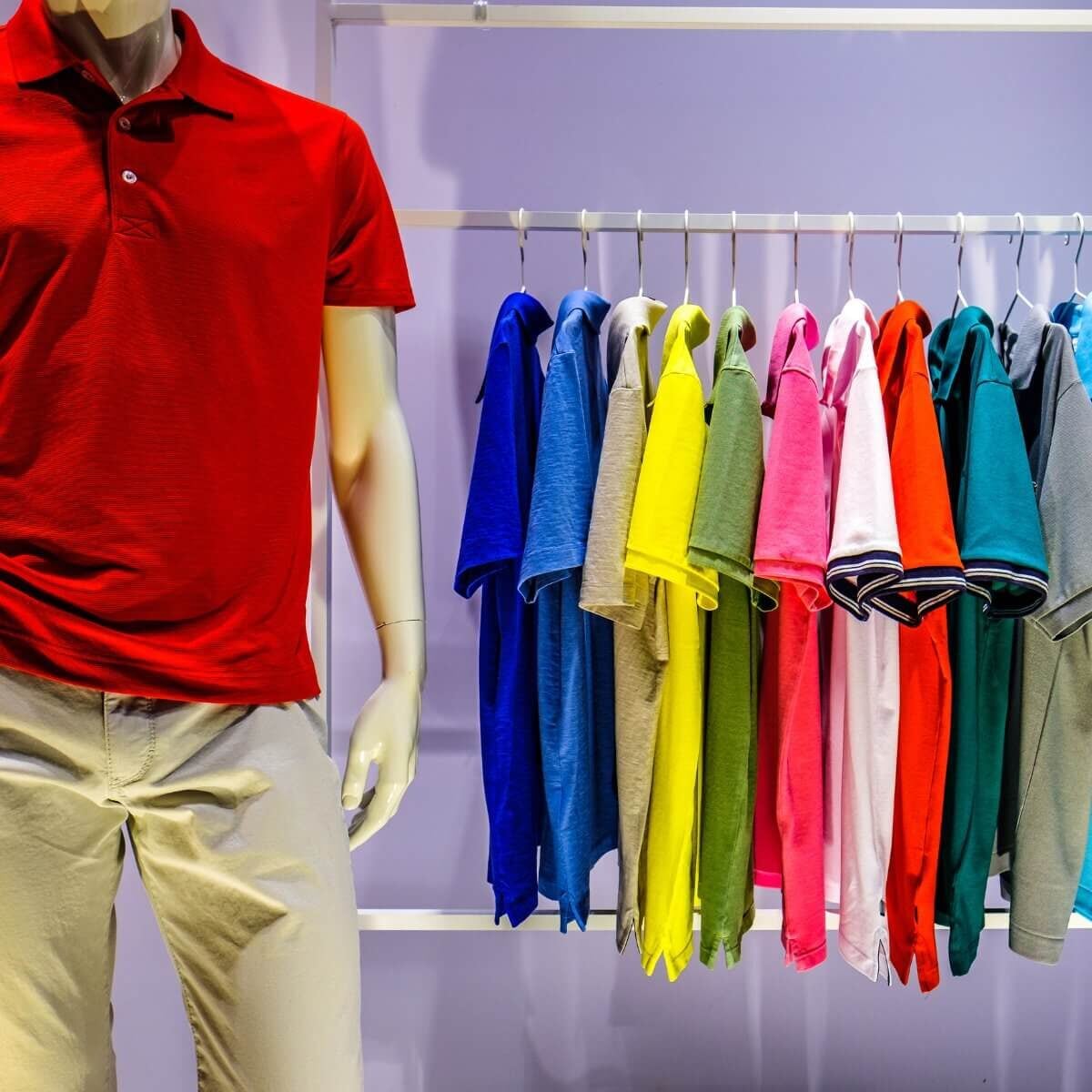
Wicking is produced by three things that are often described as one. The fibre can be inherently hydrophobic or hydrophilic; the structure can move liquid through capillary channels created by the knit; and a finish can change how the surface behaves. A polo can rely on one of these or on all three.
That matters when a claim fails, because the fix depends on the cause. If the effect comes from a finish, it will diminish with washing and abrasion. If it comes from the structure, it survives longer but is limited by the yarn. If it comes from the fibre, it is the most durable and the least flexible when a colour or a blend changes.
A cotton piqué polo and a performance knit polo can both feel dry, and they get there by different routes. The piqué relies on structure and yarn; the performance knit usually adds a fibre choice and a finish. A claim written for one should not be copied to the other without a test.
| Claim layer | What can support it | What it cannot cover |
|---|---|---|
| Fibre | Composition test and yarn specification | Structure and finish performance |
| Structure | Fabric specification and knitting records | Finish durability |
| Finish | Supplier technical data and a treated sample | Performance after repeated washing |
| Garment test | A laboratory report on the finished polo | Every colourway or every wash cycle |
| After-wash test | A report on the washed garment | Wear beyond the tested cycles |
The table is a map of what each layer can carry. A buyer who wants a claim that survives scrutiny usually needs the bottom two rows, because those are the ones that describe the product the customer receives.
Why the Same Fabric Can Test Differently
Two labs can test the same fabric and report different figures, and neither is necessarily wrong. Preparation, the direction of the specimen, the temperature and the conditioning time all influence a wicking result, and a fabric that has been washed behaves differently from one that has not.
Colour can matter too, because dyeing and finishing routes differ between shades. A dark shade that has been through a longer dye cycle may carry a different surface from a pale one, and a claim tested on the pale shade is not automatically true for the dark.
Two labs can also disagree because they prepared the specimen differently: one conditioned it overnight, another tested it straight from the bag. When a result is compared with a previous season’s report, check that the method and the preparation match as well as the figure. A drop in performance is sometimes a drop in the fabric and sometimes a change in the test.
A Testing Sequence That Matches Production
The sequence that produces usable evidence follows the order of manufacturing:
- Test the fabric as delivered, to establish the baseline.
- Test the finished garment, because construction changes the surface.
- Wash to the care label and test again, at the stated number of cycles.
- Repeat on the darkest and lightest colourways if the dye routes differ.
- Record the method and the limit beside each result.
Step three is the one that separates a claim that holds from one that fades. A finish that performs on a new polo and fails after ten washes is a real result, and it belongs in the specification rather than in the returns report.
Step five is the one that makes the file defensible. A report with the method and the limit beside the result can be read by someone who was not in the room, which is what happens when a retailer or a distributor asks for evidence six months later. A screenshot of a result without a method is not a document; it is a memory.
Turning a Result into a Claim
The wording should follow the evidence rather than lead it. A test on a fabric supports a statement about the fabric; a test on the finished garment supports a statement about the garment; a test after washing supports a statement about durability. Saying more than the test covered is the most common way a claim becomes a liability.
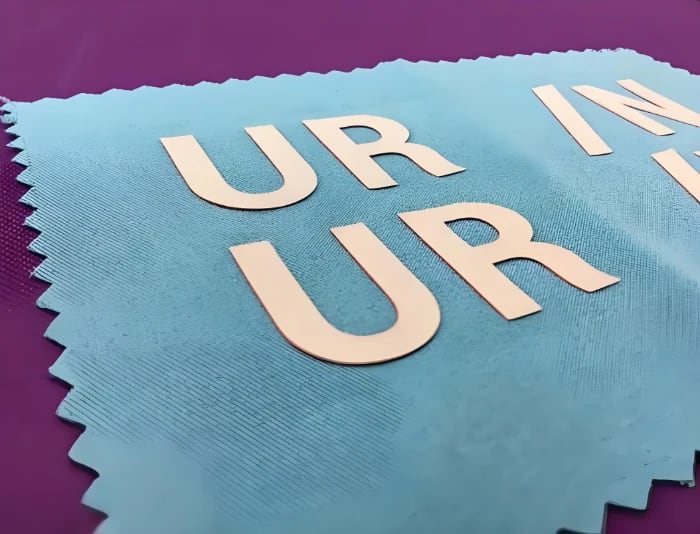
Markets also constrain the words themselves. Textile labelling rules govern composition claims, and advertising rules govern performance claims, so the final wording is worth checking with the market’s requirements rather than translated from another country’s campaign. A custom logo polo sold as a uniform and a retail polo sold on a hangtag may not be allowed to carry the same sentence.
Where Wicking Claims Fail in Wear
Most failures are not fraudulent; they are a mismatch between the test and the use. A polo tested as a flat fabric and worn under a jacket has less airflow than the test assumed. A polo treated with a finish and washed weekly loses the finish faster than the test cycle predicted. A polo with a tight print over the chest has a different surface where the print sits.
The troubleshooting question is therefore always the same: what changed between the tested specimen and the worn garment? Construction, decoration, washing, layering and climate are the usual answers, and each points to a different test to add.
Bulk, Inspection and Reorder
Bulk runs on the approved fabric, finish and decoration. Minimum order is 300 pcs per style. Sampling runs 7–12 days after fabric and specification approval, and bulk production typically runs 20–35 days after sample approval. Inspection is carried out to AQL 2.5 unless the buyer’s own plan replaces it.
Keep the test report with the approved sample and the care label. A custom performance polo programme that files the report separately from the sample tends to lose the connection between the two, and the connection is the whole claim. When the fabric or the finish changes at reorder, the report has to change with it.
FAQ
Does a wicking finish survive washing?
It depends on the finish and the wash route. Some finishes are designed to last through a stated number of cycles; others diminish sooner. The only reliable answer comes from testing the washed garment, which is why a claim should state the wash state it refers to.
Can we claim wicking from the fibre content alone?
No. Fibre choice is one of three contributors, alongside structure and finish, and the garment’s performance is the result of all three. A fibre claim can describe the material; it cannot describe how the polo manages moisture.
Which standard should we test to?
The one your market or your customer recognises, chosen before the test rather than after. Ask the laboratory which methods it runs and what each one measures, then pick the method that matches the claim you intend to make.
What is the minimum order and lead time?
Minimum order is 300 pcs per style. Sampling takes 7–12 days after fabric and specification approval, and bulk production typically takes 20–35 days after sample approval, with inspection to AQL 2.5 unless the buyer’s plan replaces it.
Sources: OEKO-TEX Standard 100, EU Regulation 1007/2011, Intertek testing, Higg, US CBP informed compliance, The Woolmark Company.
Working on a knitwear project?
Let’s talk yarn, gauge and timing.
Send a reference or tech pack and we will come back with a practical development route.

