
An oversized hoodie is not a larger hoodie. Take the regular block, add a size, and the chest grows, the shoulder stays where it was, and the sleeves get longer without getting wider. The result is a big garment with the proportions of a small one, which is why it looks wrong on the body even when the measurements say it fits.
What makes a hoodie read as oversized is a set of proportions that oversized hoodie fit specifications have to capture: a shoulder seam that sits down the arm, a chest that is wide but not deep, a sleeve that stacks at the wrist, and a body that ends where the wearer wants it. Those can be written, measured and inspected. Loose language cannot.
What the wearer feels before they see the fit
The wearer notices the hood first. A heavy hood pulls the shoulders back and the neckline up, and a light one collapses into the collarbone. Then the sleeves: if they stack at the wrist the garment reads as slouchy, and if they stop short it reads as undersized, whatever the chest measurement says.
Then the body length, because an oversized hoodie is worn with the hands in the pocket, walking, sitting, and reaching. A hem that rides up when the arms lift is a length problem, and it shows in the wearing rather than in the fitting room mirror.
Oversized hoodie fit specifications: the five numbers
Oversized hoodie fit specifications rest on five numbers: chest width, shoulder drop, sleeve length from the drop point, body length and cuff opening. Those five, with tolerances, are the silhouette. Grading up from a regular block changes their proportions, which is why the result reads as a big hoodie, not an oversized one.
Write the five per size, and write the relationship between them rather than the numbers alone. A shoulder drop of a given depth only works with a chest of a certain width; change one and the other has to move or the garment becomes a box.
Drop shoulder: the seam that sets the silhouette
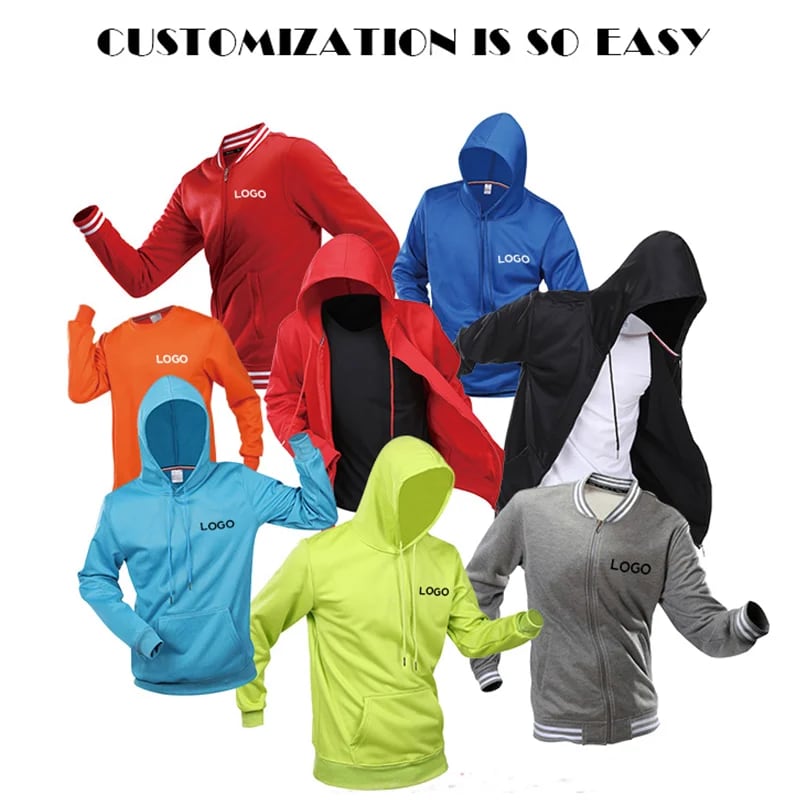
A drop shoulder moves the armhole seam off the shoulder point and down the arm. The depth of that move is the single most visible decision in an oversized hoodie, because it changes where the sleeve begins and how the fabric falls from the shoulder line.
Deeper drops read more relaxed and less structured, and they make the armhole larger, which is comfortable when the wearer layers a tee underneath. Shallow drops keep a cleaner line and suit a heavier fabric, where the weight of the cloth does the work of the silhouette.
Sleeve width, cuff and the stacking
Sleeve width is separate from sleeve length, and the two are often confused in a brief. A wide sleeve with a narrow cuff produces the stacked look; a narrow sleeve with a wide cuff looks like a mistake. The pair should be specified together, with the cuff opening given as a finished measurement rather than as a rib width.
Rib quality matters here. A cuff that relaxes after a few washes stops holding the stack and the sleeve falls straight. That is a rib specification problem, and it belongs in the same document as the pattern measurements.
Body length, pocket and proportion
Body length decides where the hoodie sits: at the hip, below it, or at the top of the thigh. The pocket has to be placed relative to that hem, not relative to the chest, or the hands land in the wrong place when the garment is worn.
Check the pocket with hands in it, standing and seated. A kangaroo pocket that sits too low pulls the front hem down and makes the hoodie look longer than it is; one that sits too high makes the garment look short even when the measurement is right.
| Measurement point | Where to measure | What it controls |
|---|---|---|
| Chest width | Flat, 2 cm below the armhole, pit to pit | Volume through the body |
| Shoulder drop | Shoulder point to the armhole seam on the sleeve | Where the sleeve begins; the silhouette |
| Sleeve length | From the drop point to the cuff edge | Stacking and wrist coverage |
| Cuff opening | Finished circumference, relaxed | Whether the sleeve holds or falls |
| Body length | High point shoulder to hem, front and back | Where the hoodie sits on the body |
| Pocket placement | From the hem to the pocket opening | Hand position and front balance |
Six rows, five decisions: the pocket is the one that turns a set of numbers into a garment. Everything else can be right and the hoodie still feel wrong if the hands do not land where the wearer expects them.
How fabric weight changes the same specification
Two hoodies with identical measurements in different fabrics do not look alike. A heavier fleece hangs from the shoulder and holds the drop; a lighter one collapses and reads closer to the body. The garment weight belongs in the specification next to the measurements, because it changes what the numbers do.
This is where an heavyweight sweatshirt specification and a standard one diverge. The heavyweight brief has to allow for the fabric’s own structure, and a fleece hoodie with a brushed inside behaves differently again at the cuff and the hem.
The specification as a controlled document
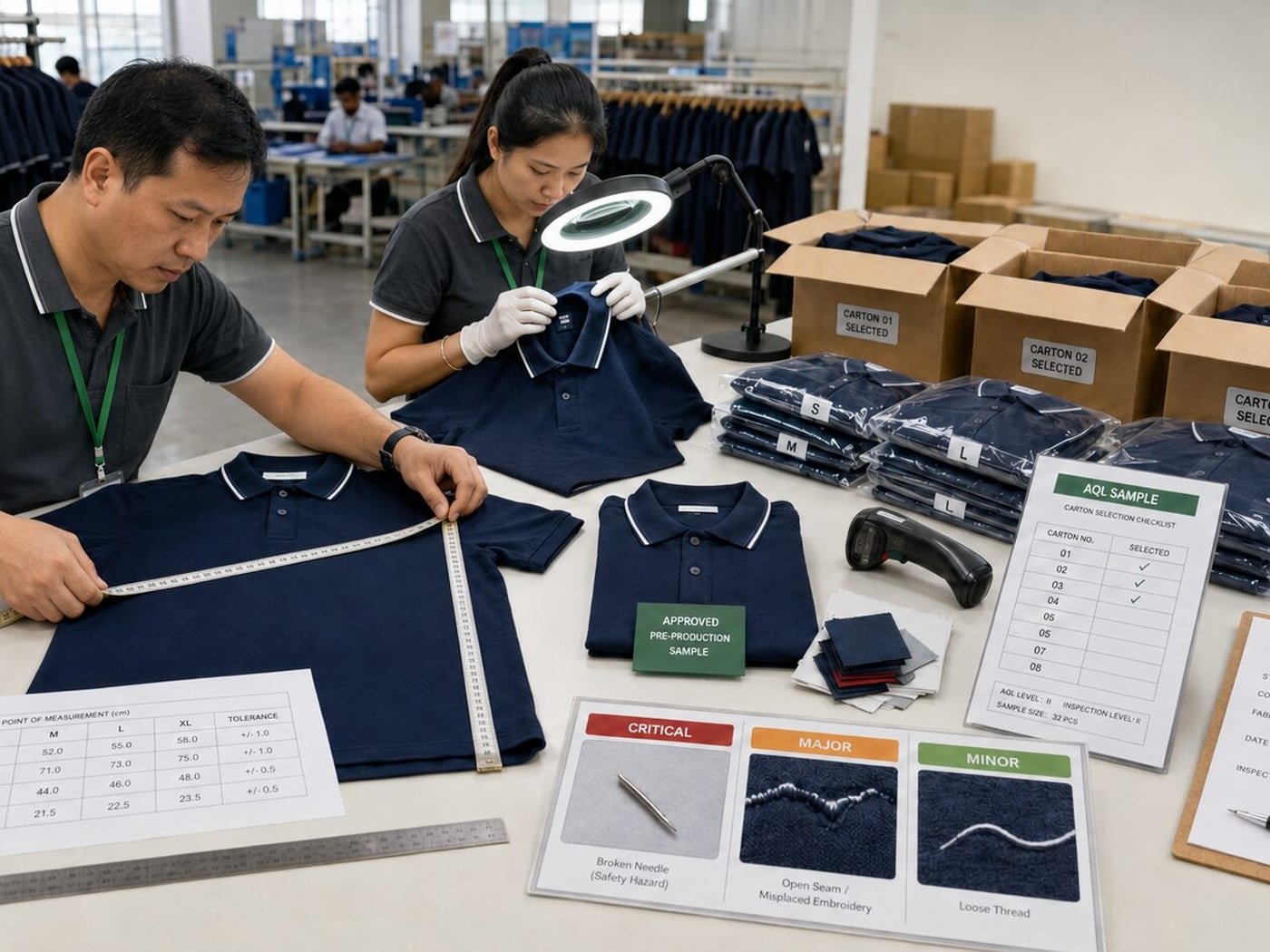
A fit specification only works if it behaves like a compliance document: one version, a date, a named approver and a change log. The point is not bureaucracy. It is that bulk inspection has to compare garments against a fixed reference, and a specification that lives in three email threads cannot be inspected against at all.
The same discipline applies to the care information. Fit changes after washing, so the labelled care routine and the shrinkage tolerance belong in the same document as the measurements. A hoodie that fits at approval and grows after the first wash has been approved against the wrong state. If the fabric weight changes after the fit is signed off, refit rather than re-measure: the numbers can stay the same and the garment will still look different.
Fitting session and sign-off
Run the fitting session on a body, in the size that will be produced most, worn over the layer the customer will wear. Photograph front, side and back with the arms down, the arms raised and the wearer seated. Those four views catch nearly every proportion problem before the grading is signed off. Record the size worn, the layer underneath and the wash state of the sample, because all three change what the photographs show.
- Build the reference. One garment, one fabric, one size, measured flat and photographed on a body.
- Fix the five numbers and the tolerances, per size, in one version of the document.
- Fit on a body in the four positions, and note where the fabric pulls or hangs.
- Adjust and re-fit once, in the same fabric, before the pattern is graded.
- Sign off the specification, the graded chart and the care routine together.
Horssle Knit samples in 7–12 days after fabric and tech pack approval and runs bulk in typically 20–35 days after sample approval, with inspection to AQL 2.5. The fitting session is cheap; a bulk run made to an unapproved proportion is not.
Bulk checks and the minimum
Check the five numbers on the first garments off the line rather than at the end. A drift in the shoulder drop or the cuff opening is correctable while the cutting is still running, and expensive once the cartons are sealed. Add one worn check: somebody puts the hoodie on, raises both arms, and sits down.
A minimum of 300 pieces per style applies, and the colour and size split decides how many garments are measured in each size. A zip-up hoodie on the same block needs the front measurement added, because a closure changes where the fabric hangs.
FAQ
Can I just size up my regular hoodie pattern?
No. Sizing up raises the chest but leaves the shoulder drop unchanged, so the sleeve starts in the same place and the garment reads as big rather than oversized. The block has to be re-proportioned, not enlarged.
How deep should the shoulder drop be?
There is no universal number. It depends on the chest width, the fabric weight and how relaxed the brand wants the silhouette. Decide it on a body in the actual fabric, then hold it across the size run.
Does a heavier fleece need a different fit specification?
Yes, at the cuffs and the hem. A heavier fabric holds a wider cuff and a deeper drop, and it will hang differently from a lighter one at the same measurements. Specify the weight with the fit, not after it.
How many sizes should be fitted before grading?
At least the middle size on a body, and the smallest and largest as flat measurements. Fitting only one size hides the grading error that appears at the ends of the range, where the proportions change fastest.
Sources: OEKO-TEX Standard 100, EU Regulation 1007/2011 on textile fibre names, Intertek textile testing, Higg facility indexing, US CBP informed compliance, and The Woolmark Company on fibre specification.
Working on a knitwear project?
Let’s talk yarn, gauge and timing.
Send a reference or tech pack and we will come back with a practical development route.


