
Polo shirt embroidery vs printing: the short answer
At an MOQ of 300 pieces per style, embroidery is the steadier choice for a small chest logo on piqué, and printing suits large or multicolor artwork. The real deciding factor is not which looks better on the first sample. It is which method can be repeated and documented across the whole order.
Treat the choice as a compliance question and the shortlist tightens. A logo is an added component sitting on the garment, so it inherits the paperwork of the order: what the ink or thread contains, how the care instruction still reads after repeated washing, and whether you can produce a test report when a retail account asks for one. A method nobody can evidence is a risk, however clean it looks on approval day.
What each method physically adds to the shirt
Embroidery is a sewing operation. Artwork is digitized into a stitch file, the digitizer sets stitch count, density and underlay, the operator chooses a backing suited to the knit, and the logo is sewn onto the panel. Because the stitch file is a fixed program, the three-hundredth piece looks like the third, provided thread lot and tension hold.
Printing deposits ink or film on the surface. Screen printing runs the panel flat on a platen, one screen per colour, with a flash cure between layers. Heat transfer cuts vinyl or prints a film and presses it at a set temperature, pressure and dwell. Both build a layer on the knit rather than stitching into it, and both depend on pressure and dwell time more than buyers expect.
Placement decides a lot. A polo front is crowded: placket, collar stand, vents, sometimes a pocket. A logo that crosses a seam sits differently in each method, so the position belongs in the tech pack, not in a photograph.
Fabric compatibility: piqué, interlock and performance knits
Piqué is forgiving. Its textured face hides the needle marks embroidery leaves and holds a dense stitch block without cupping. Fine-gauge interlock and jersey are less forgiving: a heavy logo pulls the surface into a pucker that pressing will not remove, so density and backing change, or the logo moves to a print.
Polyester brings a different problem. Disperse dyes can migrate into plastisol under heat, so a white logo on a dark polyester shirt needs a low-bleed base or a barrier film. The same fabric makes embroidery harder in another way: the stitch block has to stretch with the garment without turning board-stiff, which is why backing and density on performance polos rarely match the numbers used on cotton.
Wool-blend polos for cooler markets are a third case, since the yarn reference sits with The Woolmark Company and a print over a wool face behaves differently again. On cotton, a standard piqué polo program is the easiest place to start a trial, because the fabric forgives both methods.
Comparing the three routes side by side
The comparison below holds when the same artwork is placed at the same size on the same fabric. Change any of those three and the columns shift.
| Method | Artwork it handles | Behavior on knit | Documentation to request | Usual placement |
|---|---|---|---|---|
| Embroidery | Solid logos, up to about eight thread colours, text legible at roughly 5 mm cap height | Stitches through the fabric; piqué hides needle marks, fine knits pucker | Thread article code, colorfastness and restricted-substance report for the thread | Left chest, sleeve, collar back |
| Screen print | Flat spot colour, large areas, one to six screens | Sits on the surface; needs elastic ink to move with the knit | Ink code, low-bleed base spec, cure temperature record | Back panel, full front, sleeve |
| Heat transfer | Gradients, photographs, short runs of names or numbers | Layered film; stiff over large areas | Film article, press temperature and dwell record | Back neck, sleeve, small accents |
Two rows usually fail. Embroidery fails when a detailed logo is digitized into a stitch count that cannot resolve it. Print fails when the ink was chosen for cotton and then applied to polyester.
The paperwork a decoration should carry
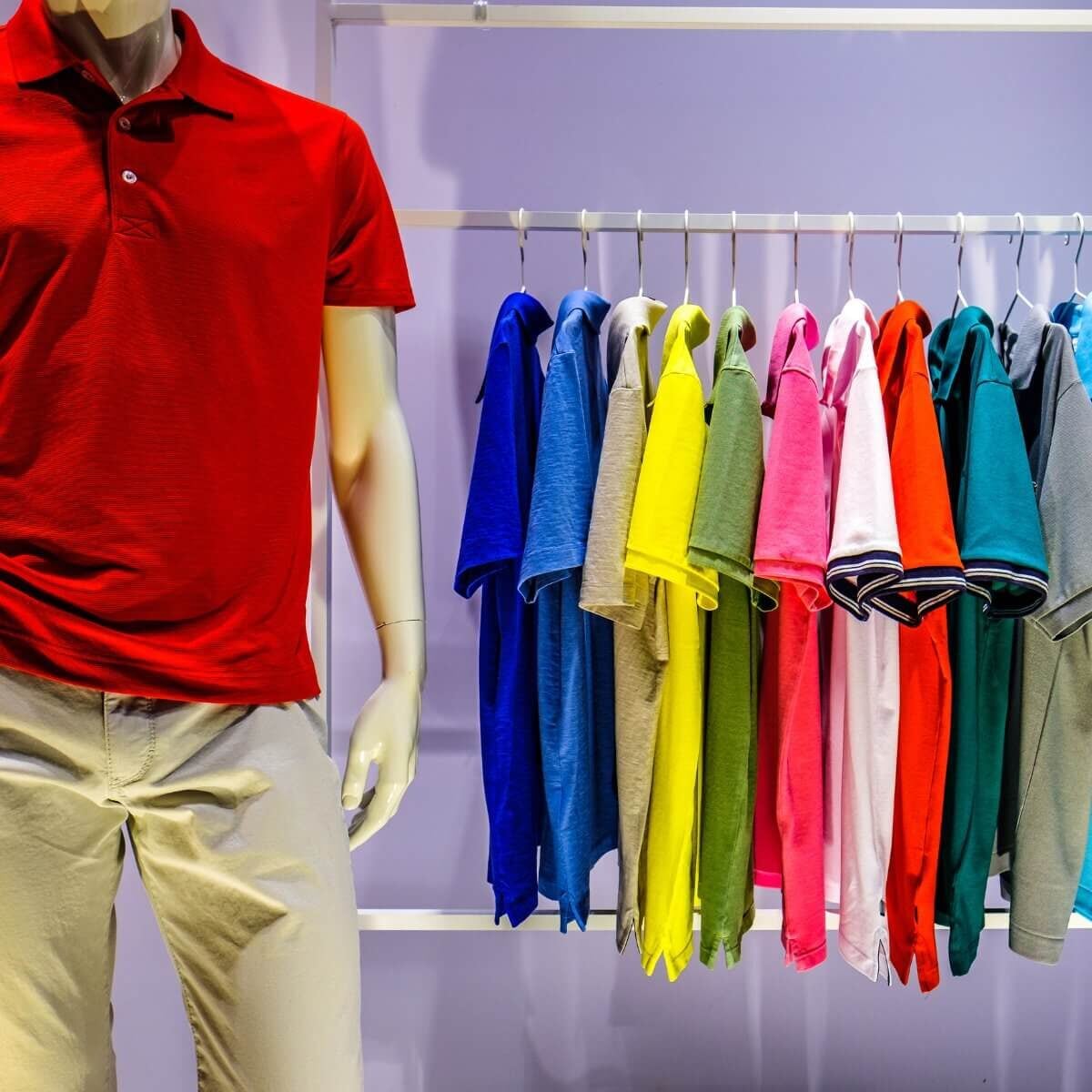
Ask what is in the ink and the thread before you ask what the logo costs. European buyers often name OEKO-TEX Standard 100, which tests articles against a limit list for harmful substances. The question to put to a supplier is precise: is the certificate held for the garment, or for the thread and ink used on it? Those are different documents, and only the second answers what you are asking.
Independent labs such as Intertek run the tests behind those reports. A usable report names the exact ink code or thread article and the method used. A page headed with the factory name and no article reference says nothing about the batch on your table.
Higg belongs in a different folder. It measures facility-level environmental performance and is often requested by brands building a sustainability file, but it does not certify a logo. Presenting the two as one thing is a small warning about the rest of the file.
Care labels, fibre content and origin marking
A logo does not change fibre content, so the composition statement stays as woven. For the European market, EU Regulation 1007/2011 sets the permitted fibre names and the tolerance behind the percentages. What a decoration can change is the care instruction: a transfer film has its own temperature ceiling, and the wash symbol has to match the least durable component, not the cotton shell.
Origin marking is the other half. US Customs and Border Protection publishes its expectations in the informed compliance series at CBP, and the country of origin must be legible on the garment itself. In a private label program where the brand supplies its own care and content labels, the brand owns the accuracy of that text, including any claim about how the decoration performs.
Running a trial that settles the question in one round
A decoration trial is cheap; a bulk order decorated the wrong way is not. Cut the panels from bulk fabric rather than sample-room cloth, because finish and shrinkage rarely match.
Take six panels. Embroider two at production density, print two by screen and two by transfer, all with the same artwork at the same size. Wash three at the temperature on the care label and tumble dry; keep the other three as controls. Compare washed against control, flat and stretched, in daylight rather than under a desk lamp.
| Check | How to test it | What a pass looks like |
|---|---|---|
| Edge definition after washing | Three home washes at the label temperature, then tumble dry | Edges stay sharp; no cracking, lifting or frayed ends |
| Coverage on the knit | Sew or print on off-cuts of the bulk fabric | No shirt colour through the stitch block or the ink |
| Stretch and recovery | Pull across the logo by hand, then release | Fabric returns; the logo does not ripple |
| Hand feel | Compare with an undecorated panel | The difference matches what you approved |
Photograph each panel with a tape measure in frame and attach the images to the approval note. Bulk is then compared with a photograph rather than a memory.
Reading the quotation for a decorated polo
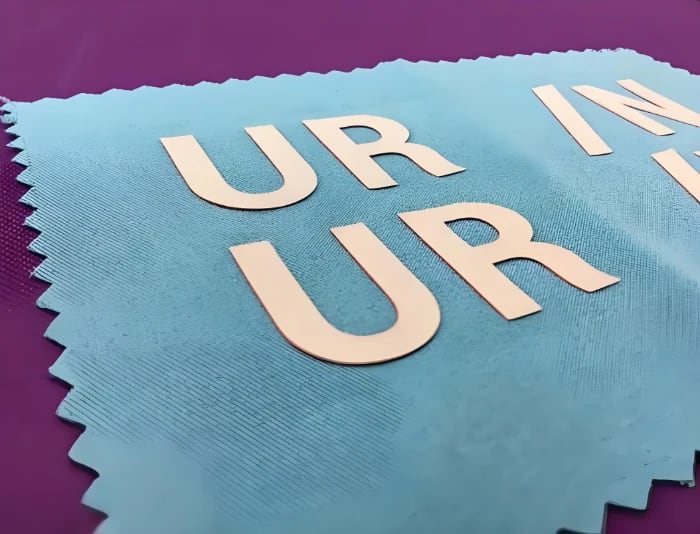
Quotes for the same shirt diverge because the line items diverge. Embroidery is priced on stitch count, thread colours and placements, plus a one-off digitizing charge. Print is priced on colours, screens, ink and setup; a transfer on film area and press time. A single figure labelled “logo” cannot be compared with another single figure labelled “logo”.
Ask for the stitch count in writing on embroidery, and the colour count, ink type and placement size on print. Ask whether the 300-piece minimum applies per style, per colour or per placement, because a program with four logo positions behaves like four orders. The logo polo development process is built around that quotation sheet.
Where each method usually wins
Embroidery wins on a left-chest crest, a small wordmark or a collar-back detail, and on uniforms where the logo must survive industrial laundering. It also wins when the artwork is simple, because a stitch file is easy to repeat across reorders.
Printing wins on the back panel, on large artwork and on anything with a gradient. Transfers win on short runs of names and numbers, and on photographic images. On golf polo programs the split is often embroidery at the chest and print at the back, which means two specifications and two sample approvals.
FAQ
Is embroidery more expensive than printing?
Not in general terms. Embroidery cost rises with stitch count and placements, so a small two-colour chest logo can sit close to a small print, while a large embroidered back panel usually costs more than the same area printed. Compare both on the same artwork and quantity, and ask for the stitch count and colour count behind each figure.
Can a polo be printed across the placket?
Not reliably. The placket, buttons and collar stand stop the front panel lying flat, and a print across that seam shows a gap or a doubled edge. Move the artwork to one side of the placket, or split it into two placements that each sit on a flat panel.
Does the logo need its own OEKO-TEX test?
The thread and the ink are separate articles from the fabric, so a garment certificate does not automatically cover them. Ask which article the report names. If the answer is vague, request the report and check that the ink or thread code matches what will run on your order.
Will a chest logo survive industrial washing?
It depends on the method, the backing and the wash program, so it has to be tested rather than assumed. A uniform program should specify wash temperature, cycle and drying, then run the trial panels through that program instead of a home cycle. Embroidery with a suitable backing usually holds better than a transfer, but the test decides it.
Sources: OEKO-TEX Standard 100, EU Regulation 1007/2011, Intertek, Higg, US CBP and The Woolmark Company.
Working on a knitwear project?
Let’s talk yarn, gauge and timing.
Send a reference or tech pack and we will come back with a practical development route.

