
Two promotional polos can cost the same and behave differently within a month. One has a heavy print on a thin collar and a piqué that softens after two washes; the other has a small logo on a collar that holds its shape and a body that still looks like a polo at the end of the campaign.
The difference is not the budget. It is where the budget was spent, and a promotional polo sourcing checklist starts with that allocation rather than with the logo. The allocation follows two questions: how often the garment will be worn, and how much brand exposure it carries. A polo worn once at a trade stand and a polo worn weekly by a sales team are different purchases even when the artwork is identical.
Promotional polo sourcing checklist: the short answer
Spend first on the collar, the neck rib and the fabric weight, because those decide whether the polo survives a wash. Save on colour count, number of placements and print area. Then agree the acceptance items before the order, so a saving on decoration does not become a complaint about the garment.
The sections below take the allocation in order, then set out the checks that keep a fixed budget from buying the wrong thing.
Where the money goes, and where the wearer notices
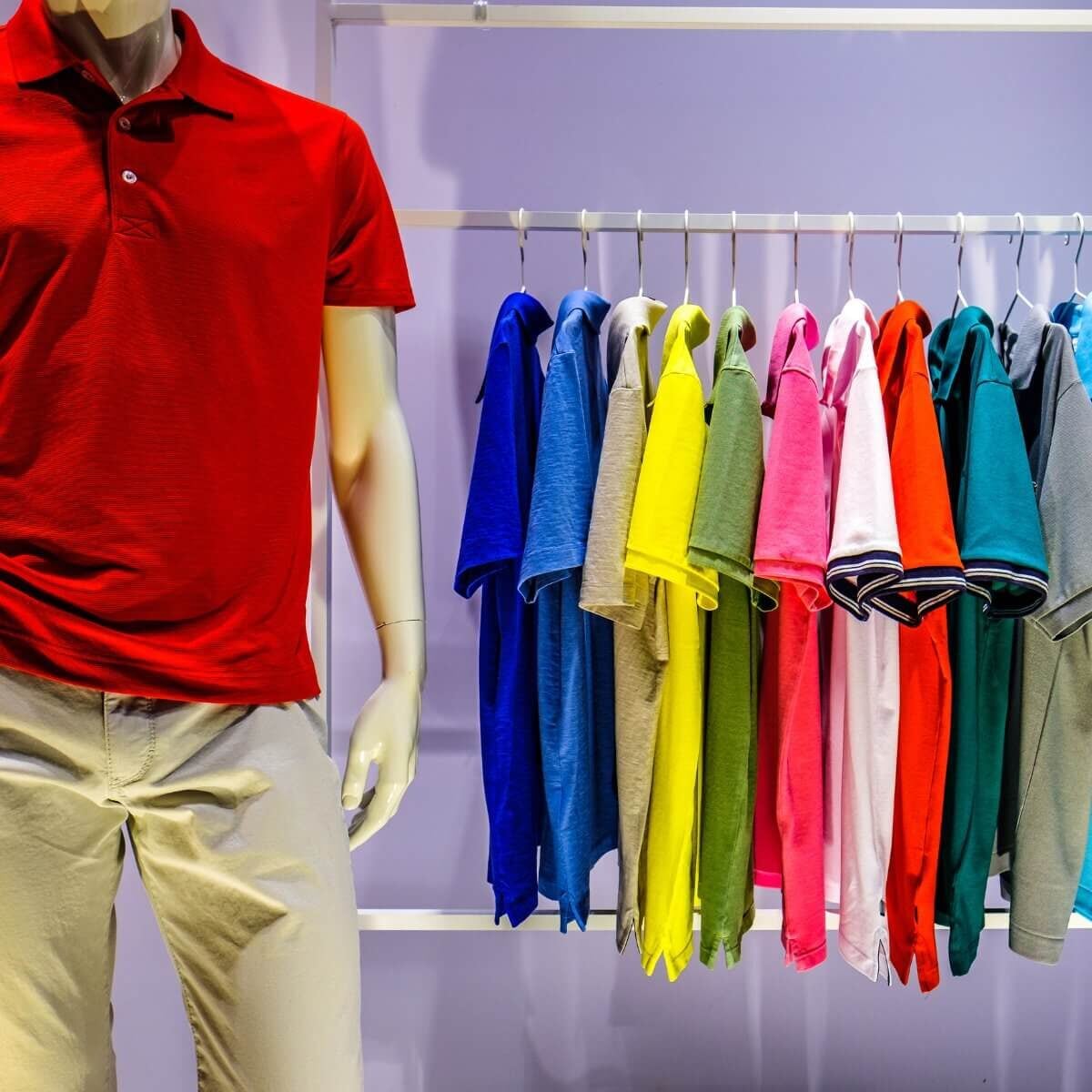
A polo is judged at the collar before anything else. The collar is the part that sits against the neck, shows the first sign of floppiness and carries the brand’s logo on most programs. A thin collar on a light piqué reads as a giveaway garment however good the print is.
The second place a wearer notices is the placket. Buttons that will not stay closed, a placket that ripples after a wash and a hem that has twisted are small faults that make the whole garment look cheap, and none of them is expensive to prevent.
The budget conversation usually begins with the print, because the print is the visible part. The better starting point is the number of wears the garment will get. A polo that goes home with a delegate is worn once or twice; a polo that a team wears weekly is washed forty times in a year, and the collar is what they will judge.
| Line | Where it sits in the budget | Why |
|---|---|---|
| Collar and neck rib | Spend | The first part to fail and the first part a wearer touches |
| Fabric weight and piqué quality | Spend | Decides how the garment reads after five washes |
| Placket and buttons | Spend a little | A ripple or a loose button undermines the whole garment |
| Colour count | Save | Each colour adds a screen, a setup and a minimum |
| Placements | Save | Second and third positions cost more than they look |
| Print area | Save | A large fill adds ink, cure time and hand |
The table is a default, not a rule. A program where the polo is the product, such as a merchandise drop, inverts the last three rows, because the print is the reason the garment exists.
Three ways to save without losing the garment
Use a stock colour. A custom shade adds a dye lot minimum and a lab dip round, and on a promotional order the shade is rarely the reason for the purchase. A stock colour that matches the brand closely enough is usually the better trade.
Reduce the colour count in the print. One colour on a light ground is the least expensive print that still looks deliberate, and two colours cover most logos. Every additional screen adds setup and a registration risk that shows on small logos.
Move the logo rather than enlarge it. A chest logo and a sleeve logo can be one placement each at modest cost, while a large back print adds ink, cure time and a heavier hand on a garment that has to stay comfortable.
Trim the size curve as well. A promotional order often carries a wide size range for a short run, and the smallest and largest sizes carry the highest unit cost. Concentrating the quantity on the middle sizes reduces the spread without changing the visible specification, provided the brief says which sizes are being covered.
What must pass inspection, whatever the budget
A cheap polo can still be a sound one if the acceptance items are named. Set them before the order and the conversation after delivery is about a standard rather than about expectations.
The four that matter are the collar, the neck rib, the placket and the print. Check the collar on a washed garment rather than a pressed one, check that the rib recovers, check that the buttons hold and check the print for adhesion and crocking after a wash.
Write them into the inspection plan, and set the acceptance rule for visual defects at the same time. A promotional lot inspected at AQL 2.5 still needs the four checks above, because none of them is a visual defect in the ordinary sense: a collar that has gone soft, a rib that will not recover and a print that has begun to lift all pass a visual count and fail the wearer.
The comparison that decides the specification
Put the two options side by side at the same total cost and ask what each one buys. One spends on a heavier piqué and a one-colour chest logo; the other spends on a three-colour back print and a lighter body. The first survives the campaign; the second photographs better on day one.
Neither is wrong. What is wrong is not choosing, because a budget that is spread evenly across every line produces a garment that is slightly weak everywhere. The brief should say which of the two the program needs.
Sample first, even on a small order
A promotional order is usually the one that skips the sample, and it is usually the one that needed it. A single sample answers the three questions a specification cannot: whether the collar stands, whether the piqué is heavy enough for the print, and whether the logo reads at the size specified.
Ask for the sample on the actual fabric and in the actual decoration, and wash it once. The extra garment is a small share of the order and the least expensive risk reduction available.
Use the sample for the three decisions the brief could not settle: the collar height, the logo size on the chest, and the shade of the garment against the brand colour. Each is easy to change on one garment and awkward to change on three hundred, and the sample is the only place where the change is genuinely cheap.
Writing the brief for a fixed budget
State the budget, the quantity, the date and the wear case. Then state the must-haves in priority order, so a supplier can propose where to save rather than guess. A brief that lists everything as a must-have gets a quotation for everything, which is rarely the least expensive way to reach the budget.
Add the decoration specification and the acceptance items, and ask for the quotation split by line rather than as one unit price. Name the date the goods are needed and the date the event begins, because a promotional order that arrives the day before has no room for a correction. A split quotation is what makes a logo polo program adjustable, because it shows which line can move when the budget does.
What a fixed budget should not buy
It should not buy a name that costs nothing to print and nothing to keep. A collar that flops, a placket that ripples and a print that cracks are remembered as the brand’s fault rather than the supplier’s, and the saving is spent again on the next order.
That is the argument for a plain piqué polo with one good logo rather than a decorated polo with a weak body. The saving on the body is the one the customer sees every time the garment is worn. The garment is the medium, and the medium has to last longer than the campaign.
FAQ
Is embroidery cheaper than printing for a small logo?
Often it is comparable, and it can be cheaper on a short run because there is no screen setup. It also reads as a more considered garment on a promotional polo, which matters when the shirt is worn after the event.
Can we use a lighter fabric to hit the price?
You can, and the garment will be transparent in pale colours and soft at the collar after a few washes. If the polo will be worn more than a handful of times, the fabric weight is the wrong place to save.
How many colours should the print use?
As many as the logo needs and no more. Two covers most marks, and each additional screen adds cost and registration risk on small artwork.
Do we need a sample for a small order?
Yes. The sample is where the collar, the fabric and the logo size are proven, and on a small order those three decisions are the whole garment.
Sources: OEKO-TEX Standard 100, EU Regulation 1007/2011, Intertek, Higg, US CBP and The Woolmark Company.
Working on a knitwear project?
Let’s talk yarn, gauge and timing.
Send a reference or tech pack and we will come back with a practical development route.

