
The sample looked exactly right on the hanger: light, open, the kind of cardigan that sells a holiday wardrobe in a photograph. It arrived at the buyer’s office folded in a courier bag, and the front edges had taken a set that no amount of hanging removed. The garment had not changed. It had been packed.
Resort cardigan development is a trade between three things that pull against each other: openness, which makes the piece feel like summer; drape, which makes it hang; and fold recovery, which decides whether it still looks like the sample after a flight.
Resort Cardigan Development: Openness, Drape and What Survives a Suitcase
Resort cardigan development balances openwork coverage against drape and packability. A loose gauge gives air and softness but takes a crease; a firmer stitch holds its line but loses the resort feel. The route is chosen from fibre, stitch and fold together, and approved on a garment that has been packed.
None of the three can be judged on a hanger, which is why the sample has to be packed and unpacked before it is approved.
The Cardigan That Looked Right and Arrived Creased
The case above is a composite of a familiar failure. A cotton open-front cardigan in a loose gauge was developed for a resort range, approved flat, and packed in a polybag for a trade show. The fold across the front edge set into the stitch, and the edge never recovered its line.
The fix was not a heavier yarn. It was a change of stitch at the front edge, a slightly tighter gauge on the band, and a folding method that put the crease where the garment would hang rather than across its most visible line.
Openness Is a Specification, Not a Mood
An open cardigan can mean a loose gauge, an openwork stitch, a larger needle or a yarn with more air in it, and each route changes coverage differently. A loose jersey lets light through evenly; a lace stitch concentrates the openings into a pattern; a rib closes up and reads denser than its weight suggests.
Ask for the gauge and the stitch to be recorded on the sample sheet, not just the yarn. Two cardigans in the same yarn at different gauges behave like different products, and the record is the only way to reorder the one the buyer approved.
Ask for coverage to be judged on a body, over the layers the customer will wear. A cardigan that is opaque over a swimsuit and transparent over a dark dress is a different product from the one in the lookbook, and both are legitimate as long as the buyer chose one deliberately.
Volume: What the Garment Costs to Ship
A resort cardigan is light, and light garments are usually packed by volume rather than by weight. A loose knit that does not compress takes more space in a carton than a dense one, so a garment that is cheap to make can be expensive to move.
Measure the folded sample and compare it with a comparable piece in the range. If the cardigan folds to twice the height of a top, the carton and the freight will reflect it, and the buyer should know that before the packaging is designed rather than after the carton is quoted.
Drape Comes From Fibre and Gauge
| Route | Drape | Crease recovery | Packing behaviour |
|---|---|---|---|
| Cotton in a loose gauge | Soft, falls close | Moderate; edges can set | Folds small, creases at the edge |
| Cotton and linen blend | Crisp, holds a shape | Lower; linen creases | Light but shows fold lines |
| Fine merino | Fluid, recovers well | High | Packs small, hangs out |
| Cotton and cashmere blend | Soft with weight | High | Packs flat, needs tissue at the fold |
Gauge matters as much as fibre within each row. A tighter gauge in the same yarn recovers better and drapes less, and a looser one does the opposite. That is the dial a buyer actually turns, and it is cheaper to turn it at the sample than at the yarn order.
Coverage and Layering
| Stitch | Coverage | Hand | Suited to |
|---|---|---|---|
| Loose jersey | Even, moderate | Soft, light | Evening layer over a dress |
| Openwork lace | Patterned, lower | Airy, decorative | Beach cover-up, poolside |
| Rib | High for its weight | Dense, springy | Travel cardigan, cool evenings |
| Cable | High, with texture | Substantial | Shoulder-season resort, not high summer |
Layering is the other half of coverage. A cardigan worn open over a dress is judged on how the fronts fall, while the same piece worn closed is judged on how the stitch reads across the body. Approve both states, and photograph both, because a sample that looks right open can look thin once it is closed.
A cable knit cardigan sits at the far end of this table: it covers more and reads warmer, which suits a resort that has cool evenings but not a beach club at noon.
Packing: Fold Recovery and Volume
A resort cardigan is bought to travel, so the fold is part of the design. Fold the sample as the customer will, leave it in a bag for a day, then unpack and hang it for an hour and photograph the result.
Give the folded cardigan a day in the bag before you judge it, because a fold that looks harmless after twenty minutes has not had time to set. Pack it twice: once folded flat as a shop would, and once rolled as a traveller would. The two methods put stress in different places, and a cardigan that survives the first can fail the second at the shoulder.
What recovers, recovers because the fibre has crimp and the stitch has room. What does not recover has either taken a permanent set at the fold or been packed too tightly for too long. Both are fixable before bulk, and neither is visible on a hanger.

Where Each Front Construction Fits
An open-front cardigan has no buttons to pull the front out of line, so it packs flatter than a button-through and recovers better at the edge. A button-through cardigan adds a placket and buttonholes, which hold the front straight but crease along the button line.
An open front also lets the cardigan be worn over almost anything, which is why it sells as a travel piece rather than a knitwear staple. A zip-front cardigan is the easiest to pack and the hardest to keep light, because the zip adds weight at the centre front. It suits a travel piece that doubles as a jacket. The front construction therefore follows the journey the garment will take, not only the look.
Testing Before Bulk
Pack the sample, unpack it, hang it, photograph it. Wear it over the layer it will be sold with, in the light it will be photographed in. Wash it and repeat the pack test, because a garment that recovers when new can lose that ability after the first wash.
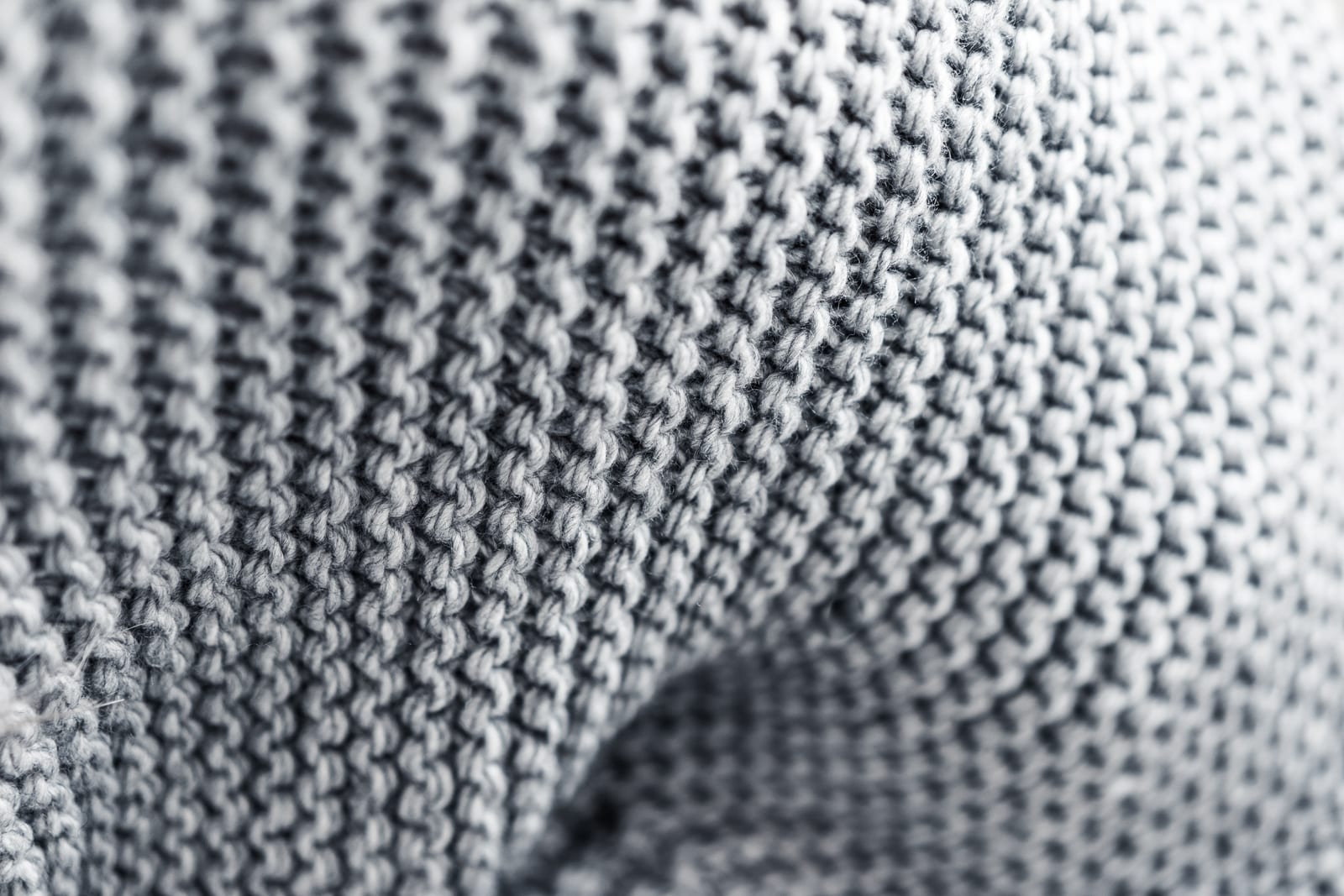
If the cardigan will be folded at the front edge, the pattern can place that fold where the garment will hang rather than across the band, and that is a pattern decision rather than a packing one. A small change at the pattern stage removes the crease that no pressing will fix later, and it costs nothing once it is decided early.
Ask the sample room to mark where the fold line falls on the finished piece, and measure the folded height against the carton. That mark and that number are the difference between a cardigan that travels and one that arrives looking used.
Ordering and Timing
Resort ranges are usually developed in a narrow window, so the yarn decision has to be made early. Sampling takes 7–12 days after fabric and tech pack approval, bulk production typically runs 20–35 days after sample approval, and the minimum order is 300 pcs per style.
The open-front cardigan range shows the construction with and without a front band, and the merino cardigans page covers the fine-gauge option that packs smallest.
FAQ
Which fibre recovers most reliably from a suitcase?
Fine merino recovers from folds better than cotton, and cotton and cashmere blends pack flat with good recovery. Linen creases by nature, which can be part of the look but has to be accepted at the brief.
Does a looser gauge crease more?
It creases differently. A loose stitch has more room to recover but also more room to take a set if it is pressed flat in a bag, so the fold method matters as much as the gauge.
Should a resort cardigan be fully opaque?
Not necessarily, but the buyer has to decide what it covers and over what. Approve coverage on a body over the layers the customer will actually wear.
Can a zip-front work for resort?
Yes, and it packs well, but the zip adds weight and structure. It suits a travel piece that has to work as a light jacket.
Sources: The Woolmark Company, OEKO-TEX Standard 100, Intertek, EU Regulation 1007/2011, Higg, Control Union.
Working on a knitwear project?
Let’s talk yarn, gauge and timing.
Send a reference or tech pack and we will come back with a practical development route.

