Compare the fabric over a motif and over a shaping round before deciding whether blocking can improve a puckered colorwork yoke. A knitter on Reddit saw waves on an unfinished circular yoke and wanted to know whether it was normal, whether wet blocking would flatten it, and whether to block before continuing. A small care-compatible swatch can answer more than repeated stretching of the whole yoke. If an area feels constrained where the back floats cross the colors, investigate that area first. If the waves follow the shaping around the yoke, compare that part with the intended fit.
Last updated: November 28, 2026
Should you block a puckered colorwork yoke?
Check where the fabric is being held
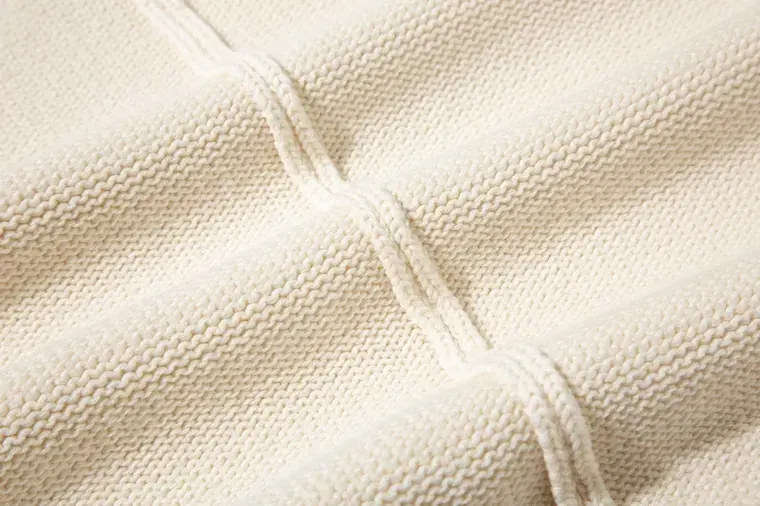
Brooklyn Tweed’s stranded colorwork guide explains why floats need enough length to span the stitches they cross. A float is the yarn carried behind the face when it is not being knitted into the visible stitches. Gently spread an unblocked motif to its intended width and watch the reverse. If a specific float becomes taut early and the face draws in where it starts or ends, record that detail. Compare with another repeat across the same number of stitches. Do not judge a stretch point by pulling until the fabric stops.
Then look around the yoke with the work supported. If extra fabric appears around most of the circumference at similar shaping points, check how the increases are distributed and how the work sits off the needle. A flat photograph of fabric still on a short cable can exaggerate the ripples. Try again with the stitches supported in a way that does not crowd the fabric. Take a relaxed front photo and a reverse photo from the same area. Mark the motif and the shaping line if they coincide, since both causes can show up together.
Make a swatch do the work first
Use the same yarns and knitting method where practical. Brooklyn Tweed’s swatching instructions explain why finishing and knitting method need to represent the intended garment. Make enough of the repeat that the sample includes the spans which are drawing in. For a yoke issue, preserve a section that includes the transition around the shaping, or record that the small swatch cannot reproduce the curve.
Photograph the swatch flat and lightly spread. Record its width across the same points before and after the intended finish, and note whether the reverse side still becomes taut before the face reaches the desired width. Follow the yarn or garment’s care instructions. Woolmark’s drying guidance gives flat drying steps for suitable, freshly washed wool sweaters. It does not say that blocking corrects every tension issue or that an unknown blend can be wet finished safely.
What we review on a jacquard sweater sample
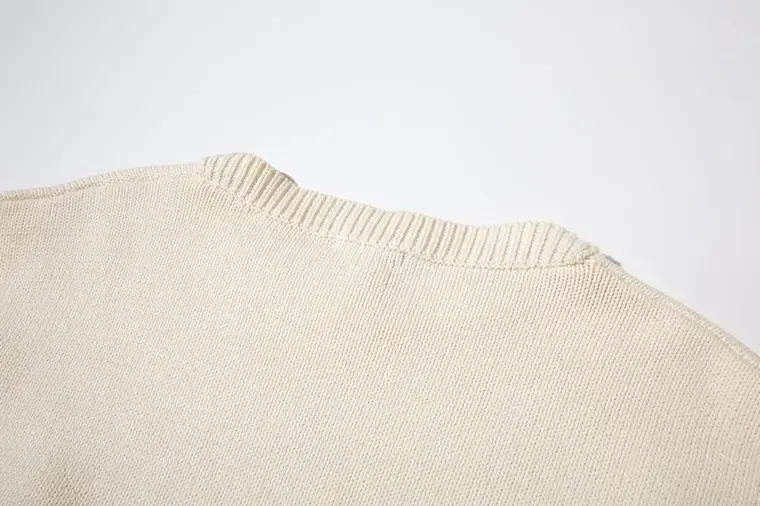
In our custom jacquard sweater program, the buyer and factory work through the motif scale, the yarn and knit structure, and the swatch before approving the garment. A commercial jacquard can use a different reverse construction than hand-worked stranded knitting. Check how the actual backing behaves alongside the visible repeat. Do not use an assumed hand-knitting float arrangement as the production specification. The motif and grading guide explains the separate question of where the design lands by size.
For a pattern that sits on a shoulder or yoke, request both the swatch and a shaped garment sample. Compare the same repeat near a shaped edge and in an area without shaping. Keep front and reverse photos together. Ask for a revision that names what will change in the repeat, backing or shaping, then recheck the chosen wear and care conditions on the revised sample. A swatch laid flat clears the flat part of the job. A garment try-on shows whether there is usable room across the shoulder.
What to do if the outcome is still hard to read
The knit is slightly wavy before finishing
Compare it with the sample after finishing and drying fully. Small waves can change as the fabric relaxes. Pay particular attention to repeat width and whether the yoke feels restrictive across the body. If appearance improves but the same floats still pull under light extension, the swatch has revealed a remaining constraint.
The motif pulls only on the largest span
Mark the exact span before changing the entire tension setting or artwork. Ask whether the repeat, yarn path or backing can be changed locally, then compare the result on both sides. Review any change to the reverse for its appearance and feel where it touches a base layer.
A photo looks flat but the garment feels tight
Wear the agreed size with the intended layer and check the point of restriction against the reference. Record where the shape or repeat first stretches. Use this observation with the relaxed measurements, so the factory can tell a size problem from a motif-specific problem.
Share both sides of the sample
Send the artwork, knit or yarn reference, front and back photos, and the position where the first wrinkle or tight spot appears. Send your jacquard sample notes.
Working on a knitwear project?
Let’s talk yarn, gauge and timing.
Send a reference or tech pack and we will come back with a practical development route.