
A T-shirt neckline rarely fails where it is measured. The sample passes its flat width at approval, the seam looks clean, and six weeks later the collar sits open on a shelf. The rib was doing less work than the seam, and the seam was doing less work than the body opening it had to control.
The T shirt neckline shape retention question breaks into three parts that fail in different ways: the rib, the seam that joins it to the body, and the body opening the band has to hold. Each has a symptom, a cause and a check that can be run on a sample, and none of them is answered by a single flat measurement.
T Shirt Neckline Shape Retention: What Holds the Curve
Shape retention is the rib returning to its cut width after stretching, held by a seam that adds no stretch of its own. A neckline holds when the rib is dense enough, the seam is sewn at consistent tension, and the body opening is not wider than the rib can control.
That definition matters commercially. A buyer who asks for a strong neckline is asking for three properties at once, and a supplier that quotes without naming them is guessing which one the buyer means. Write the three into the brief and the argument moves from adjectives to measurements.
Symptom: The Collar Opens After Washing
The cause usually starts with the body opening. When the neckline is cut wide to suit a relaxed silhouette, the rib has to control a larger circumference than its structure can manage, and it gives up where the stress is highest, at the front curve. This is the usual story behind a drop-shoulder tee that looks relaxed in the sample and shapeless after a month.
Heat is the second cause. Tumble drying at a high setting relaxes elastane and the band stops returning to its cut length, which is why a shirt can pass the wash and fail the dryer. A third cause is the fabric itself: a heavy or stiff jersey pulls on the band for the whole life of the garment, so a band that works on a light cotton can fail on a heavy one.
Load is the fourth. A gym tee is pulled over the head far more often than an office shirt, and each pull works the band a little further. If the shirt is worn for training or changed at a locker, test the neckline over twenty or thirty dressing cycles, not five.

Symptom: The Rib Recovers Slowly
Rib quality decides how fast the band comes back. A dense 1×1 rib with elastane returns faster than a loose 2×2 without it, and yarn twist matters as well, because a softly twisted yarn slides back more slowly under load. The band that feels firm on the roll can feel slack once it is stretched around a neck opening.
Rib also arrives as a tube or as a strip, and the choice changes the failure mode. A tube has no side seam to distort, while a strip cut from flat rib can stretch unevenly along its length, so the same yarn behaves differently depending on how the band was cut.
The check is simple and needs no lab. Cut a length of band, stretch it by hand to roughly the limit the neckline will see, release it, and watch how long it takes to return. Then wash it three times at the temperature on the care label and repeat. Compare the result with a garment you already know holds its shape.
Symptom: Wavy or Twisted Neckband Edges
Waves come from the sewing machine, not the rib. The band is stretched while it is attached, and if one section is stretched harder than another, the recovery pulls the surplus into a ripple. Differential feed, presser foot pressure and coverstitch tension all show up here, and adjusting one without the others usually moves the wave rather than removing it.
Twist is a different fault. A spiralled band usually comes from a rib tube cut off-grain, or from a strip cut on the bias to save fabric. Lay the shirt flat and sight along the neckline: a wave reads as a ripple along the edge, and a twist reads as a spiral that starts at one shoulder and ends at the other.
Why the Flat Measurement Misleads
Flat width is a snapshot of one moment in the garment’s life. It says nothing about recovery, and two shirts with the same flat width can behave very differently after a wash. Measure the neckline in three states instead: relaxed, stretched to the point where the seam starts to strain, and relaxed again ten seconds later.
Measure after pressing as well as after sewing. A pressed neckline can read narrower than it is, and the gap between the pressed and unpressed measurement is itself a signal about how much the seam is stretching the band.
Measure the front drop at the same time. A neckline can be the right width and still gape, because the centre front is deeper than the band can handle when the wearer bends forward. Width and drop belong on the same page of the spec sheet, with tolerances on both.
The Checks to Run Before Bulk
Run this sequence on a sample before the bulk order, and record the result rather than the impression. Each step takes minutes and answers a different failure.
| Step | Check | Failure looks like |
|---|---|---|
| 1 | Rib density against a known good band | Band feels slack on the roll |
| 2 | Band length against the finished opening | Band barely holds the curve |
| 3 | Stretch and release by hand | Slow return, soft or floppy edge |
| 4 | Seam tension along the whole curve | Ripple at the front neck |
| 5 | Three washes, then re-measure | Opening grows after washing |
| 6 | Front drop and width together | Gapes when the wearer bends |
The order matters. A band that fails step three will fail step five, and there is no point approving a sample whose rib was never going to return. Fixing the band before the wash test saves a sampling round and a lab dip.
What to Write Into the Neckline Spec
The spec sheet is what the factory on the next order will read, so describe the band rather than the intention.
| Field | What to write |
|---|---|
| Structure | 1×1 or 2×2 rib, and whether elastane is present |
| Band length | Finished length with a tolerance |
| Attachment | Seam type, stitch density, seam allowance |
| Recovery | Wash-and-measure check with an acceptance rule |
| Front drop | Depth at centre front, with a tolerance |
| Edge finish | Band width, topstitch, pressing method |
Two fields do most of the work. Band length is the number that decides whether the neckline can hold at all, and the recovery row is the one that turns a vague complaint into a test anyone can repeat. If a supplier cannot name the rib structure and the band length, the sample is not yet specified.
Ask for those two values in writing before the order is placed. They remove most of the ambiguity in a first run.
What an Inspection Can and Cannot Catch
Horssle Knit inspects to AQL 2.5, and a visual check will catch a wave, a twist, an uneven band and a skipped stitch. It cannot prove recovery, because recovery is a property of the material and the seam rather than of the unit on the table.
Put the recovery check in approval, not inspection. Approve one washed sample as the standard, keep it at the factory, and let the inspection measure against that sample and the spec sheet. A bulk order that meets a written spec is a defensible order; a bulk order that meets an adjective is an argument waiting to happen.
Agree how many units get measured, too. A visual check can cover the whole lot, but measuring takes time, so fix the number with the inspector before the inspection day.
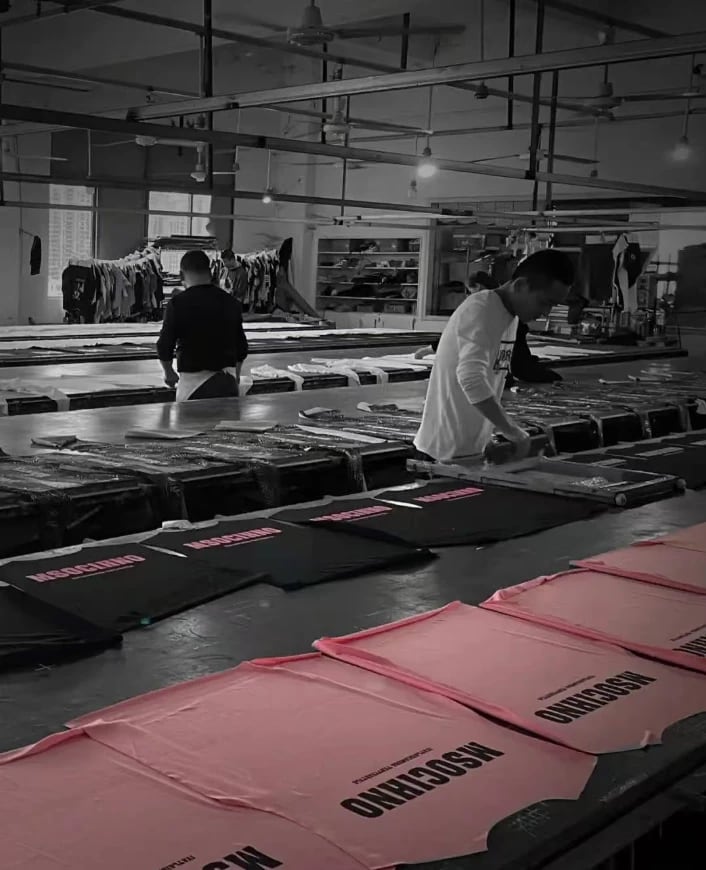
The timeline supports this. Sampling runs 7–12 days after fabric and tech pack approval, and bulk typically takes 20–35 days after sample approval, so a wash check added to the sample round costs a few days rather than a season. With a 300-piece minimum per style, a neckline that fails after delivery is expensive to correct in a second run.
The wider T-shirt range shows how the same band behaves on different fabric weights, from a light jersey to a heavy cotton, which is the quickest way to see why one neckline standard cannot cover every style.
FAQ
Can a neckline be fixed by adding more elastane?
Not on its own. Elastane helps the band return, but a loose rib, a short band and an uneven seam will still fail. Change the structure, the band length and the seam tension together, then test the result.
Is a wider neckband always stronger?
No. Width changes how the neckline looks and how much fabric the seam has to control, but recovery comes from the rib structure and the yarn. A wide band in a slack rib can open faster than a narrow one in a dense rib.
Do we need a wash test on every order?
No, but you need one approved wash standard for each fabric and colour combination. Repeat it when the yarn, the rib or the finish changes, because those are the variables that move recovery.
Why did the sample pass and the bulk fail?
The sample is one unit, often made by the most experienced operator on the line. Bulk spreads the same work across a team and a longer run, so uneven band cutting and inconsistent seam tension show up there rather than in the sample.
Sources: OEKO-TEX Standard 100, EU Regulation 1007/2011 on textile fibre names, US CBP informed compliance publications, Intertek for test methods, and Higg for facility indexing.
Working on a knitwear project?
Let’s talk yarn, gauge and timing.
Send a reference or tech pack and we will come back with a practical development route.


