
Two factories can price the same tech pack and return numbers far apart, and the gap is rarely margin. The columns that look identical describe different garments: a different yarn count, quantity basis, inspection standard, delivery term. To compare apparel manufacturing quotes, price the assumptions before you price the garment.
That is the counter-intuitive part of sourcing. The spread is mostly a spread in scope, and a buyer who negotiates the number without fixing the scope negotiates the wrong variable. The supplier that looks expensive at quotation is often quoting the garment the tech pack described.
Where identical designs stop being identical
A quote is not a price for a design. It is a price for the decisions a factory made while reading it, and most of those decisions never appear in the reply.
Six account for most of the spread: fabric and yarn, construction time, quantity basis, testing scope, packing and delivery, payment terms. Each is a real cost, and each stays implicit unless the buyer asks for it by name.
A sheet that lists only unit price and lead time ranks suppliers on scope, not capability.
Fabric and yarn: the line that moves the number most
Fabric is usually the largest cost line in a knitted garment, and the one with the most room for quiet substitution. A pique at 180 GSM and one at 220 GSM are both pique; a yarn dyed to a lab dip and one pulled from mill stock are the same colour on screen and different money on a purchase order.
Four questions close most of the gap. What is the fibre composition and yarn count? What is the weight and finish — compacted, mercerized, peached, anti-pill? Is the colour a stock shade or a custom dye lot, and what is the minimum per colour? And is the yarn certified to a standard the buyer needs?
A buyer who needs OEKO-TEX Standard 100 yarn, GRS recycled yarn or RWS wool is specifying a supply route, not a label. Horssle Knit can source those yarns against a requirement, with traceability documents where available, but the quote should name the line that uses them.
How to compare apparel manufacturing quotes like for like
To compare apparel manufacturing quotes, put every reply on one basis before you read the number: same fabric specification, same construction details, same testing scope, same delivery term and same payment terms. Factory efficiency should be the only remaining variable. Anything else is scope, not price.
In practice that means a re-quote, not a negotiation. Send every supplier the same sheet and ask them to confirm or correct each line. Some come back higher because the first number assumed a lighter fabric; some come back lower because they were pricing a quantity they cannot run at that price.
Version the sheet. When a price moves between rounds, the version tells you whether the garment changed or the factory did.
The comparison sheet: one row per assumption
One row per assumption, one column per supplier. Without these rows a spreadsheet holds prices, not quotes.
| Quote line | What a loose quote leaves open | What the sheet records |
|---|---|---|
| Fabric and yarn | Weight, yarn count, combed or carded, finish | fibre %, GSM, yarn count, finish, stock or custom shade |
| Construction | Collar build, seam type, stitch density, trims | Named construction points and any deviation from the tech pack |
| Quantity basis | Whether the price holds at your colour and size split | Total, split, minimum per colour, surcharge below it |
| Testing and certification | Who pays, which standard, which lab | Test list, standard, lab, responsible party |
| Packing | Polybag, assortment, carton marks | Bag type, size stickers, carton configuration, retail-ready work |
| Delivery term | Incoterm, origin charges, freight basis | Incoterm and named place, exclusions, validity window |
The quantity basis row is where 300 per style and 300 per colour get confused, and that moves the price more than a negotiation will. The delivery term row is where a competitive quote quietly excludes origin charges.
Workmanship shows up as minutes, not adjectives
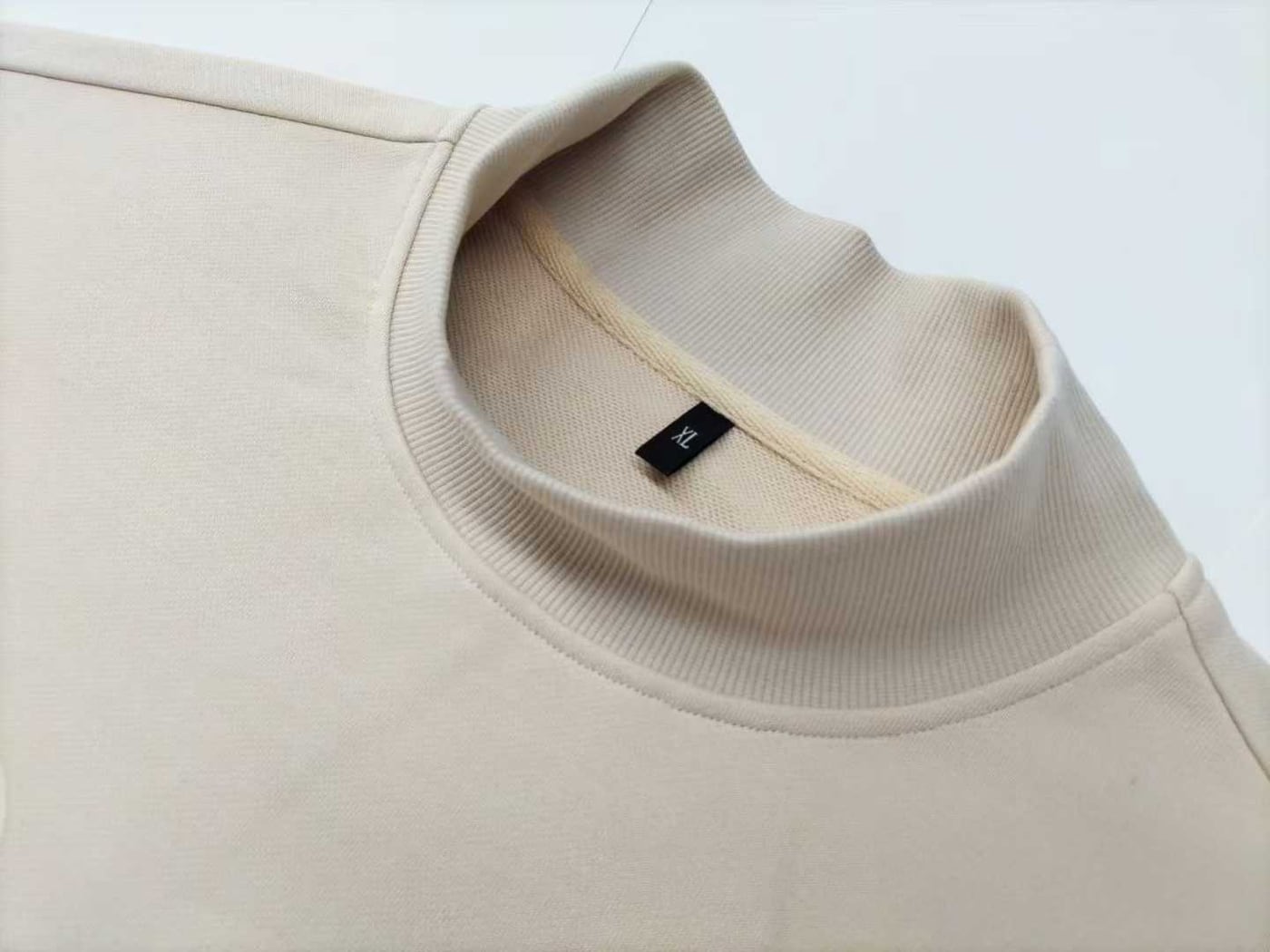
A two-piece collar with a clean roll takes longer than a fused one. A flatlock seam takes longer than an overlock. A knitted placket, a set-in sleeve, a stripe matched at the side seam — each adds handling, and handling is what a sewing line sells.

Name the inspection standard too. Horssle Knit inspects bulk orders to AQL 2.5, and a buyer who needs a tighter level should say so before pricing, because inspection time and rework allowance move with it. Ask how many sample rounds the quote assumes.
Testing, certification and compliance scope
Compliance is the line buyers assume is included and most often find excluded. fibre claims, care labelling, restricted substances and import documents are separate pieces of work, each with an owner.
For the EU, Regulation 1007/2011 sets fibre names and label content, so a quote that includes a woven main label but not the fibre and care label is incomplete for that market. For the US, CBP informed compliance publications describe what the importer is expected to hold. Restricted substance testing is a lab question, and the quote should say who pays.
Certification is not a property a factory holds once for everything; it belongs to a specific material in a specific order. A GRS claim needs a transaction certificate chain, an RWS claim needs wool traceability, an OEKO-TEX claim needs the certificate to cover the article and the colour. Ask for the number, scope and expiry date.
Delivery terms, payment terms and the landed number
Two quotes can agree on unit price and disagree on landed cost by a margin that decides the program. The delivery term sets where cost and risk transfer, so an FOB quote and a delivered quote are different offers, not different prices for one offer.
Packing changes freight more than buyers expect. A retail-ready polybag with a size sticker or an individual carton adds labour and cube, and cube is what a forwarder prices. Carton configuration belongs in the quote: pieces per carton, dimensions, weight, marking.
Payment terms sit in the same comparison. A deposit with balance before shipment and a letter of credit at sight are different cash commitments at an identical price. Duty is the importer’s calculation, so the quote should name the HS code it assumes rather than a total.
Validity closes the section: a quote with no window is a snapshot with no date.
Trade-offs worth naming before you negotiate
| Decision | What it saves | What it costs elsewhere |
|---|---|---|
| Mill stock shade or custom dye lot | No dye minimum, faster route to sample | Limited shade range; an exact brand colour may not be reachable |
| One sample round or two | Sampling time and sample cost | Bulk deviation risk moves to the buyer |
| AQL 2.5 or a tighter inspection level | Inspection time and rework allowance | Less protection on a retail-bound shipment |
| Bulk packing or retail-ready packing | labour and carton cube | Rework at the warehouse or by a third-party packer |
| FOB or delivered | Freight and insurance go to the buyer’s forwarder | Buyer carries transit risk and coordination |
Read the table twice, once as a buyer and once as a planner. A factory that shows both sides unasked is usually the one whose second-round quote barely moves.
What to send, and what to ask for
The practical version fits in one email: the completed sheet, the tech pack, the colour and size split, and a request to confirm or correct each row. The rows you argued about are the ones that would have cost you later.
Horssle Knit quotes from 300 pieces per style, samples in 7–12 days after fabric and tech pack approval, and runs bulk production in typically 20–35 days after sample approval. Those are starting points, not the comparison itself; fabric availability and approval rounds still move the schedule.
Before asking for a bulk price, ask for a sampling recommendation. A neckline to re-knit, a shade needing a lab dip, a print placement needing a marker — cheaper to find in a sample than in a shipment. The services overview covers how sampling, bulk and export packing fit.
Send the sheet to the sales team with your target quantity, and check the knitwear manufacturing FAQ for the questions that come back most often.
FAQ
Why is one quote noticeably lower than the rest?
Usually because it describes a different garment: lighter fabric, fewer construction steps, a quantity basis the order does not meet, or costs left out such as testing or freight. Ask for a re-quote on your comparison sheet. If the number survives, investigate; if it moves, you found the assumption.
Is it fair to send one factory’s price to another?
Send the specification, not just the number. A price shared without its basis invites a match on price rather than scope, and a matched price with a thinner fabric is not a better deal. Name the line that differs and ask for a re-quote.
What minimum order applies when comparing suppliers?
At Horssle Knit it is 300 pieces per style. Minimums per colour are a separate question, depending on the fabric and whether the shade is stock or dyed, so ask for both numbers. A supplier quoting only a total is hiding the constraint that surfaces at the colour split.
How long should a quote comparison take?
Allow about a week for replies against a complete tech pack, longer if fabric has to be sourced or a lab dip approved. Sampling adds 7–12 days after approval at Horssle Knit, so plans needing a sample before commitment should allow for the quote round.
Sources: OEKO-TEX Standard 100, EU Regulation 1007/2011 on textile fibre names, US CBP informed compliance publications, Intertek testing methods, Higg facility indexing, and Better Work on labour compliance.
Working on a knitwear project?
Let’s talk yarn, gauge and timing.
Send a reference or tech pack and we will come back with a practical development route.

