
The launch date was set first. Fabric approval came after it, the first sample arrived with a collar that did not match the drawing, and the comment round that should have been one email turned into three. Bulk started late, and the air freight quote landed the same week as the retail floor date. Nobody in that chain was careless. The apparel production timeline had been built forward from a purchase order instead of backward from a launch.
A schedule built backward is built the way a cost sheet is built: line by line, with a driver and a precondition on every line. The total holds only if each line is real, and a countdown that subtracts one number called production time from a launch date is not a plan.
Building an apparel production timeline backward: the short answer
An apparel production timeline is built by subtracting each block from the launch date in the order the blocks must occur: transit and documents, bulk production, any sample revision round, the first sample, and fabric and tech pack approval. Two blocks carry published windows — sampling at 7–12 days and bulk at 20–35 days.
Everything else is an input rather than a promise: the fabric approval date, the comment review, the forwarder’s transit. Two brands with the same launch date and product can therefore end up with different plans.
The blocks, in the order they are built
Seven blocks sit between a launch date and a purchase order. Each has an owner, a precondition and a different effect on the date when it moves.
| Block | Window or input | Starts only when | What it decides |
|---|---|---|---|
| Tech pack freeze | Buyer document; no factory time | Design, artwork and measurements are final | Pattern, measurement sheet, approval standard |
| Fabric and colour approval | Mill and dyehouse schedule; your input date | Lab dip and bulk swatch are signed | Which sampling window you can enter |
| First sample | 7–12 days after fabric and tech pack approval | Both approvals exist in writing | Fit, construction, hand feel |
| Sample revision | A further 7–12 day window | Comments return as one batch | Whether bulk can start |
| Bulk production | 20–35 days after sample approval | Pre-production sample is signed | Garment ready for inspection |
| AQL 2.5 inspection | Scheduled inside the bulk window | A finished lot exists | Release or rework |
| Transit and handover | Forwarder quote for your lane | Goods are released with documents | Arrival date |
Four of the seven blocks wait on the buyer or a third party the buyer appointed. Two are factory production windows; the seventh is an inspection that needs a finished lot.
That asymmetry explains most late launches. A brand that books a date and then takes two weeks to sign a lab dip has moved the launch by two weeks, not by a margin the factory can recover. The same arithmetic applies to OEM, private label and wholesale reorder programs; only the input dates change.
Fabric and tech pack approval: the gate the clock waits on
Sampling takes 7–12 days after fabric and tech pack approval. The phrase after approval is the part that gets skipped: the window is not measured from the purchase order, the deposit or the kickoff call.
Fabric approval means a signed lab dip or bulk swatch, checked under the light source named on the approval. Tech pack approval means a frozen version: measurement sheet, construction notes, print-ready artwork, label placement and colour references. Anything less is pending, and a pending approval restarts the clock.
Before the first sample, the mill books yarn or dye lots. With several colorways, the mill’s minimum per colour decides whether those colours run together or in sequence — a question for the quotation, not the schedule.
Why the sampling window is the block buyers underestimate
The 7–12 days produces a garment, not a decision. Review time sits on the buyer’s side of the ledger, and most plans leave it out.
A sample approved from photographs approves nothing measurable. The checks that decide bulk are a measurement sheet against the spec, hand feel against the target, neckline shape before and after a wash, and whether the print sits where the artwork said. The checks take an afternoon; the email chain after them can take a week.

Batching comments helps more than any other habit. One review with measurements and marked photographs beats three emails on consecutive days. A comment that changes a measurement after cutting has begun becomes a revision, and a revision runs another 7–12 day window.
Bulk production: what the 20–35 days actually contains
Bulk production typically takes 20–35 days after sample approval, and that sample is the pre-production sample: bulk fabric, bulk colour, final trims.
Inside the window sit material receipt and cutting, sewing or knitting, trimming, pressing, inline checks and the final inspection at AQL 2.5. Where a program lands inside the range is decided by construction: a plain jersey tee with one print and a paneled knit with a jacquard repeat are not the same number of operations.
AQL 2.5 is a sampling acceptance limit, not an allowance of 2.5% defective pieces. For the schedule, the practical point is that a failed lot is reworked or re-inspected after the window closes, not inside it.
Transit and the handover you do not control
The bulk window ends when goods are finished and released, not when they arrive. Transit is the one block no factory can quote: it depends on the lane, the mode, the forwarder and customs on the day.
Put your forwarder’s transit figure in the plan, then check what it covers: port-to-port is not door-to-door. Documents matter as much as the sailing. Invoice, packing list and carton marks must match what the buyer and broker expect, and care and fibre labels must satisfy the destination market. EU fibre naming rules and US labelling expectations catch first-time exporters most often.
Where the buffer belongs
A buffer at the end protects the last block. A buffer at the sampling stage protects every block after it. One full sampling window held between sample approval and bulk start does more than a week added to transit.
| Block | Plan A: first sample approved | Plan B: one revision round |
|---|---|---|
| First sample | 7–12 days after approval | 7–12 days after approval |
| Comment review | Inside the buffer | One consolidated batch of comments |
| Revision sample | Not required | A second 7–12 day window |
| Bulk production | 20–35 days after approval | 20–35 days after revision approval |
| Published windows added | 27–47 days | 34–59 days |
| Buffer held | One sampling window | One sampling window plus the revision |
| Effect on a fixed date | Absorbed | Moves by a full sampling window |
The added figures are the published windows summed arithmetically, not a quoted lead time. The columns are the same plan with one revision round inside it, and the gap is exactly one sampling window. Programs that miss a date usually spent that window twice.
What a one-week slip costs downstream
A slip is not one price, and where it happens decides what it costs. A slip in fabric approval moves sampling, bulk, inspection and transit at once. A slip in comment review costs one revision window, and only if comments arrive separately. A slip at the end of bulk is sometimes absorbed by splitting the shipment, which buys days in transit and costs a second inspection.
When the date cannot move, the honest lever is scope rather than speed: fewer colorways, fewer styles, or a style already approved. The published minimum of 300 pieces per style makes a late style expensive, since each style carries its own minimum; a colorway only thins the one you have.
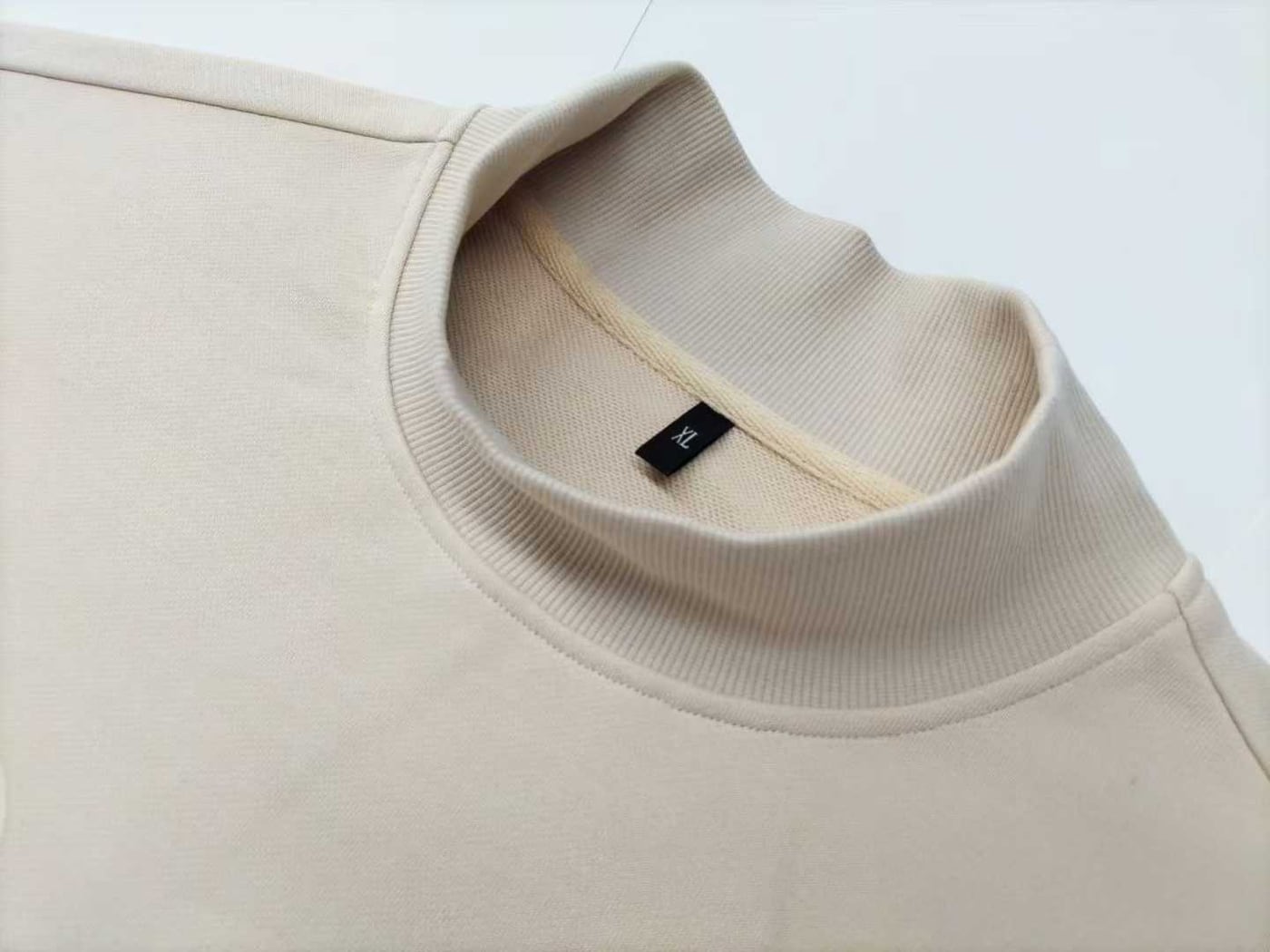
The case studies set out what changed in past programs, and at which block it changed.
The questions to settle before you fix a launch date
Five answers turn a countdown into a plan:
- Which date is fixed: retail floor, campaign, or reorder window?
- Who signs fabric and colour approval, and when?
- How many comment rounds can your team review in a week?
- Does the forwarder’s transit figure include clearance?
- If the sample fails, what drops out first?
The answers are worth more than a target date. A buyer who can say one style, one colorway, sample approved by the 12th gets a schedule that survives production. The questions buyers ask before sampling cover the rest.
Send the style, the quantity and the date you are working toward to our manufacturing services team, and ask for the plan rather than the price. Start a project with those three items and we will tell you where the date sits against the published windows.
FAQ
Can we pay extra to compress the 20–35 days?
The published window is what we can commit to after sample approval, and construction decides where a program lands inside it. A shorter bulk window comes from fewer changes, an earlier approval or a style that already exists, not from a higher unit price.
Does the 20–35 days include shipping?
No. Bulk production typically takes 20–35 days after sample approval and ends when the goods are finished, inspected and released. Transit, clearance and delivery come after that, on your forwarder’s timeline.
Our fabric is approved. Can sampling start today?
If the approval exists in writing and the tech pack is frozen at a version, yes. Sampling runs 7–12 days from that point. If artwork or a measurement is still changing, the clock has not started, and the sample that arrives will be built to the older version.
What if the launch date is fixed and the plan does not fit?
Change scope, not inspection. Move to an approved style, cut a colorway, split the shipment, or accept air freight. Every one of those costs less than a bulk lot shipped without its inspection, or a garment that reaches the floor after the campaign has run.
Sources: OEKO-TEX Standard 100, EU Regulation 1007/2011 on textile fibre names, US CBP informed compliance, Better Work, Intertek and Higg.
Working on a knitwear project?
Let’s talk yarn, gauge and timing.
Send a reference or tech pack and we will come back with a practical development route.

