
Two navy crewnecks, same yarn count on paper, same measurements within half a centimetre. One hangs from the shoulder with a clean line; the other looks slightly tired at the armhole even though nothing measures wrong. Laid side by side, the difference is obvious in ten seconds and impossible to describe in a purchase order. That is the gap a scorecard exists to close.
The samples are not the problem. Buyers usually see the difference; what they lack is a way to record it that survives the meeting. An apparel supplier sample scorecard converts that impression into a number with a reason attached, so two suppliers can be compared without arguing about which one felt nicer.
Apparel supplier sample scorecard: the short answer
An apparel supplier sample scorecard scores five areas on the same scale: fabric, make and finish, fit against the measurement sheet, communication during the sample round, and the ability to correct a fault. Score each against written anchors, weight the areas for your product, and the comparison stops being a matter of taste.
The sections below take the criteria in turn, with the questions to ask while the sample is still on the table.
Two samples on the same table
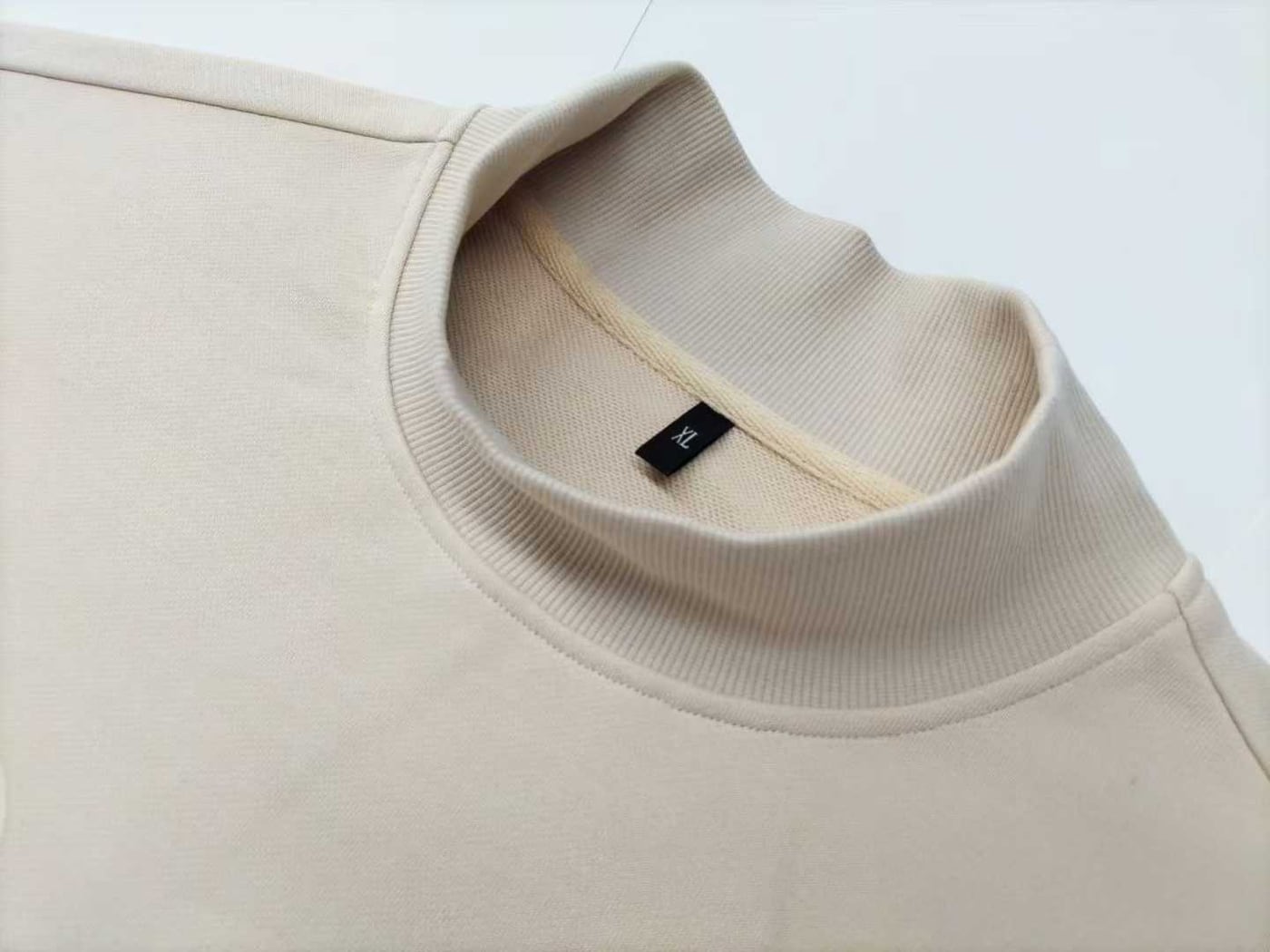
Before any scoring, put both samples on the same surface, in the same light, and handle them in the same order. Look at the armhole first, then the shoulder seam, then the hem and the neckline. The armhole is where a cheaper make shows: a set-in sleeve that has been eased in rather than shaped looks puckered even when the measurement is correct.
Then turn both inside out. The reverse side tells you more than the front, because nobody styles it. Loose threads, trimmed seams, a binding that stops short, an overlock that wanders: these are the marks of a sample room working fast, and they predict what bulk will look like under pressure.
Score what you see, not what you are told. A supplier who explains the armhole before you ask has already told you something worth scoring in a different column.
Building the scorecard
Keep the scale simple: one to five, with a written anchor for one, three and five. Anchors matter more than the numbers, because without them two buyers scoring the same sample will disagree by two points and the scorecard loses its authority.
Anchor five as production-ready with no comments, three as acceptable with minor corrections, and one as a sample that would need to be re-made. Everything between those is a judgment, and the note beside the score is what you will actually use later.
| Criterion | What you check | What a low score looks like |
|---|---|---|
| Fabric | Hand, weight, grain, shade against the standard | Different lot, twisted grain, shade drift across panels |
| Make and finish | Seams, armhole, neckline, hem, trims | Puckered sleeve, wavy hem, trimmed threads showing |
| Fit | Measured against the sheet, then worn | Measures within tolerance but hangs badly |
| Communication | Questions asked, comments answered, timing | Silence, then a sample that ignores the brief |
| Correction | Response to a stated fault on a second sample | Same fault repeated, or a new one introduced |
The last two rows are the ones buyers skip, and they are the ones that predict the bulk order. A supplier who scores five on fabric and two on correction will cost more over a season than one who scores four and four.
Scoring fabric
Fabric is scored against a standard, not against a feeling. Put the sample beside the approved swatch under the same light and check the shade, then check the grain by folding the panel along its length. A panel cut off-grain hangs crooked after a wash, and no amount of fitting corrects it.
Weight is worth checking with a number rather than a hand. Ask for the fabric weight in the unit your specification uses and compare it with the swatch card, because a supplier substituting a lighter quality is the most common quiet downgrade in sampling.
Where the fabric is a blend, ask which component drives the hand. A cashmere blend that feels soft because of a synthetic component will not age like the fibre it is named for, and the sample will feel different after the first wash.
Scoring make and finish
Work through the garment in a fixed order so the scores are comparable across suppliers. Neckline first, because it is the most visible failure. Then shoulder seams, armholes, side seams, hem, and finally the trims and labels.
Does the neckline recover when stretched? Pull it gently and watch whether it returns. A rib that stays open has been cut too wide or sewn with too little tension, and it will look worse after a wash.
Is the armhole smooth or puckered? Run a finger around the seam. Puckering means the sleeve was eased rather than shaped, which is a pattern decision, not a sewing error, and it will repeat in bulk.
Is the hem flat? Lay the garment down and look along the hem edge. A wavy hem usually means the cover stitch was run with uneven tension, and it is one of the few faults that is cheap to fix at sample stage.
Scoring communication and correction
Communication is scored from the sample round you have just completed, not from the sales conversation. Count the questions the supplier asked before sampling. A supplier who asked nothing either did not read the pack or planned to interpret it.
Who wrote the measurement sheet? If the factory produced it, the pattern is probably theirs and the fit conversation will be shorter. If the buyer produced it, ask how the factory checked it, because a sheet that was never checked is a sheet that will be graded by guesswork.
Correction is the highest-value criterion in the whole scorecard. Send one measurable comment — reduce the chest by a stated amount, raise the armhole, shorten the sleeve — and see what comes back. A supplier who returns the correct change has a working loop between the sample room and the pattern table. One who returns the change plus an unrequested alteration is telling you that the brief is advisory.

Weighting the score
Not every criterion matters equally. A brand selling a fitted knit dress should weight fit and make above fabric, because the silhouette is the product. A brand selling a heavyweight sweatshirt should weight fabric above fit, because the hand is the reason the customer buys.
Write the weights down before the scores are in. Weighting after the fact is the fastest way to justify a decision you had already made, and everyone in the room will know it.
Keep a threshold as well as a total. A supplier who scores below three on correction should not pass regardless of the total, because the scorecard is predicting a working relationship, not grading a single garment.
What the scorecard cannot tell you
It cannot tell you whether the factory will hit a date under pressure, whether the price will hold at a different quantity, or whether the relationship will survive a bad season. Those questions are answered by references, by a second sample round, and by the way a supplier behaves when something goes wrong.
What it can do is remove the least defensible part of supplier selection: the impression formed in a meeting room. A score with a written anchor and a note beside it can be shown to a colleague, revisited next season, and compared with a supplier you have not met yet.
FAQ
How many suppliers should be scored?
Three is usually enough to establish a range and two is enough to make a comparison. More than four turns the exercise into administration. The value comes from scoring each supplier on identical criteria with the same sample brief.
Should the scorecard include price?
Price belongs in the decision, but not in the same score. Score the sample first, then compare the quotations for the suppliers that clear the threshold. Mixing the two lets a low price hide a sample that will cost more to correct.
What if the samples are for different products?
Then the scores are not comparable and the scorecard should not be used. Compare like with like: same style, same fabric direction, same measurement sheet. For different products, score each supplier on a common product before drawing conclusions.
How often should the scorecard be reviewed?
Every sample round starts a fresh score, and the history is worth keeping. A supplier whose scores improve across three rounds is telling you something different from one whose scores are flat, even if both sit at the same total today.
Scoring the next sample round
Build the scorecard before the samples arrive, weight it before the scores are in, and keep the notes. The document is short, but it turns a familiar argument into a decision a team can defend.
Our atelier page shows how samples are produced and measured here, the program notes describe how sample rounds are run, and the questions buyers ask before sampling cover what to ask a supplier before scoring begins. When the scorecard is ready, start a sample brief and score us on the same sheet. Sampling is 7–12 days after fabric and tech pack approval.
Sources: OEKO-TEX Standard 100, EU Regulation 1007/2011 on textile fibre names, US CBP informed compliance publications, Better Work, Intertek and Higg.
Working on a knitwear project?
Let’s talk yarn, gauge and timing.
Send a reference or tech pack and we will come back with a practical development route.

