
Use this garment fibre content verification guide to decide whether your supplier records and test results support releasing a composition label for bulk production.
Last updated: November 26, 2026
Agree the evidence to collect, who can release the artwork and which goods to hold if results do not match. That sequence keeps a printer’s deadline from becoming the only reason to release a claim.
Garment fibre content verification: the short answer
Match the declared percentages, material records and any required laboratory evidence to the goods the label will cover. A report applies to its sample and must be tied to the actual material. Choose generic fibre names allowed in the destination market and release the artwork after the evidence review.
That is the whole process. What makes it difficult is that three departments usually own those three things, and the label printer is on a deadline that none of them shares.
Hold the composition claim before labels are printed
Prepare the layout and any non-composition details while the team gathers evidence. Freeze the fibre line only after the person responsible for the market approves the wording against the backed material. Ask the printer how late a version may be changed and record who can release it.
If the design or buying team changes the blend after the first approval, identify which artwork version and lots the change affects. Take the retired file out of circulation at both the printer and the sewing floor.
What each piece of evidence actually proves
Read each record for the question it can answer. A declaration supports a supplier’s stated material, a transaction document supports a defined certification claim, and a lab report is evidence about its sampled lot when the material identity can be followed.
| Evidence | What it proves | What it does not prove |
|---|---|---|
| Supplier declaration | What the supplier says the yarn contains | Anything about the lot you received |
| Yarn test report | The composition of the sample the mill tested | That your lot came from that sample |
| Transaction certificate | Chain of custody for a certified fibre | The percentage in the finished garment |
| Laboratory composition report | The composition of the sample you sent | That the whole lot matches that sample |
Read the last row carefully. A laboratory report is evidence about a sample, not about a shipment, which is why the sampling step below matters as much as the test itself.
The implementation path, step by step
Fix the composition in the specification. Percentages, fibre names and any trade name you intend to use. Confirm that the trade name is allowed in the destination market, because some familiar names are not recognised fibre names.
Collect the documentation. Ask for the yarn ticket and mill composition statement, then match those records to the current lot. If a certification claim is planned, request its applicable scope and transaction documents and check what the scheme actually requires.
Book the test early. Send a sample of the actual material, not a swatch from the sample room, and confirm with the laboratory which method it will use for a blend of this type.
Hold the label artwork. Approve the design, the size and the barcode, and leave the composition line as a placeholder until the result is in. A printer can hold a file for a week more easily than a factory can relabel a lot.
Compare the result with the claim. Check both the presence of each fibre and the percentage, then check the wording against the fibre names the market allows.
Record the decision. File the report, the certificate and the approved artwork together, with a version number. That file is what supports the claim if it is ever questioned.
Carry the file into bulk. Identify which material lots the evidence covers. On a reorder, review any change of supplier, blend or lot against the agreed risk and test plan before carrying over the approval.
Where a claim usually breaks
Three places. A blend, because percentages are harder to hold than a single fibre and a small drift can change what the label should say. A trade name, because a word that reads well in marketing may not be a recognised fibre name in the destination market. And a claim that travelled from a previous supplier’s certificate without checking that the certificate names the lot in question.
The trade name point deserves its own line. A fibre sold under a brand name still has to appear on the label under its generic name, and an innovative-sounding word for a regenerated cellulose fibre does not replace the generic term the rules require. The safest habit is to write the generic name first and the trade name second, if the trade name is used at all.
What a laboratory needs from you
Ask the lab which parts of the finished garment it needs and how it wants the components identified. Send a representative, traceable specimen from the intended lot where possible. Include style, colour, finish and material references. Ask whether shell, rib or lining need to be handled separately under your specifications and market rules.
Ask the laboratory which method it will use and how it reports a blend, because a result that lists the fibres without a method is hard to defend later. Keep the report with the sample reference, and keep the retained sample itself, so a future question can be answered by re-testing the same material.
Reading the result against the label
Compare the fibre names, measured percentages and the wording. If the result conflicts with the purchase specification, hold the lot and check sample identity and method first. A corrected label cannot by itself make an out-of-spec garment acceptable to the buyer.
Allow for the tolerance the market permits, and record what the market’s rule is at the time of approval rather than what it was two seasons ago. Fibre naming rules are published and they change; the label should be checked against the current text, not against a template.
Check the wording and any exceptions for each market separately. Use one artwork version only when it satisfies every market where it will ship. Where different labels are required, map each version to its market, SKU and packing instruction.
Recording the decision
The record turns a claim into something a buyer, an auditor or a customs officer can follow.
| Field | What to record | Why it matters |
|---|---|---|
| Declared composition | Fibre names and percentages as specified | The claim being tested |
| Material reference | Yarn lot, style, colour and finish of the sample | Ties the result to the goods |
| Method | The test method the laboratory used | Makes the result repeatable |
| Result | Fibres found and their proportions | The evidence itself |
| Label wording | The approved artwork, with a version number | Shows what was actually printed |
| Certificates | Transaction certificate or chain of custody, if claimed | Supports a certified-fibre claim |
| Signatures | Buyer and factory, dated | Fixes the version that was approved |
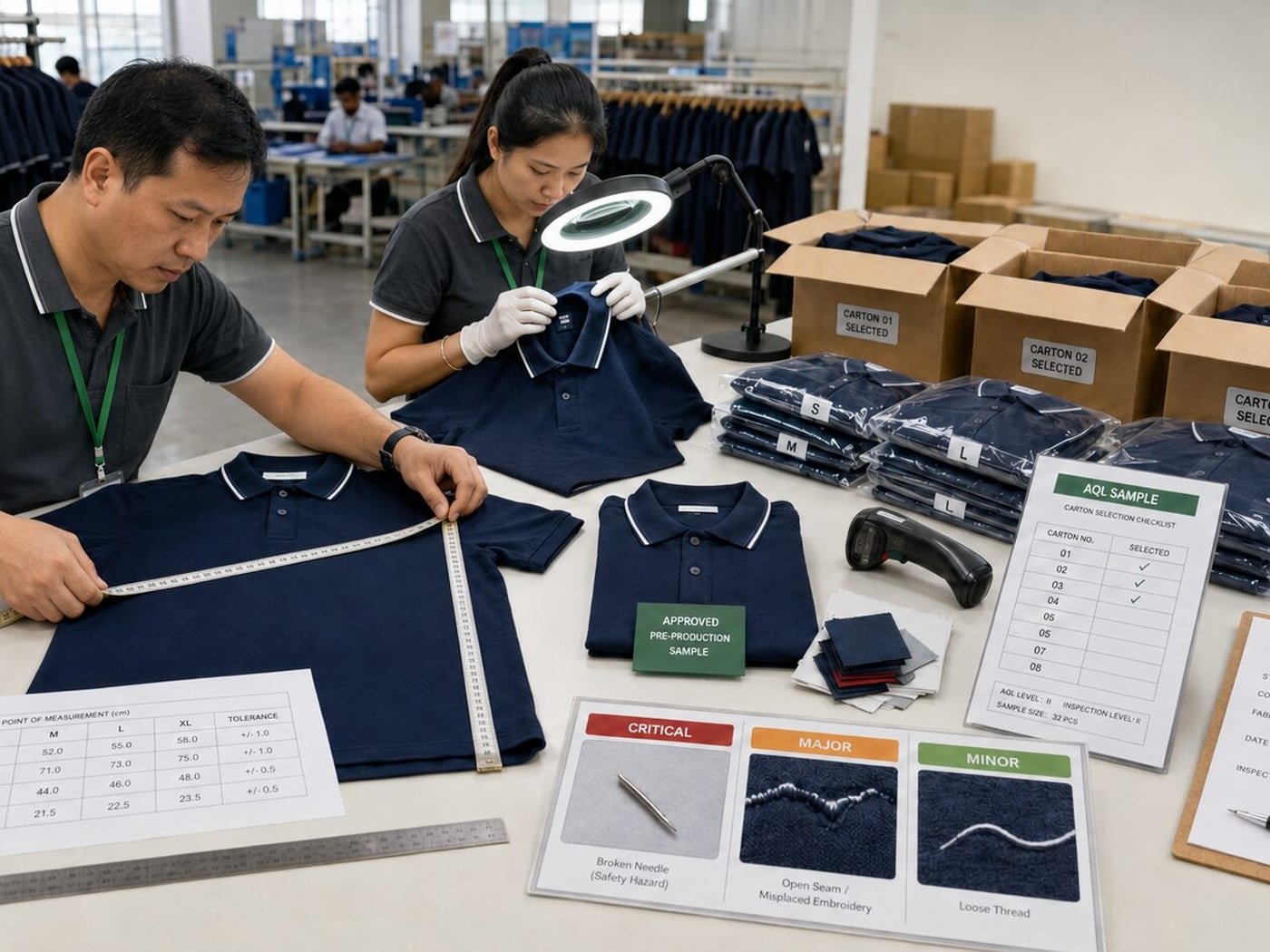
What has to match before the composition artwork is released?
Trace the lot. Tie the fabric or yarn reference to the sample ID and quote revision. If the report uses a lab reference, record how it maps back to your own lot. ISO 1833-1 sets general principles for quantitative chemical analysis of textiles. Ask the laboratory to choose the method appropriate to the fibre mixture and confirm which components it examined. Keep the report together with your sample record.
Confirm the market wording. For the US, check the FTC textile and wool labelling guidance for applicable generic names and required disclosures. For the EU, check Regulation 1007/2011 and the rules for different components and applicable exceptions. A trade name, recycled content claim or separate care instruction each needs its own review before printing.
Put one version on the line. Our published recycled cotton loungewear project describes multilingual care labels and barcode stickers applied during packing. Use that handoff to verify that the packing team receives the signed artwork version and its market or SKU mapping. When the order needs several label versions, ask the line to compare each first-off label with the approved proof before the corresponding units are packed.
Check before carrying approval forward. If the label is unchanged but the fabric changed, record whether the previous report covers the new material. If it does not, keep the lot on hold until the required records or test results are available. When the evidence and instructions agree, date the release and tell the printer and the sewing floor which earlier versions are withdrawn.
Put the authorising role on the record, not just the name of the person sending the artwork. A new supplier or lot can arrive after samples are approved. An explicit release decision gives the receiving team a way to tell whether those goods are covered by the qualification. See the cotton preparation comparison for an example of a supplier yarn claim that a composition percentage alone cannot verify.
What to do when the labels are already printed
Quarantine affected labels and units, then trace the labels to lots and orders. Resolve conflicting records before approving a correction. Depending on where the goods are and the applicable requirements, options include reprinting, relabelling or withholding the affected units. Escalate goods already shipped to the responsible buyer or compliance team.
Review composition before booking yarn. Use the questions buyers ask before sampling to identify who will supply the records and who can make a change.
FAQ
Is a supplier declaration enough for a fibre claim?
A declaration says what the supplier describes. Link it to the actual lot and agree what evidence the market or buyer requires. Use testing when the claim, material or conflicting records warrant it.
Do we have to test every lot?
Use the agreed test plan and applicable rules. Review changes to the supplier, blend or lot and confirm whether the previous evidence still covers the goods. Request new sampling where the risk or requirements call for it.
Can we use a trade name on the label?
Only alongside the generic fibre name the destination market recognises. A trade name alone does not satisfy a fibre labelling requirement, and some familiar marketing words are not recognised fibre names at all.
Who should hold the report?
Both sides, filed with the approved label artwork and the retained sample. The factory’s copy supports the shipment; the buyer’s copy supports the claim if the garment is questioned later.
Sources: Intertek, Control Union, Higg, OEKO-TEX Standard 100, EU Regulation 1007/2011 and US CBP.
Share your garment composition and label brief. Include the destination markets, blend, material references and your release or testing requirements.
Working on a knitwear project?
Let’s talk yarn, gauge and timing.
Send a reference or tech pack and we will come back with a practical development route.


